

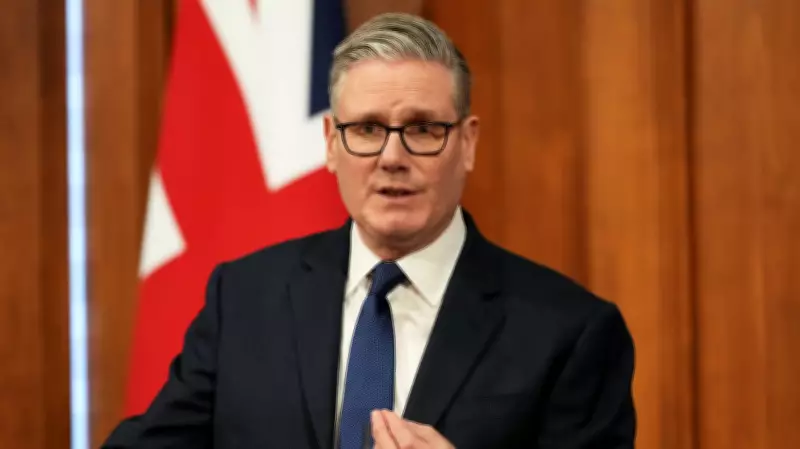
In a significant shift in British foreign policy, Prime Minister Keir Starmer announced on Wednesday that the United Kingdom will prioritize strengthening economic and defense partnerships with Europe, moving away from its traditional close alignment with the United States. This pivot comes amid ongoing global instability fueled by the Iran war and repeated public criticisms from U.S. President Donald Trump.
Starmer's Call for European Unity
Speaking at a press conference in Downing Street, Starmer highlighted the volatile international landscape, stating that the consequences of the Iran conflict are likely to persist for generations. He asserted that Britain's long-term national interest now necessitates a deeper alliance with European allies. "It is increasingly clear that as the world continues down this volatile path, our long-term national interest requires closer partnership with our allies in Europe," Starmer told reporters.
Trump's Criticism and Diplomatic Strains
The relationship between Starmer and Trump has deteriorated publicly over the Iran war. Trump has repeatedly insulted the British leader, labeling him cowardly for refusing to join the U.S. military efforts against Iran, comparing him unfavorably to Winston Churchill, and deriding Britain's aircraft carriers as "toys." In response, Starmer emphasized that he would not succumb to pressure from Trump to engage in the war, instead focusing on defensive missions to protect regional residents, including British citizens.

Brexit Damage and Future Relations
Starmer outlined plans to address the "deep damage" caused by Brexit, with a summit scheduled for the summer to reset relations with the European Union. However, he ruled out rejoining the EU's customs union or single market, aiming instead for an "ambitious" partnership that stops short of full reintegration. This approach has drawn criticism from the opposition Conservative Party, which accused Starmer of reopening Brexit wounds, and the populist Reform UK party, which called for measures to reduce energy prices.
Strait of Hormuz Meeting
In a related development, Starmer announced that Britain will host meetings this week with allies to discuss reopening the Strait of Hormuz, a critical energy shipping route blocked by Iran following attacks by the U.S. and Israel. Foreign Minister Yvette Cooper will lead a virtual meeting on Thursday involving 35 countries, including France, Germany, Japan, Australia, and Canada, to assess diplomatic and political strategies post-conflict. A British official indicated that initial efforts will focus on mine-hunting, followed by protecting tankers in the area.
Political and Economic Context
Starmer's remarks did not include new policies to assist households amid economic pressures, but he underscored the strategic importance of aligning with Europe for stability. This shift marks a departure from his earlier role as a mediator between Europe and the U.S., highlighting how the Iran war has reshaped UK foreign policy priorities toward greater European cooperation in defense and trade.






