

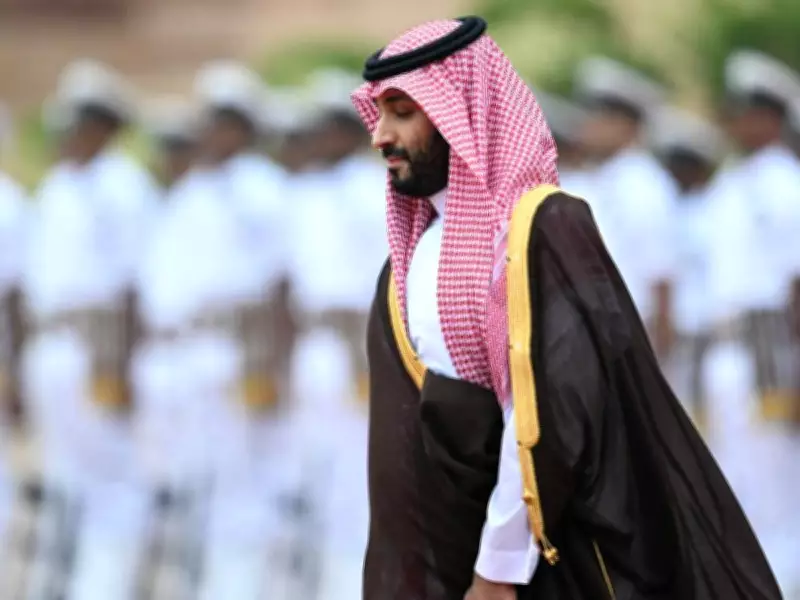
Saudi Arabia's Diplomatic Gamble with Iran Faces Severe Backlash
In a dramatic reversal of foreign policy, Saudi Crown Prince Mohammed bin Salman has seen his carefully crafted détente with Iran unravel amid escalating regional hostilities. The crown prince, who once compared Iran's Supreme Leader Ayatollah Ali Khamenei to "the new Hitler of the Middle East," had embarked on a historic diplomatic initiative to cool decades of hostility between the Sunni kingdom and Shia theocracy.
A Strategic Bet on Regional Stability
Prince Mohammed's signature foreign policy move represented a calculated wager that engagement with Tehran would foster the regional stability necessary for his ambitious Vision 2030 economic transformation plan. The crown prince worked to establish diplomatic channels with Iran, betting that dialogue rather than confrontation would best serve Saudi Arabia's long-term interests and economic ambitions.
"It's the last thing he wanted. He wants stability and order, he doesn't want missiles and drones flying around," said Bernard Haykel, a Princeton University professor of Near Eastern studies who maintains communication with Prince Mohammed. "He didn't want this at all."

Escalating Conflict and Economic Consequences
The diplomatic thaw has frozen solid since U.S. and Israeli military actions against Iran triggered furious retaliation from Tehran. Over the past two weeks, Iran has launched multiple attacks targeting:
- American military bases within Saudi Arabia
- The U.S. embassy in Riyadh
- The massive Ras Tanura oil refinery
- The extensive Shaybah oilfield facilities
While Saudi Arabia has suffered less direct impact than neighboring Gulf states like the United Arab Emirates, Bahrain, and Qatar—which have endured more frequent Iranian missile and drone volleys—the economic consequences are mounting. Formula 1 has already cancelled its scheduled April races in Saudi Arabia and Bahrain due to security concerns.
Threats to Vision 2030 Economic Transformation
The prolonged conflict presents a direct challenge to Prince Mohammed's drive to attract foreign investment for his megaprojects and position Saudi Arabia as a global hub for trade, tourism, and finance. Firas Maksad, managing director for the Middle East and North Africa at Eurasia Group, noted the significant setback to Vision 2030 objectives.
"They were already missing their targets," Maksad explained. "Now they're also going to have to focus on other things. They're going to have to reorientate spending to defence. It's going to be a much longer timeline."
Strategic Dilemmas and Regional Implications
Saudi officials maintain a cautiously optimistic public stance, with one stating, "We remain cautious, obviously, but one needs to mute noise to have a better understanding of what is happening here. It is almost business as usual." However, the kingdom faces difficult strategic choices.
Publicly, Saudi Arabia has condemned Iranian actions while calling for de-escalation. Yet Gulf leaders find themselves caught between conflicting priorities: wanting the conflict to end while fearing that a premature cessation of U.S. military operations might leave a wounded but emboldened Islamic regime on their doorstep.
Amin Nasser, chief executive of Saudi Aramco, recently warned of "catastrophic consequences" for the global economy if the conflict persists, highlighting Riyadh's deep concerns. "This one by far is the biggest crisis the region's oil and gas industry has faced," Nasser emphasized.
Analysts note that Saudi Arabia maintains some strategic advantages despite the turmoil, including access to the Red Sea that allows shipping to bypass the Strait of Hormuz—effectively closed by Iranian attacks—and continue transporting goods and crude oil. However, the broader diplomatic and security landscape has fundamentally shifted, leaving Prince Mohammed's bet on Iranian engagement in tatters and forcing a reassessment of Saudi Arabia's regional strategy.






