Rubio Strikes Reassuring Tone at Munich Security Conference
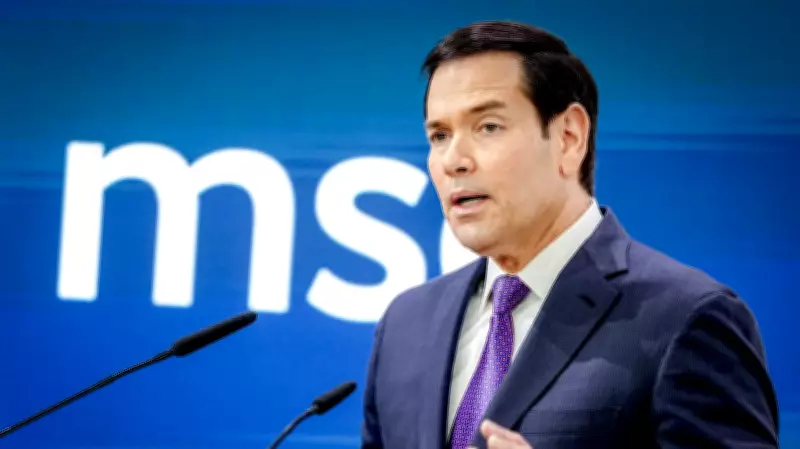
U.S. Secretary of State Marco Rubio delivered a conciliatory yet firm address to America's European allies on Saturday at the annual Munich Security Conference. Speaking in Munich, Rubio sought to reassure traditional partners after more than a year of President Donald Trump's often-hostile rhetoric toward European nations, while still advocating for changes to the trans-Atlantic relationship.
Emphasizing Historical Ties While Pushing for Change
Rubio reminded the audience of America's centuries-long roots in Europe, stating that the United States would remain forever tied to the continent even as it pushes for adjustments in the institutions that have formed the foundation of the post-World War II world order. "Our home may be in the Western hemisphere, but we will always be a child of Europe," Rubio declared, acknowledging shared sacrifices from "Kapyong to Kandahar."
The Secretary of State's appearance came exactly one year after Vice President JD Vance stunned the same conference with a harsh critique of European values. Since then, the Trump administration has made several statements and taken actions targeting allies, including Trump's short-lived threat last month to impose new tariffs on several European countries in an attempt to secure U.S. control of Greenland, a semiautonomous territory of NATO ally Denmark.

Maintaining Policy Positions While Softening Rhetoric
While offering a calmer and more reassuring tone than previous administration officials, Rubio made clear that the Trump administration is sticking to its core policy positions. He denounced what he called "a climate cult" and "an unprecedented wave of mass migration that threatens the cohesion of our societies."
Rubio argued that the "euphoria" following the Western victory in the Cold War led to a "dangerous delusion" about the inevitability of liberal democracy and borderless global citizenship. "We made these mistakes together and now together we owe it to our people to face those facts and to move forward to rebuild," he stated.
U.S. officials accompanying Rubio indicated his message was essentially the same as Vance's from the previous year but was intended to have a "softer landing" on the European audience, which had recoiled at much of Trump's rhetoric over the past year.
European Response: Reassured but Cautious
European leaders expressed appreciation for Rubio's more diplomatic approach while maintaining their own positions. Ursula von der Leyen, president of the European Union's executive commission, called Rubio's speech "very reassuring" but noted that "in the administration, some have a harsher tone on these topics."
In her own address to the conference, von der Leyen stressed that "Europe must become more independent," particularly on defense matters, and insisted on Europe's "digital sovereignty" regarding hate speech on social media platforms.
British Prime Minister Keir Starmer cautioned against complacency, stating that "we shouldn't get in the warm bath of complacency." He emphasized the need for the U.K. to reforge closer ties with Europe to help the continent "stand on our own two feet" in defense capabilities.
Hanno Pevkur, defense minister of EU and NATO member Estonia, described Rubio's characterization of America as "a child of Europe" as "quite a bold statement." While calling it "a good speech, needed here today," Pevkur added that "that doesn't mean that we can rest on pillows now. So still a lot of work has to be done."
Greenland Dispute Lingers in Background
Notably absent from Rubio's address was any mention of Greenland, despite last month's escalation over Trump's designs on the Arctic island. Following the tariff threats, the U.S., Denmark, and Greenland have initiated technical talks on an Arctic security agreement.
Rubio met briefly in Munich on Friday with Danish Prime Minister Mette Frederiksen and Greenlandic leaders, a meeting Frederiksen described as constructive. However, the Danish leader suggested on Saturday that although tensions have cooled, the underlying issue remains unresolved.

When asked whether the crisis over Greenland has passed, Frederiksen responded: "No, unfortunately not. I think the desire from the U.S. president is exactly the same. He is very serious about this theme." She emphasized that Greenland's sovereignty cannot be priced, stating that "the Greenlandic people have been very clear, they don't want to become Americans."
The conference opened on Friday with German Chancellor Friedrich Merz calling for the U.S. and Europe to "repair and revive trans-Atlantic trust together," while making clear that European officials would stand by their values regarding free speech, climate change, and free trade policies.