Rubio Clashes with G7 Allies Over Military Support in Iran and Ukraine Wars
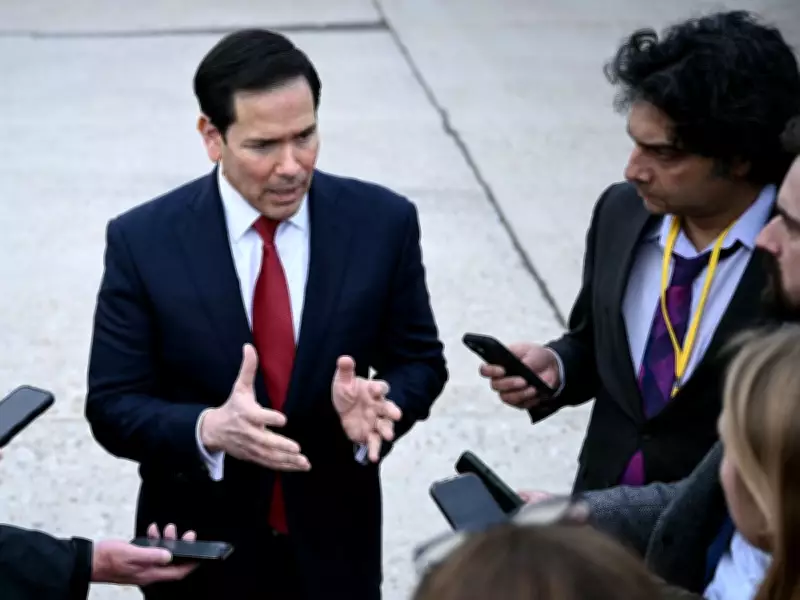
U.S. Secretary of State Marco Rubio engaged in heated exchanges with his Group of Seven counterparts during a foreign ministers' meeting outside Paris, casting significant doubt on Europe's willingness to comply with former President Donald Trump's demands for military assistance in the Persian Gulf region. The diplomatic friction emerged as discussions centered on the ongoing conflicts in Iran and Ukraine, revealing deep divisions within the international alliance.
Tensions Over Military Assistance Requests
"The United States is constantly being asked to help in a war," Rubio stated, specifically referencing the Ukraine conflict, before departing for the Friday conclusion of the G7 gathering. "But when the U.S. had a need, he didn't get positive responses," the Secretary of State added, highlighting what he perceives as an imbalance in military cooperation between transatlantic partners.
European diplomats have firmly rebuffed Trump's appeal for their naval forces to participate in securing the Strait of Hormuz, insisting they would only consider assistance once missile attacks have ceased. This position persists despite the crucial role U.S. bases in Europe have played in supporting war efforts, with some European installations providing essential logistical support throughout the conflicts.

European Resistance and Legal Concerns
German Foreign Minister Johann Wadephul expressed frustration with the situation, telling Deutschlandfunk radio before his scheduled meeting with Rubio that "It is irritating, I have to say." Germany has not received a clear, formal request from the United States regarding military intervention. "At this point, the legal requirements for us for such an operation aren't met. And there is no specific request for us to take action at this time," Wadephul clarified.
French officials echoed this cautious approach while acknowledging some preparatory measures. French Foreign Ministry spokesman Pascal Confavreux confirmed that planning is underway for potential future operations, but emphasized that "It would take place after the end of the bombing first. To be only in a defensive situation. We are preparing such a mission with all the willing partners. But we have made very clear that this war is not our war and we don't want to be entangled in it."
U.S. Position Clarification and Troop Deployment Considerations
According to a person familiar with the G7 conversations who spoke on condition of anonymity, the United States has clarified that it is not currently asking allies for immediate action in the Strait of Hormuz. However, Washington expects allies to be prepared to help secure the region once hostilities conclude. This naval coalition would ideally include as many participating allies as possible and would not be U.S.-led, with expectations that the conflict might end within weeks rather than months.
French Foreign Minister Jean-Noel Barrot reinforced the international commitment to maritime security, telling reporters that "There is, I believe, a consensus within the international community to preserve a common good, which is freedom of navigation."
The Wall Street Journal reported that the United States was considering deploying as many as 10,000 additional troops to the Middle East, providing the American president with expanded military options as key allies advocate for diplomatic negotiations to end a conflict causing increasing damage to the global economy.
Ukraine Remains Europe's Primary Concern
European leaders continue to prioritize the Ukraine conflict, attempting to isolate Russia by connecting the two wars through intelligence sharing allegations. EU top diplomat Kaja Kallas asserted on Thursday that Russia has been providing Iran with intelligence to target and kill Americans, a claim Russian counterpart Sergey Lavrov vehemently denied during a French television appearance.
UK Foreign Secretary Yvette Cooper noted the reciprocal nature of military support between the conflicts, stating that "Drones provided to Russia by Iran have been involved in the conflict in Ukraine, but we have also seen support from Russia provided to Iran in the Middle East conflict as well."

Rubio contrasted the European stance on Ukraine with their reluctance regarding Iran, arguing that "Ukraine is not America's war, and yet we've contributed more to that fight than any other country in the world. So, it'll be something to examine that the President will have to take into account down the road."
The diplomatic standoff reveals significant challenges in coordinating international responses to simultaneous global conflicts, with national interests and legal considerations creating obstacles to unified military action among traditional allies.