

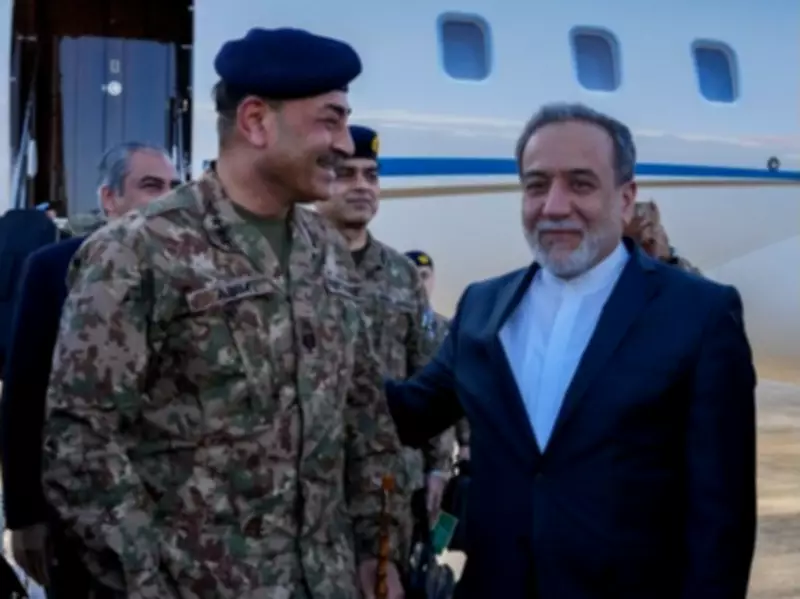
Pakistan's Army Chief Engages in Tehran Diplomacy to Facilitate U.S.-Iran Negotiations
In a significant diplomatic move aimed at de-escalating the ongoing conflict in the Middle East, Pakistan's Army Chief Field Marshal Gen. Asim Munir arrived in Tehran on Wednesday, April 15, 2026, for high-level meetings with Iranian officials. The primary objective of this visit is to arrange a second round of negotiations between the United States and Iran, following nearly seven weeks of intense warfare that has destabilized the region.
High-Stakes Meetings and Regional Peace Efforts
The discussions in Tehran come at a critical juncture, as U.S. President Donald Trump announced that leaders from Israel and Lebanon are scheduled to speak later on Thursday about halting hostilities between their nations. This development marks a rare diplomatic engagement between the two countries, which have not held direct talks in decades. According to the White House, further negotiations with Iran would likely take place in Islamabad, Pakistan, although no final decision has been made regarding the resumption of formal talks.
Iranian state television reported that Parliament Speaker Mohammad Bagher Qalibaf has already met with Gen. Asim Munir, though specific details of their conversation were not immediately disclosed. Pakistan's Foreign Ministry emphasized that this visit, along with Prime Minister Shehbaz Sharif's trips to countries including Saudi Arabia, represents "collective efforts" focused on promoting regional peace and de-escalation.

U.S. Blockade and Economic Pressure on Iran
Concurrently, the United States has maintained a stringent blockade of Iranian ports, with U.S. Treasury Secretary Scott Bessent indicating that the Trump administration plans to intensify economic pressure on Iran through new sanctions targeting countries that engage in business with Tehran. Adm. Brad Cooper, head of U.S. Central Command, confirmed that the blockade "has been fully implemented," effectively halting all maritime economic trade in and out of Iran.
Central Command stated that during the first 48 hours of the blockade, which commenced on Monday, no vessels successfully bypassed U.S. forces, and ten ships were directed to turn back toward Iranian ports or coastal areas. The enforcement is described as impartial, affecting vessels from all nations attempting to enter or leave Iranian maritime zones, while those avoiding Iranian ports remain unaffected.
Military Developments and Diplomatic Channels
On the ground, intense clashes have persisted in and around the Lebanese town of Bint Jbeil for over a week, as Israel and Lebanon engage in their first direct diplomatic discussions in years. The Israeli military reported that following a commando raid on a Hezbollah "combat compound" where numerous weapons were discovered, soldiers dismantled approximately 70 terror infrastructure sites in a swift operation. Additionally, Israeli forces claimed to have killed dozens of Hezbollah operatives in separate actions, highlighting the ongoing volatility in the region.
Pakistan has positioned itself as a key mediator in the conflict, with Foreign Ministry spokesman Tahir Andrabi noting that the country is being recognized for its constructive diplomatic engagement. "Pakistan is being recognized for its constructive diplomatic engagement in supporting de-escalation, ceasefire efforts and a broader pursuit of stability between the United States and Iran," Andrabi stated. The nation has facilitated message exchanges and helped create a conducive environment for meaningful negotiations, such as the recent talks between the U.S. and Iran.
Path Forward and International Involvement
Iranian foreign minister Abbas Araghchi participated in a preliminary meeting with Gen. Asim Munir on Wednesday, with more extensive discussions slated for Thursday to address the latest communications with the United States. The involvement of Pakistan as a mediator underscores the complex web of international diplomacy aimed at resolving the conflict, which has already resulted in significant casualties, including a deadly strike on a children's school in Minab that killed at least 165 people, most of them children.

As the situation evolves, the global community watches closely, with hopes that these diplomatic efforts will pave the way for a ceasefire and lasting peace in the Middle East. The Associated Press contributed to this report, providing additional context and updates on the rapidly changing dynamics of the Iran war.





