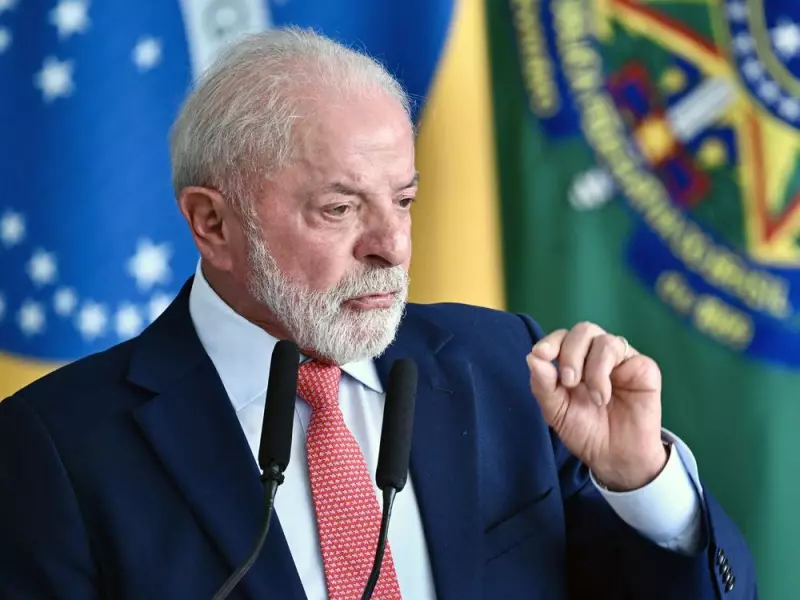
Brazilian President Luiz Inácio Lula da Silva held a series of urgent diplomatic calls on Thursday, consulting with key regional counterparts in the wake of the stunning United States military operation that resulted in the capture of Venezuelan leader Nicolás Maduro. The conversations, which included Canadian Prime Minister Mark Carney, Mexican President Claudia Sheinbaum, and Colombian President Gustavo Petro, focused on formulating a coordinated response to an event that has sent shockwaves across the Americas.
A Coordinated Regional Response
According to statements from the Brazilian government, the central theme of each discussion was the imperative to respect international law and national sovereignty. The calls came just days after a deadly U.S. raid successfully apprehended Maduro, an action that has drawn widespread condemnation from leaders throughout Latin America.
Lula, who was vacationing in Rio de Janeiro at the time of the operation, was quick to issue a strong rebuke. He condemned the seizure as a "serious affront to Venezuela's sovereignty" and a "flagrant violation of international law," stating it had crossed "an unacceptable line." However, his statement was notably careful, avoiding any direct mention of either the deposed Maduro or U.S. President Donald Trump.

Navigating Political and Economic Tightropes
These omissions were strategic, according to five officials within Brazil's administration who spoke on condition of anonymity. With a reelection campaign on the horizon and sensitive trade negotiations with the United States ongoing, Lula is walking a diplomatic tightrope. His objectives are twofold: to shield himself from attacks by conservative domestic opponents and to prevent the derailment of efforts to roll back punitive tariffs imposed by the Trump administration.
Internally, Lula's government has issued explicit guidance to members of his administration: they must not comment on the situation in Venezuela without prior authorization. If they are required to address it, they are instructed to adhere strictly to the language already established by Lula and the foreign ministry.
The core message is a steadfast defence of national sovereignty, a principle Lula also invoked when challenging the 50% tariffs Trump placed on many Brazilian exports last year—a move seen as an attempt to aid right-wing former President Jair Bolsonaro.
Balancing History with Present Realities
The situation in Venezuela presents a unique political challenge for the 80-year-old Lula. He initially rose to power more than two decades ago alongside Maduro's predecessor, the late Hugo Chávez, and has long been a vocal opponent of U.S. interventionism in the region. Venezuela's descent into autocracy under Maduro has long been a liability for the Brazilian leftist.
Yet, the political calculus has shifted. The previous fight over U.S. tariffs boosted Lula's popularity at home, positioning him favourably in polls ahead of the October election. Furthermore, he has so far managed to avoid the direct criticism from Trump that was initially directed at Mexico and Colombia following the Venezuelan raid.
Chief of Staff Rui Costa echoed the government's official line on Thursday, stating, "The need to reaffirm the sovereignty of countries, the right of each people to define their own destiny, is clear to the entire world. More than ever, this right must be affirmed." As Latin American leaders regroup, the path forward requires navigating a complex web of historical alliances, economic interests, and the uncharted political aftermath of a unprecedented intervention.