

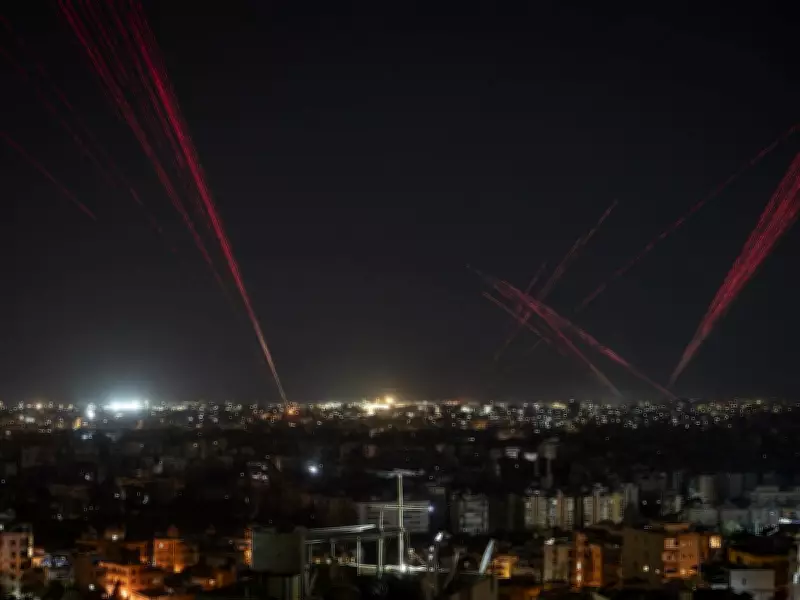
In the midst of ongoing turmoil in the Middle East, a critical perspective emerges on Lebanon's role in addressing the threat posed by Hezbollah. Since October 7, the region has been engulfed in conflict, with Hezbollah, acting as a proxy for Iran, relentlessly targeting Israel's border communities with missile attacks, rendering them nearly uninhabitable. This terrorist organization has effectively turned Lebanon into a launchpad for assaults on Israel, operating under Iran's direct instructions.
The Destabilizing Force of Hezbollah in Lebanon
Hezbollah has significantly weakened and destabilized Lebanon by establishing its own armed forces, which now surpass the Lebanese army in power. The group has amassed over 100,000 rockets aimed at Israel, recruited and trained a large military force intended to occupy Israel's north, and stored weapons caches while digging tunnels, some extending into Israel. This has transformed peaceful villages near the border into de facto military bases, undermining Lebanon's sovereignty and security.
Israel's Response and the Ceasefire Agreement
Following a U.S.-Israel attack on the Iranian regime, Hezbollah launched another wave of rocket attacks at Israel, prompting Israel to move into Southern Lebanon to clear the area of this terrorist organization. By decimating Hezbollah and crippling its leadership, Israel has effectively been doing the dirty work for the Lebanese government, which has failed to fulfill its promise to dismantle the group. This has led to a pivotal question: can Lebanon negotiate peace with Israel while Hezbollah remains armed and opposed?

A 10-day ceasefire has been announced by Israel and Lebanon, but doubts linger over Hezbollah's adherence to the terms. In a televised speech before the ceasefire announcement, Hezbollah leader Naim Qassem demanded that Lebanon cancel peace talks with Israel in Washington, stating, "We call on the president and prime minister to back down from these negotiations that we absolutely reject." He emphasized that Hezbollah would not accept any ceasefire terms with Israel, highlighting the challenges to achieving lasting peace.
The Path to Peace and International Involvement
Despite the obstacles, there is optimism that peace may emerge from necessity. The adage "the enemy of my enemy is my friend" offers hope for Lebanon and Israel to find a path to reconciliation. The United States has been actively pressing both parties, hosting an historic first meeting in Washington with Israeli and Lebanese ambassadors, facilitated by U.S. Secretary of State Marco Rubio. A planned phone call between Israel's Prime Minister Benjamin Netanyahu and Lebanese President Joseph Aoun further underscores international efforts to mediate the conflict.
Lebanon's Responsibility and the Need for Action
Lebanon has shirked its responsibility by only meekly demanding Hezbollah disarm, despite commitments under UN Security Council Resolutions 1559 and 1701, as well as a ceasefire deal in 2024. To achieve peace, Lebanon must demonstrate action over words. For state control over all its territory—a necessary condition for a lasting peace with Israel and the safety of its own citizens—Lebanon will need to forcibly evict Hezbollah from its territory. This requires decisive leadership and a firm stance against the terrorist group's influence.
In conclusion, while Israel has taken steps to address the Hezbollah threat, the onus is on Lebanon to confront this destabilizing force directly. Only through proactive measures can Lebanon secure its sovereignty and pave the way for a sustainable peace in the region.






