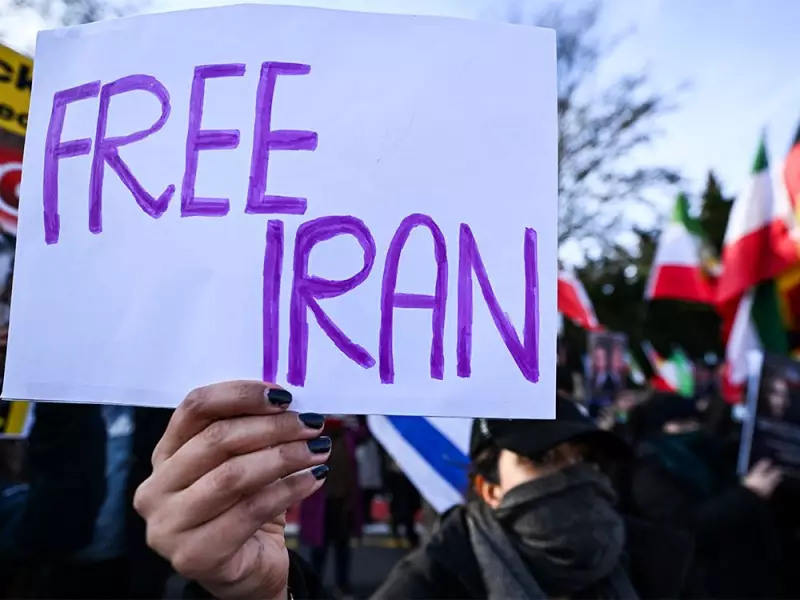
The world watches with bated breath as Iran stands at a historic precipice in 2026. The massive protests against the clerical regime prompt a critical question: will this year become Iran's version of the liberating 1989 revolutions in Eastern Europe, or will it echo the tragic and repressive 1989 crackdown in China's Tiananmen Square?
The Two Paths from a Pivotal Year
Father Raymond J. de Souza draws a powerful parallel between the current Iranian unrest and the two divergent outcomes of 1989. In that fateful year, Poland's Solidarity movement, bolstered by the moral authority of Pope John Paul II and Western allies like Margaret Thatcher and Ronald Reagan, successfully toppled communist rule, leading to the fall of the Berlin Wall.
Conversely, in June 1989, the Chinese Communist Party (CCP) under Deng Xiaoping chose a path of brutal repression in Tiananmen Square, crushing pro-democracy demonstrations and cementing its authoritarian control for decades to follow. At present, Tehran's response to dissent appears to align more closely with the latter, Chinese model of severe crackdowns.

The 1979 Roots of Global Upheaval
The seeds for both 1989 outcomes were planted a decade earlier in 1979, a year of profound global transformation. In that single year, three monumental events set the stage for the next half-century:
The Islamic Revolution in Iran saw Ayatollah Khomeini return to power, overthrowing the Shah and establishing a theocratic state that has dominated Middle Eastern geopolitics ever since.
In the communist world, two opposing forces emerged. Deng Xiaoping consolidated power in China, launching economic reforms while imposing draconian social controls like the one-child policy. Meanwhile, Cardinal Karol Wojtyla of Kraków became Pope John Paul II, whose 1979 pilgrimage to Poland ignited the spiritual fire that would fuel the Solidarity movement.
The West also shifted, with the election of Margaret Thatcher as British Prime Minister in 1979, followed by Ronald Reagan's U.S. presidency in 1980, creating a powerful alliance committed to confronting Soviet expansion.
Iran's Trajectory and the Stakes for 2026
Throughout the 1980s, Iran was consumed by a devastating war with Iraq, initiated by Saddam Hussein. The conflict, which resulted in over a million deaths, ended in a stalemate but left the Islamic Republic secure. From 1989 onward, Iran embarked on a 35-year campaign to export its Islamist ideology and influence across the region, often through proxy networks and support for militant groups.
Now, in 2026, the regime faces perhaps its most significant internal challenge since its inception. The fundamental question, as posed by de Souza, is whether the Iranian people's courageous protests will culminate in a Polish-style breakthrough for freedom, or if the regime will succeed in a Chinese-style reinforcement of its repressive apparatus.
The outcome will not only determine Iran's future but will also reshape the balance of power in the Middle East and send a powerful signal about the resilience of authoritarianism in the 21st century. The world witnesses a nation grappling with its destiny, caught between the powerful historical echoes of 1989.