

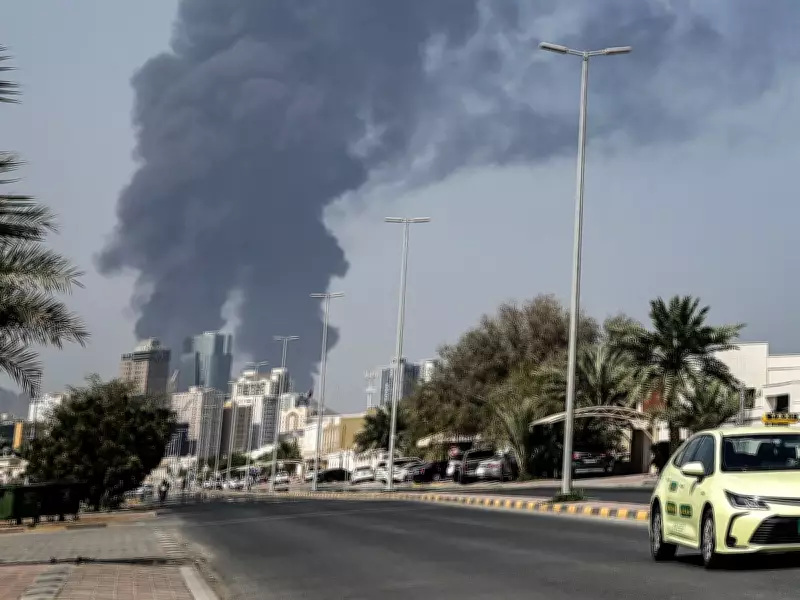
Iran's Aggression Strengthens Gulf Alliances with U.S. and Israel, Says U.A.E. Official
A senior adviser to the Emirati president has declared that Iran's recent attacks on the United Arab Emirates and other Persian Gulf states represent a strategic miscalculation, driving these nations into closer alignment with the United States and Israel. Dr. Anwar Gargash, speaking in a broadcast interview, emphasized that the assaults have exposed Iran as a destabilizing force, making regional cooperation with Western allies more critical than ever.
Missile and Drone Assaults Shift Regional Dynamics
Gargash highlighted that approximately 2,000 Iranian missiles and drones have targeted the U.A.E., with most aimed at civilian infrastructure such as buildings, airports, and roads. He starkly contrasted this with the absence of Israeli attacks, stating, "We're not seeing 2,000 Israeli missiles and drones targeting us, we're seeing 2,000 Iranian missiles and drones targeting us." This reality, he argued, is strengthening relationships with Israel for those Gulf states that have them and encouraging new diplomatic channels for others.
The conflict, now in its eighteenth day, has disrupted global markets, caused significant casualties in Iran, and displaced hundreds of thousands in Iran and Lebanon, where Israel is combating Hezbollah, a U.S.-designated terrorist proxy of Iran. Gargash refrained from assigning blame to the U.S. or Israel for the war, instead focusing on Iran's actions as the primary catalyst for regional realignment.

U.A.E. Considers Role in Securing Strait of Hormuz
In response to the heightened tensions, Dr. Gargash revealed that the United Arab Emirates is evaluating participation with the United States in securing the Strait of Hormuz, a vital corridor for global oil shipments. He asserted that this responsibility should not fall solely on the U.S., urging countries in Asia, Europe, and the region to contribute. "I can see us playing a role with other countries in ensuring the safety and security of the Strait of Hormuz," he stated, underscoring the need for collective action.
This consideration follows earlier calls by former U.S. President Donald Trump for NATO and East Asian allies to assist in strait security, which were largely rejected. The current U.S.-Israeli bombing campaign, initiated on February 28 without prior consultation with allied nations, has further complicated diplomatic efforts.
Iran's Strategy Backfires, Bolstering American Influence
Gargash characterized Iran's approach as "the folly of this Iranian strategy that will actually make Israel less of a threat and Iran more of a threat." He added that the attacks are not diminishing the American role in the region but rather "strengthening it." Speaking from his Dubai office, he noted that Iran has targeted neighbors who viewed themselves as peacemakers, thereby undermining regional stability and increasing skepticism about Iran's nuclear and missile programs.
The U.A.E. official's comments come amid ongoing diplomatic engagements, including a recent conversation between U.S. Secretary of State Marco Rubio and Emirati Foreign Minister Sheikh Abdullah bin Zayed Al Nahyan, though details remain sparse. Gargash, a former foreign minister who frequently represents his nation, concluded that Iran's actions have made the American connection more vital, reinforcing alliances that could reshape the geopolitical landscape of the Middle East.






