

France Restricts U.S. Ambassador's Access After Skipped Meeting Over Activist Death
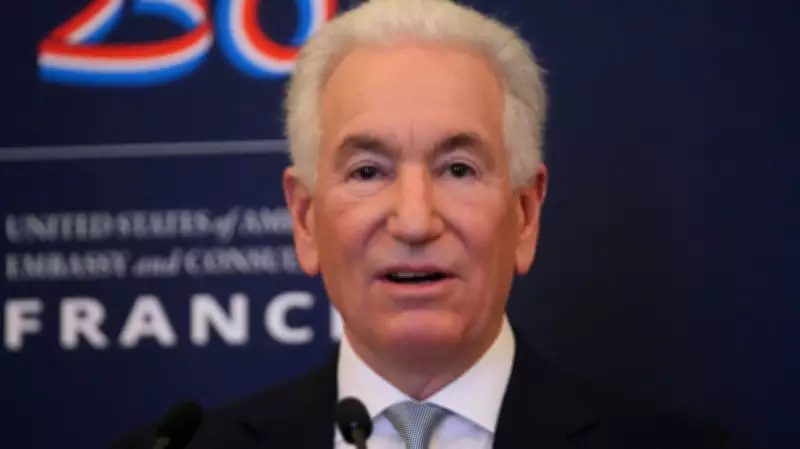
France's top diplomat has taken the significant step of requesting that United States Ambassador Charles Kushner no longer be granted direct access to members of the French government. This decision comes after Ambassador Kushner failed to attend a scheduled meeting at the Quai d'Orsay, the headquarters of the French Foreign Affairs Ministry, on Monday evening. The meeting was intended to address comments made by the Trump administration concerning the recent beating death of a far-right activist in France.
A Diplomatic Snub and Its Consequences
According to diplomatic sources, French authorities had formally summoned Ambassador Kushner to the Foreign Affairs Ministry. His absence from this diplomatic summons prompted Foreign Affairs Minister Jean-Noel Barrot to impose restrictions on the ambassador's access. In a statement, Minister Barrot cited "this apparent misunderstanding of the basic expectations of the mission of an ambassador, who has the honor of representing his country" as the rationale for the action.
The ministry, however, emphasized that the door remains open for future diplomatic engagement. It noted that it is still possible for Ambassador Kushner to carry out his duties and present himself at the Quai d'Orsay for necessary discussions. The statement expressed a desire to "smooth over the irritants that can inevitably arise in a friendship spanning 250 years," highlighting the long-standing alliance between the two nations.

The Catalyst: U.S. Comments on a Political Killing
The diplomatic summons was triggered by a statement posted on social media platform X by the U.S. State Department's Counterterrorism Bureau. This statement, which was also shared by the U.S. Embassy, declared that "reports, corroborated by the French Minister of the Interior, that Quentin Deranque was killed by left-wing militants, should concern us all."
Quentin Deranque, a far-right activist, died this month from brain injuries sustained during a beating in the French city of Lyon. The attack occurred on the margins of a student meeting where a far-left lawmaker was a keynote speaker. His death has cast a spotlight on the intense political tensions in France ahead of next year's presidential election.
French Rejection of "Instrumentalization"
In response to the U.S. comments, Foreign Minister Barrot stated over the weekend, "We reject any instrumentalization of this tragedy, which has plunged a French family into mourning, for political ends." He further asserted, "We have no lessons to learn, particularly on the issue of violence, from the international reactionary movement."
The U.S. State Department's post elaborated, stating, "violent radical leftism is on the rise and its role in Quentin Deranque's death demonstrates the threat it poses to public safety. We will continue to monitor the situation and expect to see the perpetrators of violence brought to justice."
A Pattern of Diplomatic Friction
This incident is not the first time Ambassador Kushner has been summoned by French officials. In August, he was called in over a letter he sent to French President Emmanuel Macron alleging that France had not done enough to combat antisemitism. In that previous instance, French foreign officials met with a representative of the U.S. ambassador, as the diplomat himself did not attend the meeting.
The current restrictions mark a notable escalation in diplomatic protocol, directly limiting the ambassador's channels of communication with the French government as a consequence of his absence from a critical discussion.






