

Fragile Ceasefire Holds as Iran-U.S. Talks Proceed Amid Regional Tensions
Negotiators from Iran and the United States are preparing for high-level talks this weekend, even as the ceasefire between the nations remains precarious. The situation is further complicated by ongoing exchanges of fire between Israel and Hezbollah, as well as Iran's continued stranglehold on the critical Strait of Hormuz, through which a significant portion of the world's oil once flowed.
Multiple Threats to the Truce
Numerous issues threaten to derail the fragile ceasefire and broader negotiations aimed at permanently ending the conflict. Iran's semiofficial Tasnim news agency, which has close ties to the Revolutionary Guard, has stated that talks scheduled for Saturday will not proceed unless Israel halts its attacks in Lebanon. Meanwhile, U.S. President Donald Trump has criticized Iran for its management of the Strait of Hormuz, accusing the country of doing a "very poor job" by restricting the free passage of ships.
In a separate incident, Kuwait reported a drone attack on Thursday night, which it attributed to Iran and its militia allies in the region. Although Iran's paramilitary Revolutionary Guard denied involvement, the group has a history of carrying out unclaimed attacks across the Middle East.

Preparations for Negotiations Continue
Despite these tensions, preparations for the Iran-U.S. talks in Pakistan appear to be moving forward. U.S. Vice President JD Vance is scheduled to depart from Washington to participate. Additionally, negotiations between Israel and Lebanon are expected to commence next week in Washington, according to anonymous sources familiar with the plans, who cited the sensitivity of the matter.
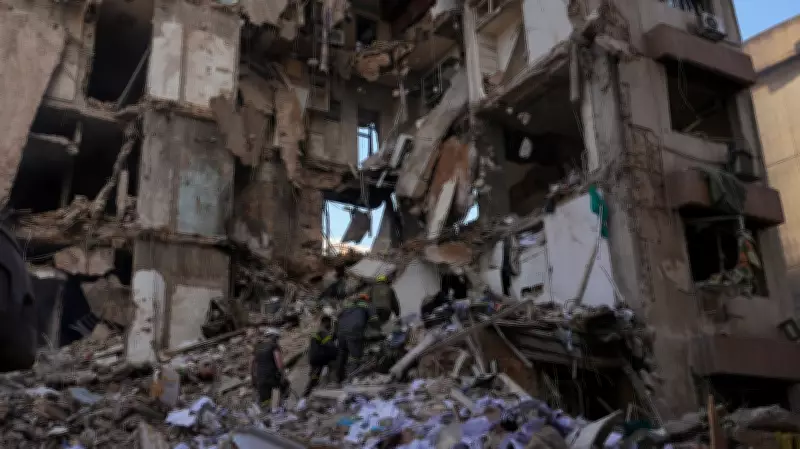
Israel's insistence that the ceasefire with Iran does not include a pause in its conflict with Hezbollah—which entered the war in support of Iran—poses a significant risk to the deal. On the day the truce was announced, Israel conducted airstrikes on Beirut, resulting in over 300 fatalities, as reported by Lebanon's Health Ministry. This marked the deadliest day in Lebanon since the war began on February 28.
Key Statements from Leaders
President Trump revealed on Thursday that he has urged Israeli Prime Minister Benjamin Netanyahu to reduce the intensity of the strikes. Early Friday, Israel's military announced it had targeted approximately 10 launchers in Lebanon that had fired rockets toward northern Israel the previous day.
Iran's parliament speaker, Mohammad Bagher Qalibaf, issued a warning on Thursday, stating that continued Israeli attacks on Hezbollah would lead to "explicit costs and strong responses." In response, Netanyahu stated that he has authorized negotiations with Lebanon "as soon as possible" with the objectives of disarming Hezbollah militants and establishing diplomatic relations between the two neighbors, who have technically been at war since Israel's establishment in 1948.
As of early Friday afternoon, the Lebanese government had not issued a response. The timing and location of the talks were initially reported by Axios.
Human Toll and Recovery Efforts
Two days after Israel's intense barrage, residents in Beirut were sifting through the wreckage of their homes, attempting to salvage furniture and personal mementos from the rubble. Many expressed gratitude for having lost only their possessions, not their loved ones.
"There is no substitute for family," said Wissam Tabila, 35. "Everything else can be replaced."
Strait of Hormuz: A Critical Flashpoint
Iran's closure of the Strait of Hormuz has had profound global economic impacts, driving oil prices higher, depressing stock markets, and causing widespread economic turmoil. Tehran's control over this vital waterway has emerged as its most significant strategic advantage in the conflict.
The spot price of Brent crude, the international benchmark, was approximately $97 on Friday, reflecting an increase of more than 30% since the war's onset. Prior to the conflict, over 100 ships traversed the strait daily, many carrying oil to Asia. Since the ceasefire, only 12 ships have been recorded passing through.

The precariousness of the situation was underscored when a Botswana-flagged liquefied natural gas tanker, following a route mandated by the Revolutionary Guard, abruptly turned around early Friday, according to ship-tracking data.
Sultan al-Jaber, head of the United Arab Emirates' major oil company, highlighted that around 230 oil-laden ships are currently awaiting passage through the strait and must be allowed "to navigate this corridor without condition."
President Trump reiterated his concerns about the situation on his social media platform, writing: "Iran is doing a very poor job, dishonorable some would say, of allowing Oil to go through the Strait of Hormuz." He added, "That is not the agreement we have!" referring to the limited number of ships Iran has permitted to pass.
Unresolved Issues: Nuclear Programs and Casualties
The ceasefire deal remains fragile, with unresolved questions regarding Iran's missile and nuclear programs—key targets for the U.S. and Israel in the war. The United States insists that Iran must never develop nuclear weapons and seeks the removal of Tehran's stockpile of highly enriched uranium, which could be used for weapon production. Iran maintains that its nuclear program is for peaceful purposes.
While President Trump has indicated that the U.S. would collaborate with Iran to remove the uranium, Tehran has not confirmed this arrangement. Mohammad Eslami, chief of Iran's nuclear agency, stated on Thursday that safeguarding Tehran's right to enrich uranium is "necessary" for any ceasefire negotiations.
The human cost of the conflict is stark, with over 3,000 reported fatalities in Iran, according to a senior Iranian medical official. Iran's government has not provided an official death toll from the weeks-long war.





