A former Canadian envoy has launched a sharp critique of the federal government's stance on Venezuela, accusing Ottawa of uncritically adopting an approach championed by former U.S. President Donald Trump and his allies. The criticism highlights a significant foreign policy debate within Canada regarding its role in the ongoing Venezuelan crisis.
A Stinging Diplomatic Rebuke
The core of the accusation is that Canada is "parroting" an anti-democratic strategy formulated in Washington. This strategy, according to the former diplomat, involves maintaining intense economic pressure and political isolation of the Venezuelan government under Nicolás Maduro. The critique suggests that instead of pursuing an independent, Canadian-led diplomatic path, Ottawa has chosen to follow a U.S. playbook that the envoy believes undermines democratic principles and regional stability.
The U.S. Context and Canadian Alignment
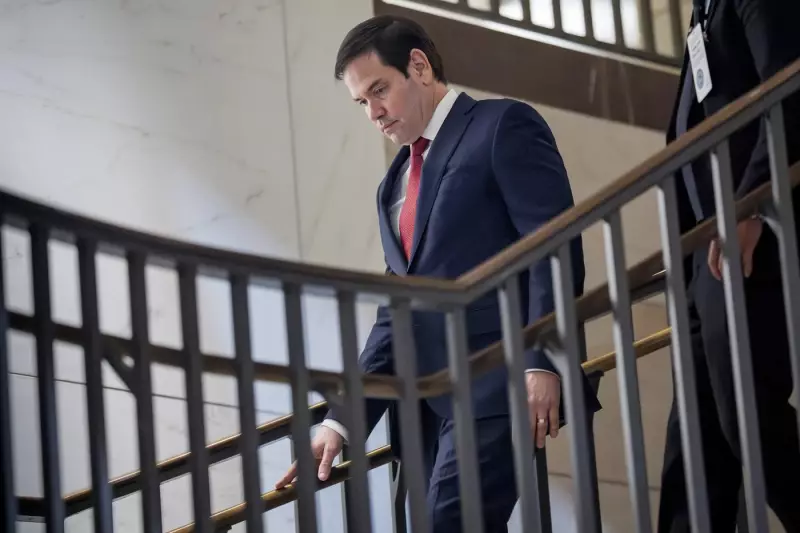
The comments come amid continued U.S. focus on Venezuela. Notably, U.S. Secretary of State Marco Rubio was at the Capitol on January 5, 2026, for high-level briefings, underscoring the ongoing priority of the issue for American policymakers. The former Canadian official's remarks draw a direct line from these U.S. actions to Canada's own policy decisions, implying a lack of sovereign judgment in Ottawa's foreign affairs department.

This alignment has been most visible in Canada's support for sanctions and its recognition of opposition figures as legitimate leaders, positions that closely mirror those taken by the previous Trump administration and maintained by subsequent U.S. governments. The envoy argues this tandem approach has failed to produce a democratic transition and has instead exacerbated humanitarian suffering.
Implications for Canada's Global Stance
This public criticism from an experienced diplomat raises important questions about Canada's reputation as an independent middle power. Traditionally, Canada has sought to carve out a distinct role in hemispheric affairs, often acting as a mediator or promoter of dialogue. The accusation of "parroting" challenges this self-image and suggests a shift towards a more ideologically driven and less pragmatic foreign policy.
The controversy also touches on a broader debate about how democracies should engage with other nations experiencing internal political crises. Should the focus be on isolation and pressure, or on fostering inclusive dialogue and addressing root economic causes? The former envoy's intervention firmly places him in the latter camp, while characterizing the current Canadian government's position as fundamentally flawed and derivative.
As of January 7, 2026, the Canadian government has not issued a formal public response to these specific allegations. The situation continues to develop, with Canada's policy towards Venezuela remaining a point of contention among foreign policy experts and within diplomatic circles.