

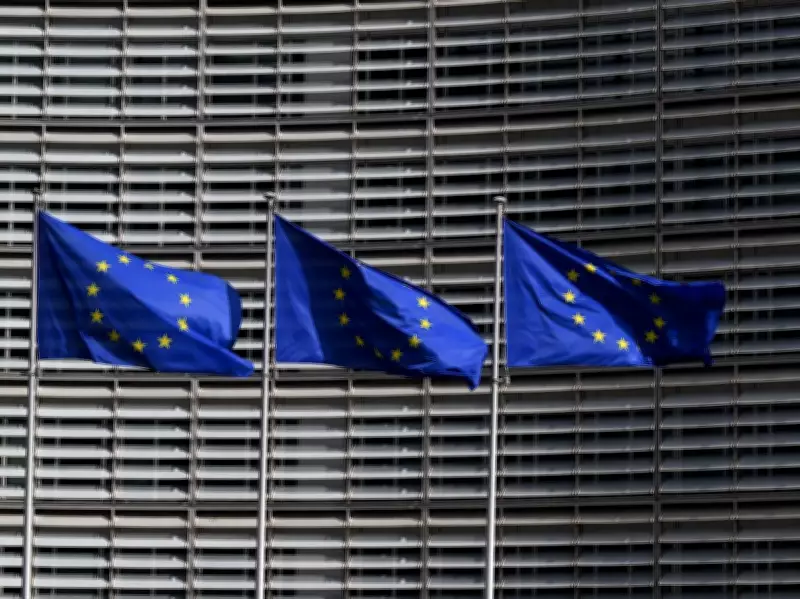
Geoff Russ: EU Membership Would Spell the End for Canada as We Know It
The Foreign Minister of France's deeply unpopular government has publicly floated the notion of Canadian membership in the European Union. While Prime Minister Mark Carney has cheerfully dismissed the idea for the time being, he has simultaneously declared his intention to pursue closer ties with Europe.
A Dangerous Path to Federation
Indeed, Canada should absolutely seek to deepen trade and cooperative relationships with the European continent. However, this can and should be accomplished without permanently submitting to the overarching EU project, which aims to gradually fuse its member states. This process seeks to transform the bloc from a mere trading alliance into a fully federated superstate, a move that would fundamentally alter Canada's independent governance.
The Superiority of Bilateral Relations
Prior to the reelection of U.S. President Donald Trump, Canada enjoyed a highly functional relationship with the United States. This included easy mutual commercial access, very loose mobility rules, and robust military and political partnerships. Crucially, none of this required Canada to formally submit to direct American governance, which is precisely what EU membership would entail. Regardless of the challenges posed by a Trump-led America, EU membership would also prevent Ottawa from negotiating its own comprehensive trade deal with the U.S. This would force Canada to rely entirely on the EU to broker any trade agreement with its southern neighbor or any other nation, surrendering a key pillar of its foreign policy autonomy.

Overlooking the EU's Governance Crisis
Proponents of European integration consistently overlook the severe governance problems plaguing the EU bloc. Canada is already struggling with its own regulatory quagmires, molasses-slow approval processes, procedural nightmares, and a government tendency to nickel-and-dime the private sector at every turn. Joining the EU would dramatically exacerbate these tendencies, akin to a person already laid low by the flu voluntarily giving themselves food poisoning.
The Stranglehold of Overregulation
For starters, the EU's overly stringent employment protections and rigid renewable-energy mandates actively hold back industrial innovation and economic development. In fact, this culture of overregulation is pulling the bloc apart at the seams. As recently as last June, nearly a dozen member states warned that Brussels was crippling the bloc's military readiness with excessive red tape. European defence ministers specifically pointed out that EU environmental, conservation, and procurement regulations, including ESG (Environmental, Social, and Governance) criteria, were severely hampering rearmament efforts.
The Myth of Agile Statecraft
Whoever sold the idea of the EU as a sleek, agile model of transnational statecraft was profoundly mistaken. Yet, this excessive economic interventionism isn't even the worst of the EU's mounting problems.
Immigration and the Collapse of Free Movement
Immigration and the free movement of people between EU countries has become the leading cause of social and political unrest on the continent. The ideal of Europe as an orderly, unified landmass that has moved beyond hard internal borders has been severely challenged. The bridge between the German city of Frankfurt and the Polish city of Słubice, once a powerful icon of European free movement and post-war reconciliation, now hosts reinstituted regular ID and passport checks. This is a direct response to rising pressure over migration, with Poland adopting an especially hawkish stance on the issue.
Germany stands as the primary hotbed for mass legal and illegal migration into Europe and has been forced to impose internal mobility controls in a desperate attempt to curb the influx, a move mirrored by Poland. One of the EU's most cherished principles—the free movement of people enabled by the borderless "Schengen" area, which includes non-EU states like Switzerland—has been significantly tightened. This retreat is a direct consequence of mass immigration pressures and a deeply fraught asylum system, revealing the bloc's internal fractures.






