

Canada Rejects Participation in Offensive Military Actions Against Iran
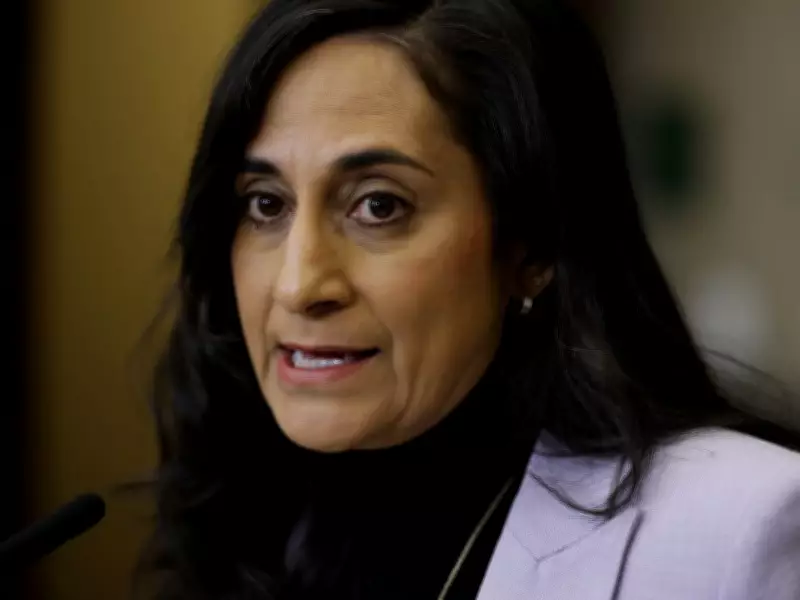
Foreign Minister Anita Anand has explicitly stated that Canada has no intention of joining offensive military operations against Iran, emphasizing the country's commitment to finding peaceful solutions and protecting civilian lives. In an interview with Bloomberg News, Anand clarified Canada's position amid growing international tensions.
No Prior Consultation on Offensive Operations
"Canada was not consulted prior to the offensive operation" against Iran, Anand revealed, adding that the country "has not participated in and has no intention of participating in" such military actions. This declaration comes as Canada maintains its cautious approach to the Iran conflict, balancing its NATO commitments with its diplomatic priorities.
Focus on De-escalation and Civilian Protection
Anand stressed that Canada's primary objectives are de-escalation and civilian protection. "Canada's priority is to find a path toward de-escalation and to protect civilian lives," she told reporters during discussions in Ankara. While Prime Minister Mark Carney has urged restraint, he has not completely ruled out involvement to defend allied nations if necessary.

Strait of Hormuz Security Considerations
Responding to U.S. President Donald Trump's call for NATO assistance in securing the Strait of Hormuz, Anand noted that the waterway falls outside NATO's traditional geographic scope. However, she did not dismiss the possibility of Canada contributing to efforts aimed at ensuring freedom of navigation through the strategic channel.
"There should be no weaponization of international shipping lanes, period — and that includes the Strait of Hormuz," Anand asserted. "Our current conversation with Gulf countries rests on how we can continue to support them, especially in the face of indiscriminate attacks."
Limited Naval Capacity and Diplomatic Engagement
Should allies agree on a coordinated response to secure the Strait of Hormuz, Canada's participation would likely be constrained by its current naval capabilities. Anand acknowledged that while no formal NATO assistance request has been made regarding the strait, discussions continue among international partners.
The foreign minister confirmed ongoing diplomatic conversations, with a G7 foreign ministers meeting scheduled for the following week. Although she hasn't spoken directly with U.S. Secretary of State Marco Rubio since the conflict began, engagement with other allies remains active.
Global Energy Market Disruption
The Strait of Hormuz has been effectively closed since joint U.S.-Israel attacks on Iran began over two weeks ago, disrupting approximately one-fifth of global oil shipments. Insurance rates for vessels attempting to navigate the waterway have soared following attacks on commercial shipping.
President Trump's criticism of allies who have declined to support U.S. efforts in the region has added to diplomatic tensions. In social media posts, Trump declared that the United States doesn't require assistance from NATO, Japan, Australia, or South Korea, though he had previously requested allied support for securing the vital shipping lane.
NATO's Defensive Role Emphasized
Anand reinforced that NATO's work remains focused on defensive measures and deterrence. "Those are the principles that we will be seeking to uphold in taking all decisions together with our NATO allies," she stated, referencing upcoming alliance meetings where these matters will be further discussed.
As a founding NATO member, Canada continues to navigate complex international dynamics while maintaining its commitment to diplomatic solutions and regional stability in the Middle East.






