

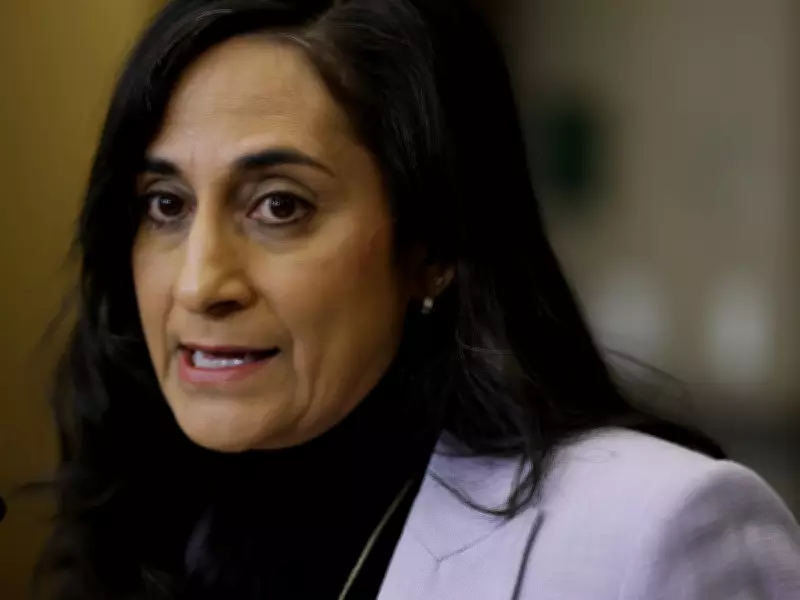
Jesse Kline Challenges Anita Anand's Assertions of Canadian Global Leadership
Foreign Affairs Minister Anita Anand delivered a bold proclamation at the Chatham House Global Trade Conference in London last week, declaring that "This is Canada's moment to lead." However, this statement has prompted critical examination from commentators who question the actual substance behind such claims of international influence and leadership.
The Marketing of Canadian Foreign Policy
Anand's speech was officially presented as a platform to "underscore Canada's trade diversification efforts to strengthen economic security and resilience." Yet according to analysis, the address more closely resembled a promotional campaign for Prime Minister Mark Carney's earlier speech at the World Economic Forum in Davos this past January.
"Everywhere I go as foreign minister — every country, every room, every foreign minister I speak with — the conversation begins with Prime Minister Carney's speech at Davos," Anand claimed during her London appearance. She further noted that some international observers have begun referring to these principles as the "Carney doctrine," which she described as being rooted in "principled pragmatism."

From Academic Terminology to Tangible Results
Even Anand acknowledged that such elevated terminology might not resonate with ordinary Canadians. "These are not the terms that Canadians regularly speak in when they meet for coffee at Tim Hortons," she conceded during her remarks.
In an effort to make foreign policy more accessible, Anand proceeded to enumerate what she characterized as the Carney government's achievements in trade, economics, and international affairs. However, critics argue that while the Liberal government excels at promoting their ambitious ideas and celebrating perceived successes prematurely, their track record on delivering concrete, measurable outcomes remains less impressive.
Examining the Trade Agreement Claims
One of Anand's specific assertions warrants particular scrutiny: "Canada has signed more than 12 trade agreements across four continents in the past six months." This statement initially appears remarkable, but a closer examination reveals important qualifications.
According to analysis, it is misleading to suggest Canada has established a substantial new free trade bloc when many of these agreements are actually memorandums of understanding — essentially preliminary agreements to negotiate formal agreements at some future date.
Among the nations and blocs Anand listed were Indonesia, India, the Philippines, along with the ASEAN and Mercosur trading groups. The only comprehensive free trade agreement among these that is actually set to take effect is the Canada-Indonesia Comprehensive Economic Partnership Agreement, scheduled for implementation later this year.
The Reality Behind Negotiation Announcements
Prime Minister Carney's recent diplomatic visit to India resulted primarily in a commitment to reach a trade agreement by year's end. Similarly, during his Asian engagements, Carney and Filipino President Bongbong Marcos announced their "intent to imminently launch negotiations on a new free trade agreement." A comparable arrangement to negotiate at a later date was established with the United Arab Emirates last November.
Negotiations with Mercosur and ASEAN nations are not new developments — they were initiated in 2018 and 2021 respectively. While Carney has expressed hope of accelerating these processes, until formal agreements are signed and implemented, they cannot legitimately be counted as completed trade agreements.
Expert Caution Regarding Implementation
Former foreign affairs minister Stéphane Dion recently expressed concern to journalist John Ivison about the potential for these agreements to remain theoretical rather than practical. Dion warned that the "danger" of these agreements "staying on paper" — meaning failing to translate into meaningful economic relationships — is "very high."
This critique highlights the fundamental question raised by Anand's declaration of Canadian leadership: while the rhetoric of global influence is compelling, the tangible evidence of other nations following Canada's lead remains uncertain and requires ongoing verification through concrete diplomatic and economic achievements.






