

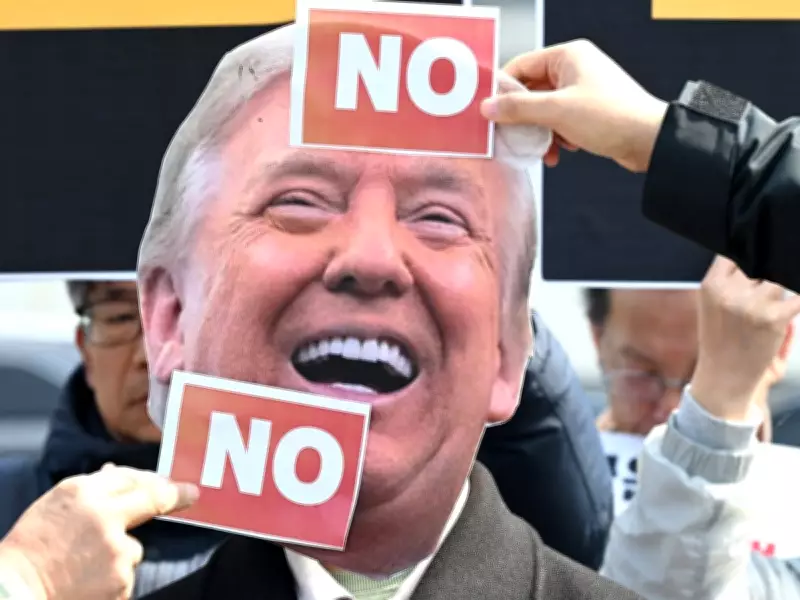
US Allies Express Reluctance to Join Trump's Strait of Hormuz Naval Mission
Key American allies across Europe and Asia have shown significant hesitation in responding to President Donald Trump's demands for assistance in reopening the vital Strait of Hormuz, expressing deep concerns about being drawn into the escalating war with Iran. The strategic waterway, which handles approximately one-fifth of the world's oil shipments, has been effectively closed since US and Israeli military actions against Iran began, creating a global energy crisis that has sent prices soaring and threatened economic stability worldwide.
European Union Adopts Cautious Stance
In Brussels, European Union foreign ministers emphasized their desire to avoid further escalation of the conflict, carefully considering even the possibility of redirecting an existing Red Sea naval mission to the critical passage. Spanish Foreign Minister Jose Manuel Albares articulated the prevailing European position, stating, "We must not do anything that adds even more tension or escalation. What we need is for the bombings and the missile launches against all countries in the Middle East to stop, and for us to return to the negotiating table."
The responses from European officials came as a direct rebuttal to Trump's Sunday insistence that his NATO and Asian allies must help restore oil and gas shipments through the blocked strait. Luxembourg's Foreign Minister Xavier Bettel delivered particularly blunt criticism, declaring, "Blackmail is not what I wish for," while questioning the appropriateness of NATO involvement in the situation.

NATO's Role Questioned by European Leaders
German Foreign Minister Johann Wadephul clarified that NATO had not made any decisions regarding the Strait of Hormuz and should not be held responsible for the passage. Bettel further emphasized that NATO exists to respond when member states are directly attacked, not to fulfill all defensive or military requests. "I want to remind that none of us has been directly attacked," Bettel stated. "There are no grounds for now to invoke Article 5," he added, referencing the alliance's collective defense clause.
Trump had directly challenged his NATO allies in an interview with the Financial Times, warning that the military alliance would face a "very bad future" if members refused to assist the United States in Iran. However, European officials offered only tepid responses to these renewed attacks on the transatlantic organization.
Asian Allies Show Similar Reluctance
Beyond Europe, key Asian allies demonstrated equal hesitation. Japanese officials confirmed they had no plans to dispatch ships to escort stalled tankers through the troubled waters. The United Kingdom similarly declined to commit to a full naval mission, with UK Work and Pensions Secretary Pat McFadden speaking for the government and noting, "Of course, everyone is concerned about the situation in the Straits of Hormuz and the wider effect of this war on energy prices. But it's also important to remember that we have not sought to be a protagonist in this war."
Global Energy Crisis Intensifies
The blockade of the Strait of Hormuz has created severe global repercussions, with energy prices skyrocketing and governments worldwide worrying about inflation, economic slowdowns, and potential food supply disruptions. The strategic passage serves as a critical artery for global energy markets, and its closure has upended international trade patterns while prompting Tehran to launch missiles and drones across the region in response to US operations.
Despite the economic pressures, officials remained cautious about supporting Trump's military initiatives, recognizing the complex geopolitical risks involved. Some European leaders indicated willingness to at least consider proposals if presented with concrete plans. Lithuanian Foreign Minister Kestutis Budrys told Bloomberg TV in Brussels, "We have to look into it and consider it. I would look for the in-depth debate within NATO."

The widespread reluctance among US allies highlights growing international apprehension about the expanding conflict in Iran and its potential to draw additional nations into direct military engagement. As the situation continues to evolve, diplomatic efforts appear focused on de-escalation rather than military reinforcement, despite Trump's persistent calls for allied support in reopening the vital energy corridor.





