

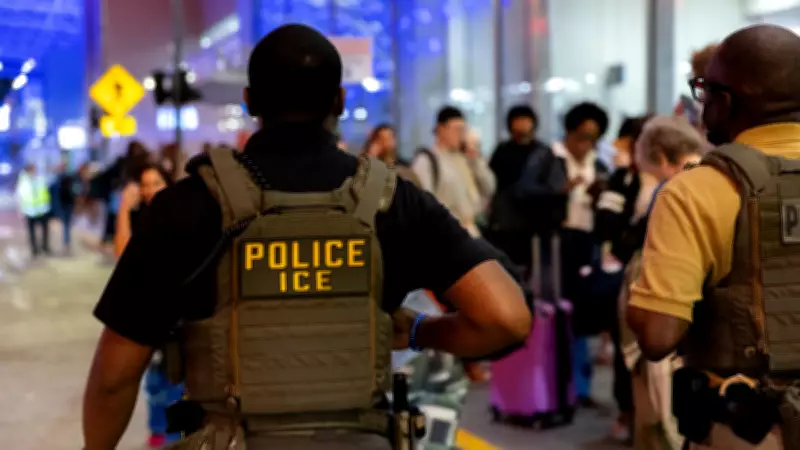
TSA Union Blasts Trump's ICE Deployment as Ineffective and Risky
The union representing Transportation Security Administration officers has a clear message for President Donald Trump regarding his plan to deploy Immigration and Customs Enforcement agents to airports: it's a misguided move that fails to address the core issues caused by the partial government shutdown. On Monday morning, the president announced that ICE officers would be sent to several airports to supposedly ease the long security lines that have emerged. However, union representatives argue this strategy is not only unhelpful but could actually compromise safety.
Union Leaders Express Frustration and Concerns
Joe Shuker, a regional vice president for the American Federation of Government Employees, which represents TSA officers, voiced strong opposition. "Our guys are going to be pissed," Shuker told HuffPost, after learning about ICE officers arriving at Philadelphia International Airport, one of 14 targeted locations. He emphasized that ICE agents lack the specialized training required for TSA duties, such as identifying airport-specific threats like homemade bombs in luggage or counterfeit passports. "There's no way it helps," he stated bluntly about their new assignment.
Tom Homan, Trump's border czar, explained on CNN's "State of the Union" that the administration would deploy officers to major airports with the worst wait times, though they wouldn't handle baggage screening. Homan suggested ICE officers could manage exits to free up TSA personnel, but Shuker countered that many airports don't even have TSA-manned exits, and when they do, it's a low-stress role that allows agents to sit. He also raised alarms about the potential spectacle of ICE presence, which might attract media attention and heighten fears among immigrant workers, possibly leading to more sick callouts. "Our guys don't need more distractions," he added.

Shutdown Impacts and Safety Risks Escalate
The partial government shutdown, which began on February 14, has left much of the Department of Homeland Security, including TSA, unfunded. As a result, TSA officers have gone weeks without pay, with their next paycheck set to be missed this Friday. This financial strain has led to an unusual number of sick callouts, causing brutally long security lines at several large airports. Hundreds of officers have resigned, and many are considering other jobs to avoid future shutdowns. "At some point, everybody is just going to run out of money," one agent lamented.
Everett Kelley, AFGE's president, issued a statement condemning the ICE deployment. "Putting untrained personnel at security checkpoints does not fill a gap. It creates one," he said. "Our members at TSA have been showing up every day, without a paycheck, because they believe in the mission of keeping the flying public safe. They deserve to be paid, not replaced by untrained, armed agents who have shown how dangerous they can be."
Political Stalemate and Proposed Solutions
Democrats have insisted that any funding deal include accountability measures for ICE, such as removing officers' masks and strengthening use-of-force standards. Trump has resisted compromise, reportedly rejecting a GOP-backed proposal to fund all of DHS except ICE, which could have paid TSA officers and normalized security lines while delaying ICE issues. Sending ICE officers to airports does nothing to expedite a deal, and if their presence accidentally shortens lines, it might only prolong the congressional stalemate.
Shuker argued that the only real solution is for Trump to sign a deal funding TSA paychecks. "The president is sending in ICE and paying them to do our officers' jobs – paying them more than us, actually," he said. "If they paid TSA, they wouldn't need ICE to assist. There wouldn't be lines. There wouldn't be callouts." This highlights the ongoing tension between political maneuvering and practical security needs during the shutdown.






