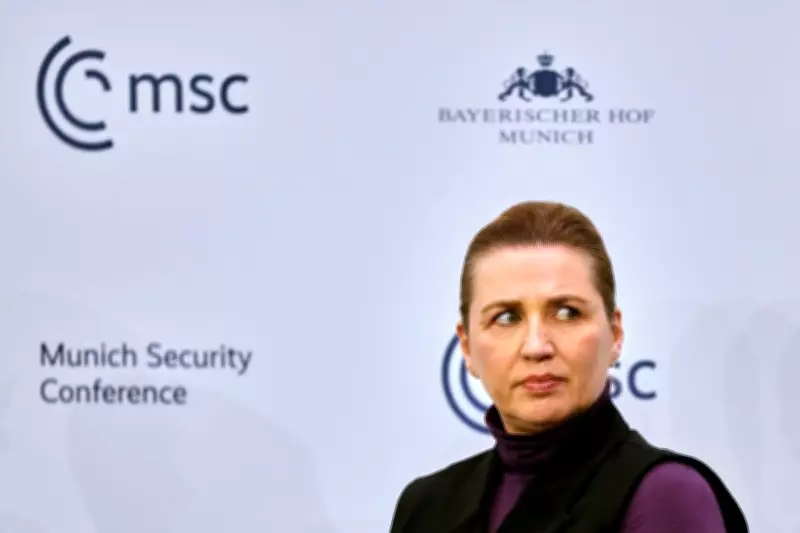
Danish Prime Minister Mette Frederiksen has publicly confirmed that former United States President Donald Trump's aspiration to acquire Greenland continues to be a topic of interest. This revelation came during a panel discussion at the Munich Security Conference held in Munich, Germany, on Saturday, February 14, 2026.
Geopolitical Implications of Trump's Greenland Desire
The notion of the United States purchasing Greenland, a vast autonomous territory within the Kingdom of Denmark, first emerged during Trump's presidency and has since lingered as a point of diplomatic curiosity. Prime Minister Frederiksen's comments underscore the persistent nature of this ambition, suggesting it remains a live issue in international relations. The strategic location of Greenland in the Arctic region, rich in natural resources and geopolitical significance, makes it a focal point for global powers.
Historical Context and Modern Relevance
Historically, the United States has shown interest in Greenland, notably with the 1946 offer to buy it from Denmark for $100 million in gold. Trump's revived interest aligns with contemporary concerns over Arctic sovereignty, climate change impacts, and resource exploitation. Frederiksen's acknowledgment at a high-profile security forum indicates that this topic is not merely speculative but part of ongoing dialogues among world leaders.

Frederiksen emphasized the importance of maintaining strong bilateral relations between Denmark and the United States, while also respecting Greenland's self-governance and the wishes of its population. The Danish government has consistently rejected the idea of selling Greenland, citing its integral role in the Danish realm and the autonomy granted to Greenlanders.
Reactions and Future Prospects
The persistence of Trump's desire raises questions about future U.S. foreign policy directions, especially if he were to return to office. Experts note that such ambitions could influence Arctic policy, affecting environmental regulations and international cooperation in the region. The discussion at the Munich Security Conference highlights how personal political agendas can shape global geopolitical landscapes.
In summary, Prime Minister Mette Frederiksen's remarks confirm that Donald Trump's interest in acquiring Greenland remains a tangible element of international discourse. This situation reflects broader themes of sovereignty, resource competition, and diplomatic relations in an increasingly contested Arctic. As climate change opens new opportunities and challenges in the North, the fate of Greenland will likely continue to be a subject of intense scrutiny and debate among nations.