Trump's Golden Oval Office: A Symbol of Power and Status Signaling
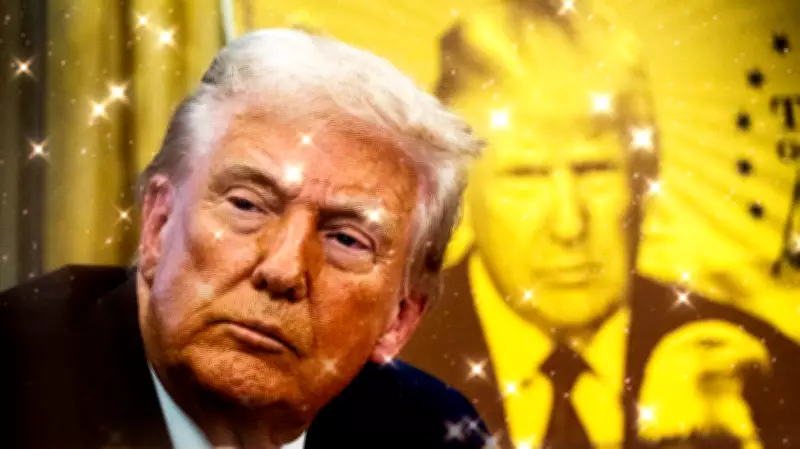
President Donald Trump's lavish gilding of the Oval Office has sparked global attention, transforming the space into a spectacle of gold-framed pictures, emblems, curtains, coasters, vases, and trophies. Beyond this, renderings indicate the White House ballroom is also set to be drenched in gold under Trump's orders, amplifying the opulent theme.
A Decades-Long Fascination with Gold
Manahil Riaz, a psychotherapist and owner of Riaz Counseling in Houston, notes that Trump's fascination with gold spans decades, predating his presidency. This is evident in landmarks like the gold signage at Trump Tower and the gold-bedecked living room in a family photo featuring Trump, his wife Melania, and son Barron on a fake lion. "It's become a part of his visual signature," Riaz said.
While personal color preferences are common, therapists and color theory experts suggest Trump's penchant for gold carries deep symbolic meaning. In color psychology, gold is associated with success, achievement, and status. Riaz explains, "Gold is linked to achievement, authority, and status, or someone emphasizing success and recognition. It serves as a visual shorthand for these qualities, reflecting what Trump wants to be associated with."

Historical and Cultural Significance of Gold
Historically, gold has held sacred and powerful connotations. In Ancient Egypt, it was tied to gods and the afterlife, with pharaohs buried in gold to symbolize eternal life and sacred authority. In cultures like the Middle East, gold is gifted during major milestones as a token of prosperity and generational wealth. Denise Dudley, a clinical psychologist and behavioral expert, adds, "Globally, we associate gold with success or victory, akin to an Olympic gold medal."
Riaz points out that items need not be made of real gold to convey these values; the color itself suffices, whether in curtains or decor. "I think it's a design choice representing him pounding his chest to show control and power, aiming to instill fear and attract seekers of advice and protection," Riaz said.
Creating Disparity and Signaling Status
Experts argue that Trump's gold decor reflects a deliberate disparity. Dudley states, "Someone showcasing all this gold likely aims to create a divide between the haves and have-nots." She contrasts this with average individuals who might avoid gold decor to not appear superior. "Trump wants us to notice he's one of the haves, happy to highlight differences," Dudley explained, referencing gold sinks at Mar-a-Lago as further evidence.
This behavior ties into psychological concepts like "identity signaling" and "status signaling." Dudley describes identity signaling as using visual cues, such as home decor, to express self-perception. "Trump's gold lettering and decor everywhere show off his personal brand narrative of success, authority, dominance, and winning," she said. Status signaling, similar but broader, involves projecting identity to the world, historically done with materials like gold and marble, as seen in Versailles under Louis XIV.
Contrast with Past Presidents and Governance Concerns
Past presidents have personalized the Oval Office to reflect their styles, such as Barack Obama's cream rug with leader quotes or Joe Biden's portrait of Benjamin Franklin and civil rights busts. However, Trump's gold-drenched approach stands out. Dudley remarks, "It speaks to his over-the-top personality and belief in being above the law, needing to visually display power." She adds that as a showman, Trump might escalate the gold theme further.
Riaz criticizes the focus on redecorating amid pressing issues. "How is this relevant to America's challenges? It suggests he may not empathize with scarcity or lack of power," Riaz said. She emphasizes that a president's attention should reflect relatability, not unrelatable grandeur. "The priority should be solving problems and improving conditions, not emphasizing visual grandeur or personal style. Stop redecorating and focus on the actual job," Riaz concluded.
In summary, Trump's golden Oval Office serves as a potent symbol of power and status, rooted in psychological and historical contexts, while raising questions about governance priorities.