Iran's Nuclear Chief: Uranium Enrichment Rights 'Necessary' for U.S. Talks
The head of Iran's nuclear agency has declared that the nation's right to enrich uranium is a fundamental prerequisite for any negotiations with the United States. This statement comes at a time of escalating tensions in the Middle East, underscoring the critical role of nuclear capabilities in diplomatic discussions.
A Firm Stance on Nuclear Sovereignty
In a recent announcement, the Iranian nuclear chief emphasized that maintaining the ability to enrich uranium is not merely a bargaining chip but a necessary condition for engaging in talks with U.S. officials. This position highlights Iran's commitment to preserving its nuclear sovereignty while navigating complex international relations.
The assertion reflects ongoing debates over Iran's nuclear program, which has been a focal point of global security concerns for years. By framing enrichment rights as essential, Iran signals its unwillingness to compromise on what it views as a sovereign right under international agreements.

Context of Regional Tensions
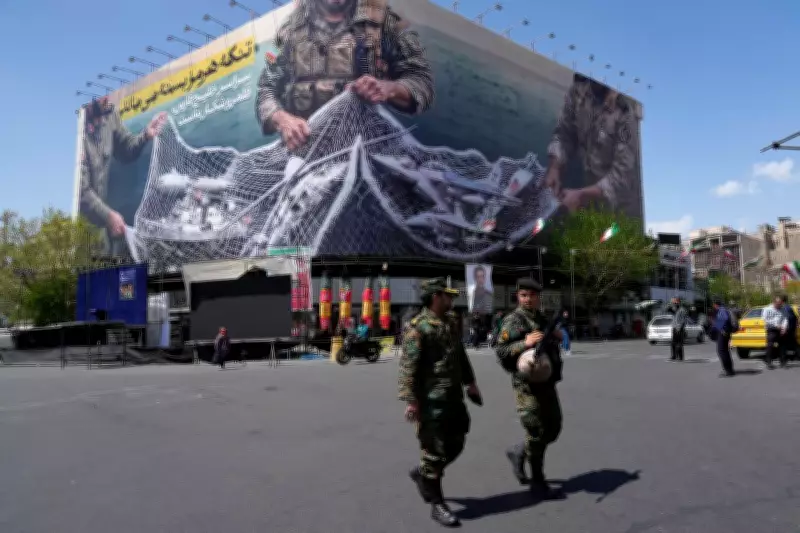
This development occurs against a backdrop of heightened regional instability, with recent events in Tehran illustrating the volatile atmosphere. For instance, anti-U.S. sentiments have been visibly displayed in public spaces, such as billboards depicting American aircraft being ensnared by Iranian forces, accompanied by messages asserting control over strategic waterways like the Strait of Hormuz.
Such imagery and rhetoric underscore the deep-seated animosities and geopolitical rivalries that complicate diplomatic efforts. The nuclear chief's remarks can be seen as part of a broader strategy to assert Iran's strength and independence in the face of external pressures.
Implications for U.S.-Iran Relations
The insistence on uranium enrichment rights as a non-negotiable element could pose significant challenges for future U.S.-Iran talks. It raises questions about the feasibility of reaching a mutually acceptable agreement, given the historical disputes over Iran's nuclear activities.
Experts suggest that this stance may be aimed at strengthening Iran's bargaining position, ensuring that any dialogue addresses core issues of national security and technological advancement. However, it also risks stalling progress if the U.S. views enrichment as a red line in non-proliferation efforts.
As both nations navigate these delicate discussions, the international community watches closely, aware that the outcome could have far-reaching consequences for regional stability and global nuclear diplomacy. The path forward remains uncertain, with the nuclear chief's words setting a firm tone for the negotiations ahead.