Trump's Golden Oval Office: Experts Decode the Psychology Behind the Gilded Decor
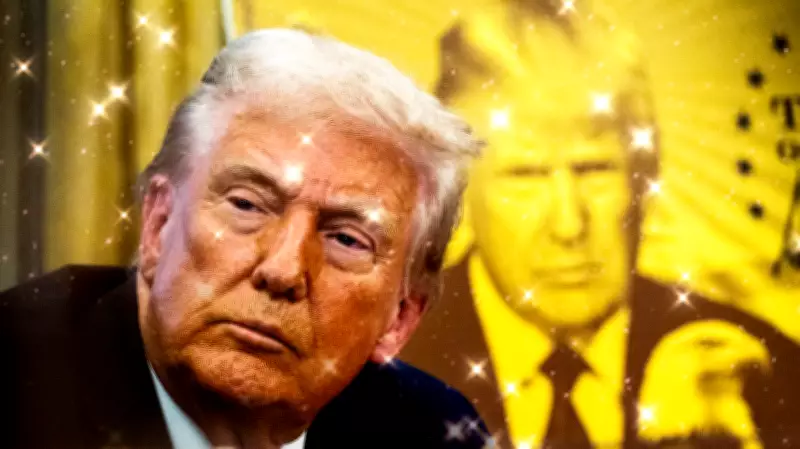
President Donald Trump's transformation of the Oval Office into a gilded space has captured global attention, with gold-framed pictures, gold emblems, gold curtains, coasters, vases, and trophies now dominating the room. Beyond the Oval Office, renderings suggest the Trump-ordered White House ballroom will also be drenched in gold, continuing this distinctive aesthetic theme that has become a visual signature of his presidency.
A Decades-Long Fascination with Gold
"Trump's fascination for the color gold is documented for decades. Long before he became the president," said Manahil Riaz, a psychotherapist in Houston and owner of Riaz Counseling. This enduring preference is evident through the gold signage at Trump Tower and the gold-bedecked living room in a now-famous family picture featuring Trump, his wife Melania, and son Barron riding a fake lion.
"It's become a part of his visual signature," Riaz emphasized, noting that while there's nothing inherently wrong with preferring a particular color for personal decor, therapists and color theory experts suggest the president's penchant for gold carries significant symbolic weight.

The Psychology of Gold: Success, Achievement, and Status
"In color psychology, gold is associated with achievement, authority and status, or someone who places a strong emphasis on success and recognition," Riaz explained. "Gold just becomes a visual shorthand for those qualities. So, this is what [Trump] wants to be associated with — achievement, authority and status."
This association has deep historical roots. According to Riaz, Ancient Egyptians linked gold to gods and the afterlife, with pharaohs buried with gold objects symbolizing eternal life and sacred authority. In Middle Eastern cultures, gold is traditionally gifted during major life milestones as a symbol of prosperity and generational wealth.
"All over the world, when we see gold, we associate it with success or victory," added Denise Dudley, a clinical psychologist and behavioral expert. "Like the Olympic gold medal."
Riaz noted that items don't actually need to be made of gold to represent these values — the color itself serves as the symbol, whether manifested in gold-colored curtains or genuine gold necklaces.
Creating Disparity and Signaling Status
"I think it's a design choice that's kind of representing him pounding his chest to show people that he's in control and power, and people should be afraid of him and should come to him for advice and protection," Riaz said. Gold decor reflects a deliberate disparity, and experts suggest Trump likely wants this effect.
"Somebody who's showing off all this gold is probably trying to create a disparity between the haves and the have-nots," Dudley observed. She contrasted this with average people who might avoid gold decor precisely because they don't want to appear "above" or "better than" others.
"I would never want anyone to feel inadequate or to feel like I was showing off ... but that's the opposite. Trump wants us to notice that he's one of the haves, and he's happy if he can point out the difference between he as a have and everybody else," Dudley explained.
Trump wants observers to look at the gold decor within the Oval Office or the gold sinks at Mar-a-Lago and understand he is a "powerful guy" with "a lot of gold around," Dudley said. "And I think part of it, too, is that he likes to create that disparity between 'I have this, and you don't have it.'"
Identity Signaling and Personal Brand Narrative
According to Dudley, Trump's extensive use of gold represents "identity signaling," where people use visual cues — including home decor and personal style — to demonstrate how they perceive themselves.
"He's got gold lettering and gold decor everywhere, and he paints everything gold, and it's all gold, gold, gold," Dudley noted. "And I believe that Trump is showing off his personal brand narrative ... of success and authority and dominance and winning over everybody else."

"Similarly, there's another thing in psychology called 'status signaling.' It's almost the same, but in this case, it's not so much me telling you who I am about myself by what I'm wearing or how I decorated my house, but it's me signaling who I am to the world," Dudley explained.
Historically, people have used "fancy" materials like gold and marble to signal their status. "That's why Versailles looks like Versailles. It was Louis the 14th who was signaling that 'I am the Sun King, I'm the most powerful man in the world,'" Dudley said.
Contrast with Previous Presidential Styles
While past presidents have decorated the Oval Office to reflect their tastes and leadership styles, Trump's gold-drenched approach represents a distinct departure. President Barack Obama installed a cream rug with quotes from past leaders on the border, while President Joe Biden hung a portrait of Benjamin Franklin and displayed busts of notable civil rights leaders.
"It's probably speaking back to his over-the-top personality and his belief that he is above the law, can do anything he wants and needs to sort of show his power as visually as possible," Dudley said of Trump's golden decor.
"If nothing else, Trump is a showman," Dudley continued. "And so I think some of this gold thing could be that, too ... it's like, 'You guys are saying I use too much gold? Wait 'til you see what I do next.'"
Questioning Priorities During a Presidency
Riaz expressed concern about the timing and focus of such extensive redecorating projects. "How is that relevant to what's happening in America? Which just makes me think I don't think he knows. I don't think he can empathize, I don't think he understands what it's like to be in scarcity and to not have power and control," Riaz said.
"And ... what he decides to put his attention to is a reflection of who he is, which is unrelatable," Riaz added, suggesting the president's focus should be elsewhere.
"I think, at the end of the day, the focus shouldn't be on decor at the office or the aesthetics of gold when it comes to Trump," Riaz emphasized. "What really matters is governing and addressing the serious real-world issues that people are facing."
The president has a responsibility to look beyond appearances and instead focus on people's well-being, economic stability, and how his actions impact the country and the world, Riaz continued.
"The priority should always be solving problems, improving conditions for citizens and not emphasizing visual grandeur or personal style," Riaz concluded. "So, in conclusion, stop redecorating the office and focus on your actual job."