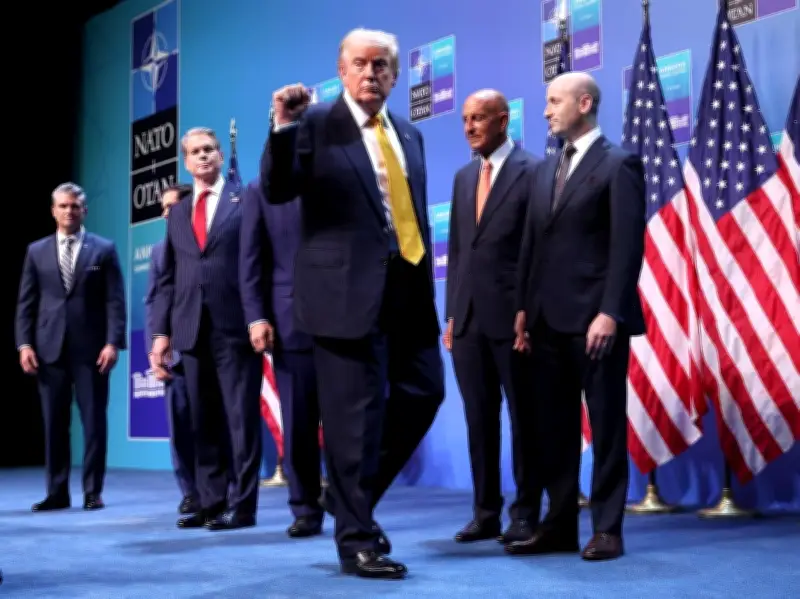
U.S. President Donald Trump achieved a major victory at the 2026 NATO summit in Ankara, Turkey, pushing allies to commit to significant defence spending increases, yet his public remarks remained critical of several member nations. The summit communique highlighted a collective $139 billion rise in defence spending by European countries and Canada in 2025, marking a long-sought shift in burden-sharing.
Trump's Mixed Messages at the Summit
Trump, who has consistently called for NATO members to spend more on their own defence, took aim at Spain during a press conference on Wednesday, July 8, 2026. He described Spain as "a terrible partner in NATO" that "doesn't participate" and "doesn't pay," going so far as to suggest cutting off all trade with the country until improvements are made. This criticism came despite the overall progress on spending.
Earlier in the day, Trump expressed dissatisfaction with NATO over issues unrelated to defence budgets, including the alliance's stance on Greenland and its reluctance to support U.S. actions against Iran. He singled out France, Italy, and Spain for not backing his campaign against Iran, calling Iran the "No. 1 state sponsor of terror."

Historic Spending Increase Achieved
The summit marked a turning point for NATO's long-standing debate over defence financing. Prime Minister Mark Carney of Canada told reporters, "It's not just that he's winning the argument — he's won the argument. Countries realize they need to take more responsibility. They see the direct threats." Carney highlighted the opening of the Arctic and an increasingly aggressive Russia as key drivers, stating, "Arctic security is not a flank, it's a front."
Trump's push for higher spending is not new. U.S. presidents from Dwight Eisenhower to Barack Obama have urged NATO allies to contribute more, with John F. Kennedy in 1963 noting that the U.S. "cannot continue to pay for the military protection of Europe while the NATO states are not paying their fair share." At the 2008 Bucharest summit, George W. Bush encouraged "European partners to increase their defence investments," and Obama in 2016 told Canada that "NATO needs more Canada." None succeeded as Trump has now done.
Canada's New Defence Commitments
During the summit, Carney announced an $800 million pledge for a new missile system for Canada's fighter jet fleet, following the selection of a German-Norwegian bid to build a new submarine fleet. These moves align with NATO's goal of increasing defence spending to 5% of GDP, a target nearly every member has now committed to.
Trump's Mood Remains Dark
Despite the breakthrough, Trump's mood appeared unchanged. While Carney described the president as being in "good spirits," Trump's public comments suggested otherwise. However, by the end of the meeting, Trump struck a conciliatory tone, saying the room was "filled with love" and describing other leaders as "smart people and good partners." The irony was clear: Trump won the argument on defence spending but seemed reluctant to celebrate the victory.