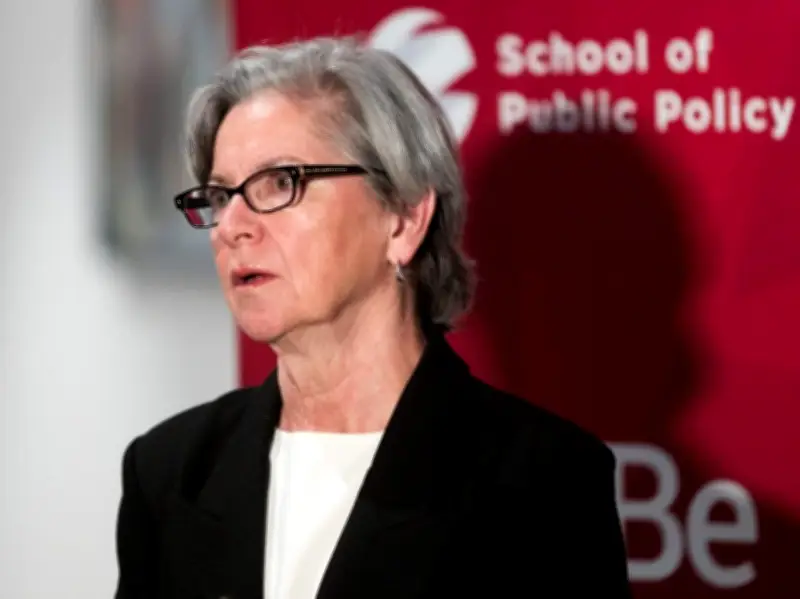
Former Liberal MP Martha Hall Findlay, now director of the University of Calgary's School of Public Policy, has reversed her long-standing support for a massive carbon capture project in Alberta's oil sands, calling it a looming $20-billion boondoggle that will burden taxpayers and fail to meaningfully reduce global emissions.
Findlay's About-Face on CCUS
In a May 1 column in The Globe and Mail, Findlay — who was an original architect and leading proponent of carbon capture, utilization and storage (CCUS) as chief sustainability and climate officer at Suncor Energy — said the proposed Pathways project would require federal and Alberta taxpayers, along with Canada's five major oil companies, to pay billions of dollars that “will not generate revenue, only significant costs.” She estimated the project would achieve less than a 0.02% reduction in global industrial greenhouse gas emissions.
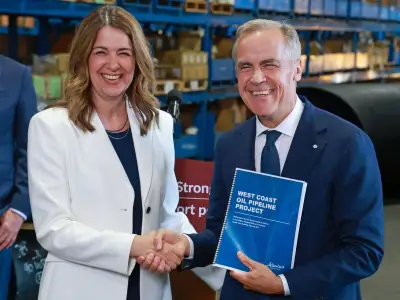
The project is tied to the proposed Alberta-to-B.C. pipeline, which Prime Minister Mark Carney's government insists must be accompanied by the construction and financing of the world's largest CCUS project. The pipeline alone could cost up to $40 billion, with 90% financed by federal and Alberta taxpayers. The CCUS component would be 75% publicly funded.

Efficiency and Cost Concerns
A report by Kenneth Greene of the Fraser Institute this week outlined several reasons CCUS is a bad idea. The technology is inefficient when used to store emissions, seldom hitting promised reduction targets and historically subject to significant cost overruns. CCUS is mainly used to increase oil and natural gas recovery, thus increasing emissions rather than lowering them.
The project requires building more than 650 km of new pipeline and storage infrastructure as large as or larger than the infrastructure required for oil and gas production itself. Emissions from 20 facilities in northern Alberta would be transported to a permanent storage hub up to 2,000 metres underground near Cold Lake, Alta. This will account for only a fraction of emissions produced by the oil sands and will inevitably face regulatory and legal challenges, along with political protests about safety concerns.
Broader Context: Canada's Emissions and Energy Policy
Canada produces just 1.6% of global emissions, and the parliamentary budget office has said that even eliminating all of Canada's emissions tomorrow would have no material effect on climate change. Findlay argued that the CCUS project is another federal fiscal disaster, similar to former Prime Minister Justin Trudeau's failed $200-billion-plus climate strategy, which Carney scrapped after admitting it would fail to meet emission reduction targets.
In a rapidly changing world where energy security is crucial to maintaining national sovereignty and prosperity, critics say Canada should stop imposing ruinously expensive restrictions on oil and gas production that major economic competitors, including the U.S., do not apply to themselves. Instead, they advocate selling Canada's vast natural gas resources globally to replace coal-fired electricity, which would be the single most effective way to lower global emissions.