Trump to Deliver Prime-Time Address on Iran War Amid Plummeting Approval Ratings
The White House has provided no specific details regarding the content of the address, but it follows closely on the heels of Trump's assertion that Iran had requested a pause in hostilities. This claim was made even as the president outlined conditions that highlight the ongoing uncertainty surrounding the war's future direction.
Political Pressure Mounts as Public Support Wanes
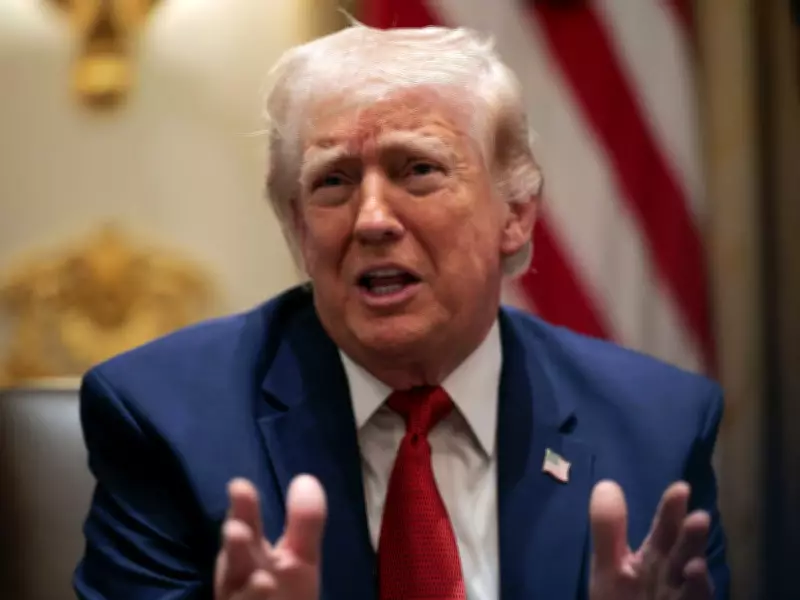
President Donald Trump is scheduled to address the nation on the Iran war this Wednesday evening. This marks his first prime-time speech since the commencement of the conflict, arriving at a time when his approval ratings are in sharp decline and rising economic anxieties are intensifying political pressures domestically.
Trump is set to speak at 9:00 PM Eastern Time, which translates to 0100 GMT on Thursday. This timing comes more than a month after the United States and Israel initiated their assault on Iran. The delay is notable, as presidents typically deliver addresses at the very beginning of major conflicts, making this a departure from standard protocol.

The president's remarks are occurring during a particularly precarious political moment. Recent polling data indicates that Trump's approval rating has slipped below 40 percent, with disapproval climbing above the mid-50s. This shift reflects growing voter dissatisfaction with both the war itself and its economic repercussions.
Economic Fallout and Public Opinion
Support for the Iran campaign is significantly underwater, with majorities of the public opposing the offensive. Independent voters, in particular, have turned sharply against it. The economic situation has further compounded these political challenges.
Gasoline prices have surged above $4 per gallon, equivalent to over $1 per liter, reaching levels not seen in years. Concurrently, consumer confidence has weakened, further eroding Trump's already fragile standing on economic issues.
In recent days, Trump's messaging has oscillated between escalation and withdrawal. He has suggested the war could conclude within "two or three weeks," insisting that the United States has largely achieved its objectives. However, he has also threatened expanded strikes on Iran's energy infrastructure and floated the possibility of ground operations. Administration aides privately acknowledge uncertainty regarding the long-term strategy.
International Reactions and Market Responses
Trump has also unsettled international allies by stating he is "beyond reconsideration" on U.S. membership in NATO. This declaration came after European countries declined to support the Iran campaign, risking a widening transatlantic rift during a critical moment of crisis.
Despite these tensions, financial markets have responded to more optimistic signals from the administration. Global equities rallied and oil prices fell on Wednesday amid hopes for a near-term resolution to the conflict. Brent crude oil was down approximately one percent at $102.85 per barrel, while stock markets across Asia and Europe posted strong gains.
"The market appears increasingly optimistic that an end to the war in Iran is in the offing," commented AJ Bell investment director Russ Mould. Nevertheless, analysts caution that underlying risks remain acute, with oil prices still elevated and the Strait of Hormuz—a vital conduit for roughly one-fifth of global oil supply—effectively shut.
There has been no independent confirmation of Trump's claim regarding Iran's request for a ceasefire. On his Truth Social platform, Trump wrote, "Iran's president 'has just asked the United States of America for a CEASEFIRE!' We will consider when Hormuz Strait is open, free, and clear. Until then, we are blasting Iran into oblivion or, as they say, back to the Stone Ages!!!"