

Trump Announces Immediate Naval Blockade of Strategic Strait After Failed Iran Negotiations
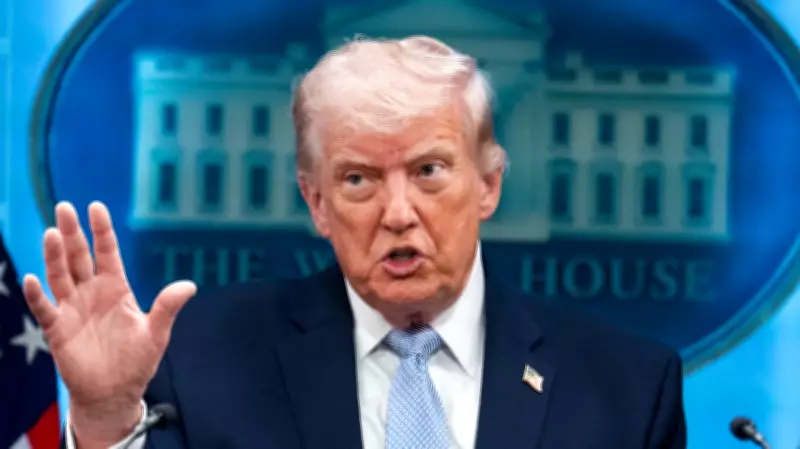
President Donald Trump declared on Sunday that the United States Navy would "immediately" commence a blockade to prevent ships from entering or exiting the vital Strait of Hormuz. This dramatic announcement followed the collapse of U.S.-Iran peace talks in Islamabad, Pakistan, which concluded without any agreement after twenty-one hours of intense negotiations.
Strategic Control Over Global Oil Chokepoint
President Trump's order aims to exert strategic dominance over the critical waterway, which is responsible for transporting approximately twenty percent of the world's oil supplies. By imposing this blockade, the administration seeks to strip Iran of a key source of economic leverage it has wielded during the ongoing conflict. "I have instructed our Navy to seek and interdict every vessel in International Waters that has paid a toll to Iran," Trump stated emphatically. "No one who pays an illegal toll will have safe passage on the high seas."
The president further warned that the United States was prepared to "finish up" Iran at the "appropriate moment," identifying Tehran's nuclear ambitions as the central reason for the diplomatic failure to end the war.

Ceasefire in Jeopardy as Talks Collapse
The face-to-face discussions ended earlier on Sunday, casting serious doubt on the fragile two-week ceasefire that is set to expire on April 22. U.S. officials attributed the breakdown to what they described as Iran's refusal to commit to abandoning its path toward developing a nuclear weapon. Conversely, Iranian officials blamed the United States for the failure without specifying the exact sticking points.
Neither side provided clear indications of what will transpire once the ceasefire lapses. Pakistani mediators, who hosted the talks, urged all parties to maintain the temporary peace. Both delegations asserted that their positions were clear and placed the responsibility for progress on the other side, highlighting how little ground was gained throughout the lengthy negotiations.
Divergent Positions on Nuclear Program
Vice President JD Vance, speaking after the talks, emphasized the U.S. demand: "We need to see an affirmative commitment that they will not seek a nuclear weapon, and they will not seek the tools that would enable them to quickly achieve a nuclear weapon."
Iran's lead negotiator, parliament speaker Mohammad Bagher Qalibaf, responded by stating it was time for the United States "to decide whether it can gain our trust or not." While Iranian officials earlier claimed the talks disintegrated over two or three key issues due to U.S. overreach, Qalibaf did not mention the core disputes in his social media posts.
Iran has consistently denied seeking nuclear weapons but insists on its right to a civilian nuclear program. The nation has offered "affirmative commitments" in writing previously, including within the landmark 2015 nuclear deal. Experts note that Iran's stockpile of enriched uranium, though not currently weapons-grade, is only a short technical step away from becoming so.
Human Cost and Economic Impact
Since the war began on February 28, the conflict has resulted in significant casualties: at least 3,000 people in Iran, 2,020 in Lebanon, 23 in Israel, and more than a dozen in Gulf Arab states. It has also inflicted lasting damage to infrastructure across several Middle Eastern countries. Iran's control over the Strait of Hormuz has largely severed the Persian Gulf and its crucial oil and gas exports from the global economy, causing energy prices to skyrocket.
Diplomatic Efforts and Regional Tensions
Pakistani Foreign Minister Ishaq Dar announced that his country would attempt to facilitate a new dialogue between Iran and the U.S. in the coming days. "It is imperative that the parties continue to uphold their commitment to ceasefire," Dar urged.
The deadlock in Pakistan, along with Vance's take-it-or-leave-it proposal demanding Iran end its nuclear program, mirrored the failed nuclear talks held in Switzerland during February. Although President Trump has stated the subsequent war was intended to compel Iran's leaders to abandon nuclear ambitions, each side's positions appeared unchanged following six weeks of intense fighting.

An Iranian diplomatic official, speaking anonymously due to the sensitivity of the closed-door talks, denied that negotiations had failed over nuclear ambitions. "Iran is not seeking to acquire nuclear weapons, but it has the right to nuclear energy for peaceful purposes," the official reiterated, echoing Iran's longstanding negotiating stance.
There was no official word on whether talks would resume, though Iran's state-run IRNA news agency reported the country remained open to continuing the dialogue.
Contrasting Proposals and Military Movements
The United States and Iran entered the negotiations with sharply different proposals and contrasting assumptions about their leverage to end the war. Prior to the talks, the ceasefire was already threatened by deep disagreements and Israel's continued attacks against Iranian-backed Hezbollah in Lebanon.
Iran's ten-point proposal called for a guaranteed end to the war and sought control over the Strait of Hormuz, including an explicit halt to Israeli strikes on Hezbollah. In contrast, the U.S. fifteen-point proposal, as described by Pakistani officials to The Associated Press in March, included monitoring mechanisms and a rollback of Iran's nuclear program, along with reopening the Strait of Hormuz.
During the talks, the U.S. military reported that two destroyers transited the critical waterway ahead of mine-clearing operations, marking the first such movement since the war began. Iran's state media, however, denied this claim. "We're sweeping the strait. Whether we make a deal or not makes no difference to me," President Trump remarked as negotiations extended into early Sunday morning.
Escalating Conflict in Lebanon
The diplomatic impasse raises new concerns about the fighting in Lebanon. Israel has continued its strikes since the ceasefire was announced, asserting that the agreement did not apply there—a claim contested by Iran and Pakistan.
Lebanon's state-run National News Agency reported that six people were killed on Sunday morning in an Israeli strike in Maaroub, a village near the southern coastal city of Tyre. While strikes over Beirut have diminished in recent days, Israel's attacks on southern Lebanon have intensified alongside a renewed ground invasion, initiated after Hezbollah launched rockets toward Israel in the opening days of the Iran war.
Negotiations between Israel and Lebanon are scheduled to begin on Tuesday in Washington, according to Lebanese President Joseph Aoun's office, following Israel's surprise authorization of talks despite the lack of official relations between the countries. Protests erupted in Beirut on Saturday over the planned negotiations.
Israel aims for Lebanon's government to assume responsibility for disarming Hezbollah, similar to terms envisaged in a November 2024 ceasefire. However, the militant group has survived decades of efforts to curb its strength. On the day the Iran ceasefire was announced, Israel conducted devastating airstrikes on Beirut, killing more than 300 people in the deadliest day in Lebanon since the war began, according to the country's Health Ministry.





