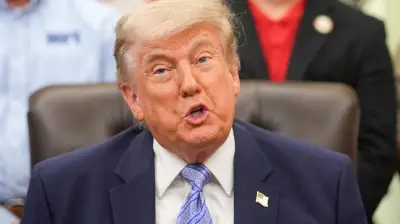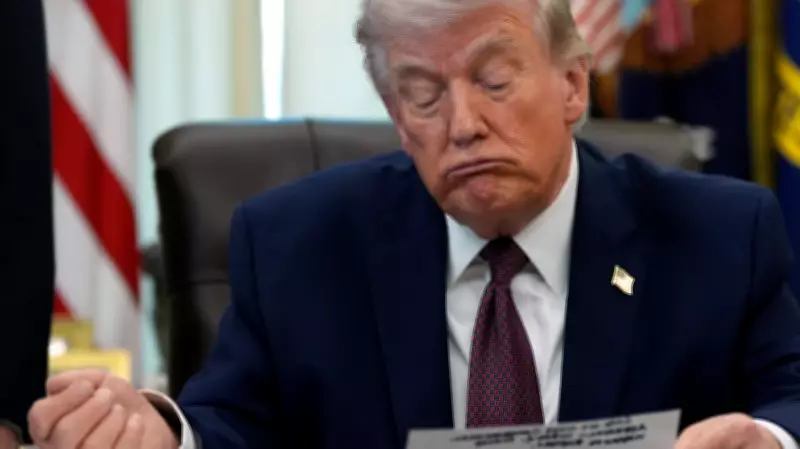
During an Easter lunch at the White House on Wednesday, former President Donald Trump launched into a tirade about the federal government's financial limitations, specifically targeting social programs like daycare, Medicare, and Medicaid. He asserted that the United States is too large and preoccupied with military conflicts to manage such initiatives effectively.
Trump's Remarks on Federal Responsibilities
"The United States can't take care of daycare," Trump stated emphatically. "That has to be up to a state. We can't take care of daycare. We're a big country. We have 50 states. We have all these other people. We're fighting wars. We can't take care of daycare. You gotta let a state take care of daycare, and they should pay for it too."
He expanded on this point, adding, "It's not possible for us to take care of daycare, Medicaid, Medicare, all these individual things. They can do it on a state basis. We have to take care of one thing: military protection." These comments were shared on social media by FactPost, highlighting the contentious nature of his statements.

Context and Political Implications
Trump's outburst aligns with a broader Republican strategy currently under consideration in Congress. Lawmakers are reportedly exploring plans to significantly reduce federal healthcare spending to allocate more funds toward the Pentagon's $200 billion request for the ongoing war in Iran. This move could have profound effects on millions of Americans reliant on these social safety nets.
Comparative Data on Childcare and Healthcare
The debate over federal funding for social programs is underscored by stark international comparisons. According to a 2021 report from The New York Times, the United States spends merely 0.2 percent of its GDP on childcare for children aged two and under. This translates to approximately $200 per year for most families, a figure that pales in comparison to other developed nations.
In countries like Israel, government support for early childhood care amounts to $3,327 per child annually, while Norway leads with a substantial $29,726 per child each year. These disparities highlight the potential for increased federal investment in such areas.
Furthermore, the World Health Organization notes that over 70 countries worldwide provide some form of universal healthcare, suggesting that comprehensive federal involvement in health and social services is feasible and widely adopted globally.
Broader Implications for Social Policy
Trump's comments have reignited discussions about the role of the federal government versus state governments in funding critical social programs. Advocates for expanded federal support argue that centralized funding could ensure more equitable access and higher standards across all states, particularly for vulnerable populations.
Critics, however, echo Trump's sentiments, emphasizing state autonomy and fiscal responsibility. As this debate continues, the potential reallocation of funds from healthcare to military expenditures remains a contentious issue, with significant implications for public health and national security priorities.