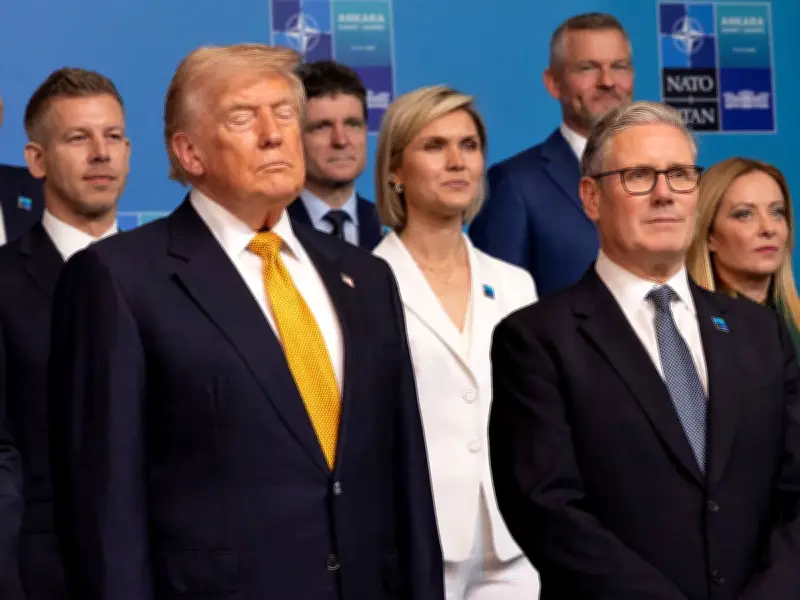
The NATO summit in Ankara on Wednesday concluded with forced smiles and a brief communiqué, as U.S. President Donald Trump's disruptive presence cast doubt on the alliance's future meetings. Secretary-General Mark Rutte suggested there might not be a summit next year, reflecting deep divisions over Iran, Greenland, and defence funding.
Trump's Reluctant Attendance
Trump made clear he attended only because the summit was in Turkey, hosted by President Recep Tayyip Erdoğan. "Frankly, if it weren’t held in Turkey, where my friend happens to be a very strong leader, it’s possible that I wouldn’t have attended," Trump said Tuesday before a bilateral meeting. He added, "I felt I had to attend because of the fact that he’s gone all out."
The U.S. restarted its war with Iran on Tuesday night, and Trump lambasted allies for not joining the conflict. He also revived talk of invading Greenland and insulted Italian Prime Minister Georgia Meloni, though he later called her "a nice person, actually."

Summit Outcomes and Uncertainty
The two-day summit produced a short declaration reaffirming "an ironclad commitment" to Article 5, the collective defence clause. It also highlighted increased defence spending by European members and Canada. However, Rutte would not confirm a 2027 summit in Albania. "The next summit is in Albania, and, of course, we still have to decide on the exact timing," he said at a closing press conference.
Rutte has spent two years flattering Trump to keep the U.S. in NATO, congratulating him for forcing allies to boost defence budgets. Despite this, Trump expressed disappointment over NATO's stance on Iran and Greenland. Some observers believe skipping a year might ease tensions.
Impact on Alliance Cohesion
Trump's behaviour has eroded consensus within the 32-member alliance. The brief communiqué signals difficulty in reaching agreements. While allies thanked Turkey for hosting, the next meeting's date remains uncertain, leaving NATO's future schedule in doubt.