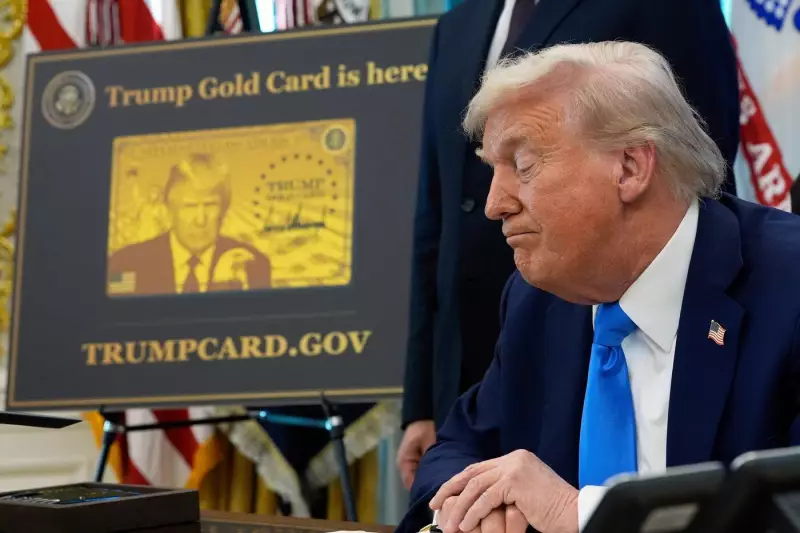
Former U.S. President Donald Trump is taking an active role in shaping his historical legacy, with initiatives bearing his name emerging during his current term. A defining visual from this push is the Trump Gold Card, prominently displayed during a significant presidential action.
A Signature Move in the Oval Office
The effort came into public view on September 19, 2025. On that day, President Trump signed a series of executive orders in the Oval Office of the White House in Washington. During the signing ceremony, a poster advertising the Trump Gold Card was clearly visible, linking the presidential action directly to the branded financial product. The event was documented by Associated Press photographer Alex Brandon.
The Strategy of Immediate Recognition
This move underscores a departure from the traditional post-presidency naming of buildings, roads, or institutions. Instead, it highlights a strategy of immediate legacy-building concurrent with political power. By associating his name with a premium service like the Gold Card during official government business, Trump blends personal brand with presidential authority.

The executive orders signed that day, while not detailed in the initial report, form the substantive policy backdrop against which this branding exercise was set. The juxtaposition of governance and personal nomenclature is a marked feature of Trump's political methodology.
Context and Implications
This incident is part of a broader pattern where the former president has sought to maintain a powerful public and commercial presence. The use of the White House, the most iconic seat of American executive power, as a setting to feature a personally branded item, blurs lines that have historically been more distinct. It raises questions about the intersection of personal enterprise and public office, a theme that has characterized much of Trump's career in politics.
For observers and historians, actions like these provide real-time material for assessing how a modern presidency can actively curate its own historical footprint, rather than leaving the task entirely to future generations.