

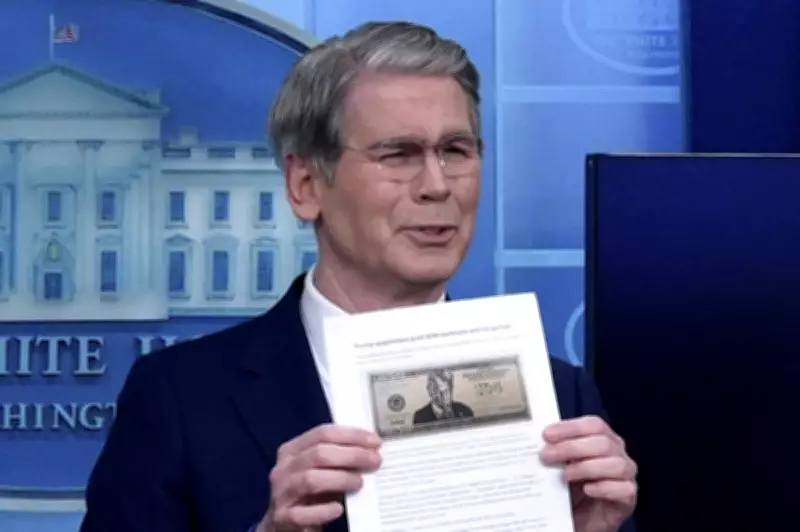
U.S. Treasury Secretary Scott Bessent has confirmed that the Treasury Department is taking limited initial steps toward the creation of a $250 bill featuring former President Donald Trump. The announcement, made during a press briefing at the White House on May 28, 2026, has ignited discussions about currency redesign and the legacy of American presidents.
Limited Steps Confirmed
Speaking to reporters in the James Brady Press Briefing Room, Bessent acknowledged that preliminary discussions and design concepts are underway, but emphasized that the process is in its early stages. "We are exploring the feasibility and public interest in a $250 note honoring President Trump," Bessent said. "However, no final decisions have been made, and any such change would require extensive review and congressional approval."
Historical Context
The proposal to feature a former president on U.S. currency is not unprecedented. Currently, George Washington appears on the $1 bill, Thomas Jefferson on the $2 bill, Abraham Lincoln on the $5 bill, Alexander Hamilton on the $10 bill, Andrew Jackson on the $20 bill, and Ulysses S. Grant on the $50 bill. A $250 bill would be a new denomination, last seen in the 19th century in the form of gold certificates.

Critics argue that introducing a new denomination could complicate transactions and increase production costs. Supporters, however, view it as a fitting tribute to Trump's impact on the nation. The Treasury Department has not released a timeline for further action.
Public Reaction
The announcement has drawn mixed reactions from lawmakers and the public. Some praise the initiative as a recognition of Trump's contributions, while others question the necessity and cost. Social media platforms have seen a surge in discussions, with hashtags like #Trump250 and #CurrencyDebate trending.
Bessent concluded the briefing by stating that the Treasury will seek public input before moving forward. "We want to hear from Americans across the country," he said. "This is a decision that should reflect the will of the people."






