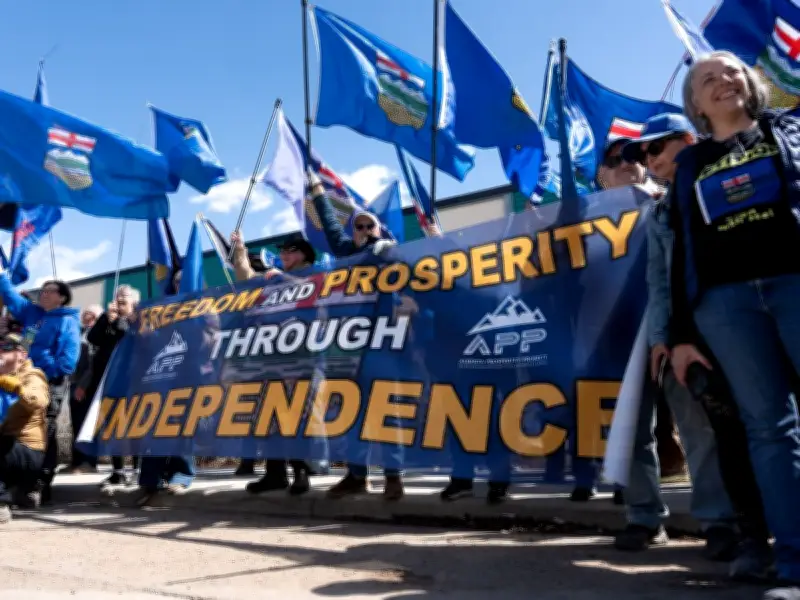
When Albertans head to the polls this October to vote on whether they should eventually consider separating from Canada, it will mark exactly 40 years since Preston Manning gathered a small group of close advisors to discuss what would become the Reform Party a year later. The slogan back then was "The West Wants In." Now, the central question is whether Alberta wants out—or, more precisely, whether Albertans want to be asked if Alberta should seek independence.
A Clear Referendum Question
No snide remarks should be made about Alberta's referendum question. Compared to the ambiguities and obfuscations of Quebec's questions in 1980 and 1995, Alberta's ballot paper is expected to be a model of clean, clear prose. This clarity reflects a desire to avoid the confusion that plagued previous secessionist movements in Canada.
Lessons from History
Manning, now regarded as the grand old man of conservative populism, recently shared lessons he believes should have been learned from the 1995 Quebec referendum. Chief among them is that voting to remain does not imply a vote for the status quo. This insight is crucial as Alberta considers its own path forward.

It is worth recalling the tradition in which Manning operated—his father, Ernest Manning, served as Alberta's longest-serving premier from 1943 to 1968. This tradition is one of grievance politics, a term that is not necessarily pejorative but descriptive. Whether grievance politics serves the common good depends on the purposes to which it is put.
The Power of Grievance Politics
The Trump phenomenon is the most powerful grievance movement at the moment, and it is particularly creative in finding causes for grievance—immigrants, fake news, real news, trading partners, Ukraine, Greenland, and Canada. For good or ill, its political potency is undeniable.
Grievance has always been a part of Alberta politics, though it is not exclusive to the province. Any group that considers itself a minority is inclined toward grievance, and many Albertans see themselves as a minority in Canada, one that has not been treated kindly.
Historical Roots
This sentiment is not new. Cartoons from the 1930s depict farmers shaking their fists at the skies, blaming the Canadian Pacific Railway for all their woes. Long before the National Energy Program of the 1980s, the political culture of the West was shaped significantly by grievance against the prevailing central Canadian consensus, both on the right (Social Credit) and the left (Cooperative Commonwealth Federation).
When Brian Mulroney defeated the long-governing Liberals in 1984, there was a sense in Alberta that long-standing grievances would be remedied by a new party in charge of the same federal system. However, by 1986, Manning sensed that those grievances ran deeper than a change in parties could fix. Those parties, after all, depended on populous central Canada's seats to win power. If a new party did not solve the old grievances, perhaps an entirely new arrangement was needed—one that found room for a West that wanted in.