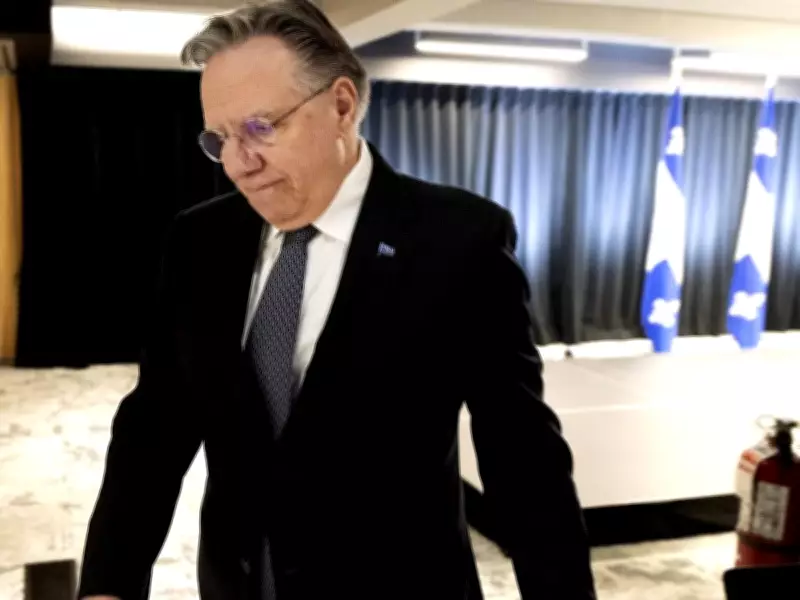
In a scathing critique of government fiscal management, columnist Robert Libman argues that fundamental change is needed to protect taxpayer dollars from wasteful spending. The recent Gallant Commission report on the SAAQclic debacle—a disastrous online portal rollout for Quebec's auto insurance board with $500 million in cost overruns—has brought this issue into sharp focus.
The Core Problem: Spending Other People's Money
Libman invokes Nobel Prize-winning economist Milton Friedman's observation that "nobody spends somebody else's money as wisely as he spends his own." This principle, Libman contends, lies at the heart of government contracting problems where those making spending decisions don't bear the direct financial consequences.
Companies and contractors working with governments at all levels often operate within systems where financial accountability, oversight, and responsibility become difficult to pinpoint and control, particularly for large, complex projects. Suppliers can easily take advantage when decision-makers lack specific expertise or time to scrutinize pricing, products, and methodologies thoroughly.

The SAAQclic Case Study
The SAAQclic situation exemplifies these systemic failures. According to the Gallant Commission report, SAAQ bureaucrats misled the government for years about escalating costs. Quebec's minister responsible for the public sector, France-Élaine Duranceau, acknowledged that private sector employees would have lost their jobs for similar failures.
Premier François Legault expressed outrage, insisting he was unaware of the extent of cost overruns until the auditor general revealed them in February 2025. However, evidence suggests some ministers knew about problems much earlier, with Legault himself admitting concerns as early as 2023—though he claimed he was told costs had only increased from $660 million to $682 million.
"We could have asked more questions," Legault conceded this week—a statement Libman calls a significant understatement.
Economic Context and Consequences
During periods of economic stress affecting ordinary citizens, Libman emphasizes that those managing public funds—both politicians and civil servants—must exercise exceptional diligence. The current situation sees Legault and Duranceau threatening legal action against responsible SAAQ officials, but Libman argues the government should instead implement systemic reforms using this fiasco as a catalyst for meaningful change.
Proposed Solutions for Better Oversight
Libman suggests several potential reforms to address what he calls an "institutionalized problem":
- Enhanced Auditor General Authority: Expanding the role and judicial powers of auditors general at all government levels, with regular press conferences to increase transparency. This approach could prevent situations like the federal ArriveCan app, which cost 750 times more than budgeted.
- Revised Contracting Processes: Improving bidding and public tender procedures, reconsidering the practice of awarding contracts to the lowest bidder (which can encourage corner-cutting), and exploring fixed-price contracts with clear deliverables and performance standards.
- Independent Oversight Committees: Establishing expert panels to vet all contracts and expenditures above certain thresholds.
- Increased Professional Accountability: Holding politicians, ministers, and bureaucrats to higher standards of professional liability similar to architects, accountants, and engineers.
The Fundamental Principle
Libman concludes that regardless of specific procedural variations, little will change until those responsible for public funds feel compelled to guard taxpayer dollars as if the money were coming directly from their own pockets. He quotes another renowned economist, Thomas Sowell: "It is hard to imagine a more stupid or more dangerous way of making decisions than by putting those decisions in the hands of people who pay no price for being wrong."

The columnist draws a parallel to home renovations, where homeowners instinctively push back against "cost overruns" or "extras" because their own money is at stake. This same protective instinct, he argues, must be institutionalized in government spending to prevent future fiascos like SAAQclic.