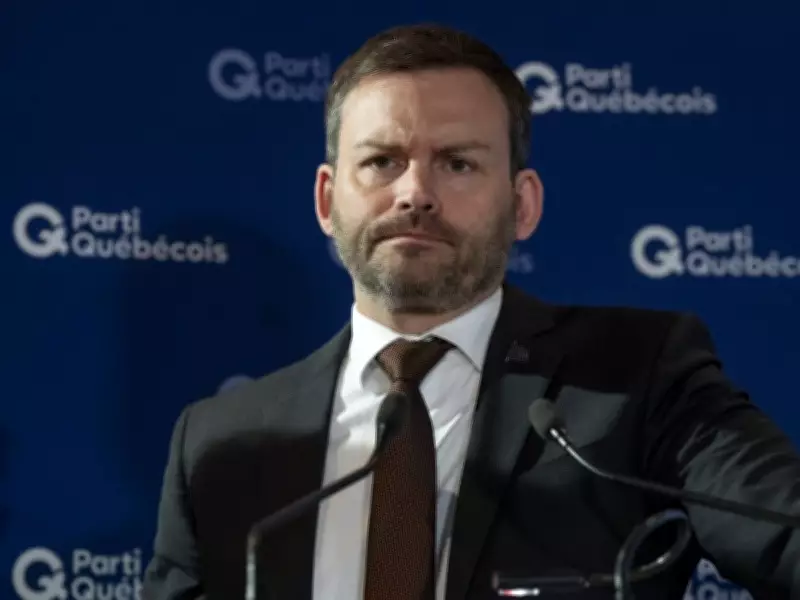
PQ Leader's Sovereignty Strategy Faces Critical Scrutiny
Parti Québécois Leader Paul St-Pierre Plamondon finds himself navigating treacherous political waters as he attempts to reconcile his party's foundational commitment to Quebec sovereignty with contemporary geopolitical realities. The leader's recent statements acknowledging the risks of holding a sovereignty referendum during periods of international instability have sparked intense debate about whether he's inadvertently making a case for Quebec's continued place within Canada.
Historical Context and Contemporary Challenges
Since its establishment in 1968 under founding leader René Lévesque, the Parti Québécois has contested fifteen provincial elections, securing power on five occasions. The party achieved consecutive majority governments from 1976 to 1985 and again from 1994 to 2003, with an additional minority government in 2012 that lasted less than two years. During those initial majority terms, the PQ conducted sovereignty referendums in both 1980 and 1995, with Quebec voters rejecting separation each time.
Throughout its fifty-seven-year history, the party has frequently faced the strategic dilemma of balancing its core sovereignty mission with the practical demands of electoral politics. As elections approached and the possibility of governance emerged, PQ leaders have historically tempered their separation rhetoric to appeal to broader voter concerns about stability and effective administration.

The Current Political Landscape
Paul St-Pierre Plamondon now confronts a similar predicament to his predecessors, though under markedly different circumstances. For approximately two years, opinion polls have consistently shown the Parti Québécois leading in popular support, creating anticipation of potential electoral success. However, this political advantage coincides with growing voter apprehension about sovereignty, particularly influenced by economic uncertainties related to the United States under President Donald Trump's administration.
Following the PQ's significant electoral setback in the previous election, St-Pierre Plamondon embarked on an ambitious rebuilding effort, emphatically committing to hold a sovereignty referendum during his first term if elected. This unambiguous pledge helped reinvigorate the party's traditional base and restore support among committed sovereignists.
Strategic Shifts and Political Contradictions
The political landscape has evolved rapidly, with voter dissatisfaction toward the incumbent Coalition Avenir Québec government, leadership challenges within the Liberal Party, and the emergence of Conservative alternatives creating a fragmented political field. This division among non-sovereignist voters has benefited the PQ, but as elections approach, scrutiny of St-Pierre Plamondon's referendum commitment has intensified.
Following a recent byelection victory in Chicoutimi—the party's fourth such win since the last general election—the PQ leader sought to address growing voter concerns. He acknowledged that many Quebecers expressed apprehension about a sovereignty referendum, particularly influenced by economic threats emanating from the United States. In response, St-Pierre Plamondon suggested that a PQ government might postpone any referendum until after the conclusion of Donald Trump's presidential term in 2029.
This nuanced position prompted immediate criticism from political opponents who characterized it as backtracking, though St-Pierre Plamondon firmly rejected this interpretation. The leader recognizes that reversing his longstanding referendum commitment would severely damage his credibility and potentially undermine the PQ's electoral prospects more significantly than current voter concerns about sovereignty.
Fundamental Inconsistencies in the Sovereignty Argument
Rather than retracting his referendum pledge, St-Pierre Plamondon has attempted to reassure Quebecers that any sovereignty vote would occur later within a potential four-year term, contingent upon changing circumstances. This approach creates significant logical contradictions within the PQ's political framework.

By acknowledging that periods of geopolitical instability represent unfavorable conditions for pursuing Quebec independence, St-Pierre Plamondon implicitly suggests that remaining within the Canadian federation provides greater security and stability for Quebec. This position directly contradicts the PQ's foundational argument that Quebec must separate from Canada to properly position and protect itself on the international stage.
Furthermore, if elected and subsequently delaying a referendum for several years, St-Pierre Plamondon would need to govern Quebec within the very Canadian federal system he consistently portrays as restrictive and detrimental to Quebec's development. His political platform is fundamentally constructed around the premise that Quebec requires independence from Canada's perceived constraints to achieve its full potential.
Governing Dilemmas and Political Consequences
The prospect of a sovereignty referendum in the current geopolitical context presents electoral risks for the Parti Québécois. Postponing such a vote would require St-Pierre Plamondon to first demonstrate effective governance within the existing federal framework. Successful administration would undermine his argument that Canada stifles Quebec's development, while poor governance would raise questions about his capacity to lead an independent Quebec effectively.
This creates a paradoxical situation where the PQ leader's political strategy appears to acknowledge the protective benefits of Canadian federation while simultaneously advocating for its dissolution. Quebec voters seeking stable, effective governance must carefully consider these contradictions as they evaluate the Parti Québécois platform and leadership in the approaching election.
The fundamental question remains whether Paul St-Pierre Plamondon's nuanced approach to sovereignty represents pragmatic political strategy or reveals inherent weaknesses in the separation argument itself. As Quebec's political landscape continues to evolve, these contradictions will likely play a decisive role in determining both the PQ's electoral fortunes and the broader trajectory of the sovereignty movement.