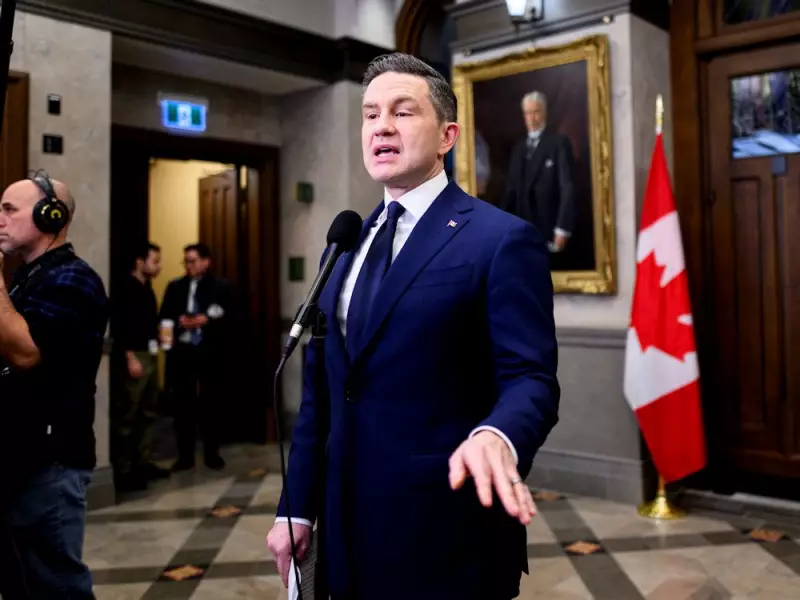
Conservative Party Leader Pierre Poilievre has drawn a sharp contrast with Prime Minister Mark Carney's energy policy, declaring he would use federal authority to build an oil pipeline to the Pacific even in the face of opposition from First Nations and provincial governments.
A Clear Divide on Pipeline Strategy
In a year-end interview with CBC's Rosemary Barton on December 14, 2025, Poilievre outlined his stance. "Of course I would consult … but we are going to build a pipeline when I am prime minister," he stated, signaling a willingness to override objections to advance the project.
This position directly challenges the Liberal government's stated requirement for unanimous approval. On multiple occasions, Prime Minister Carney has asserted that a West Coast pipeline cannot proceed without the consent of all affected Indigenous communities and the British Columbia government.

Carney's Consensus Model Faces Hurdles
The policy divergence comes just weeks after Carney and the Alberta government signed a November 27 memorandum of understanding to pursue a bitumen pipeline aimed at Asian markets. However, the document is notably silent on how to handle dissent.
One of its "necessary conditions" requires Alberta to "engage meaningfully with Indigenous Peoples" and "engage with British Columbia." In July, Carney told reporters, "we must have a consensus of all the provinces and the Indigenous people … if a province doesn’t want it, it’s impossible."
Reiterating this point in the House of Commons after the MOU was signed, Carney emphasized, "We believe the government of British Columbia has to agree. We believe that First Nations right-holders in this country have to agree and support all stakeholders after that."
A Wall of Opposition on the Ground
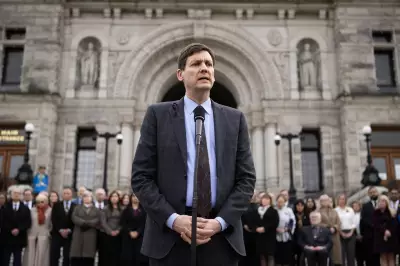
The practical reality for any pipeline proposal is significant resistance. Both B.C. Premier David Eby and a coalition of First Nations groups stand firmly opposed. This coalition was instrumental in defeating the Northern Gateway pipeline in 2016.
At a recent Assembly of First Nations summit, National Chief Cindy Woodhouse Nepinak was unequivocal: "when it comes to approving large national projects on First Nations lands, there will not be getting around rights-holders."
Defending the MOU on CBC as recently as December 1, Liberal B.C. MP Taleeb Noormohamed called it a plan for a "theoretical pipeline" with no set route, but reiterated that any real project "has to have the consent of the jurisdiction in question, has to have the consent of First Nations."
Poilievre's declaration sets the stage for a fundamental debate over resource development, Indigenous rights, and federal authority, making pipeline policy a central issue for the next election.