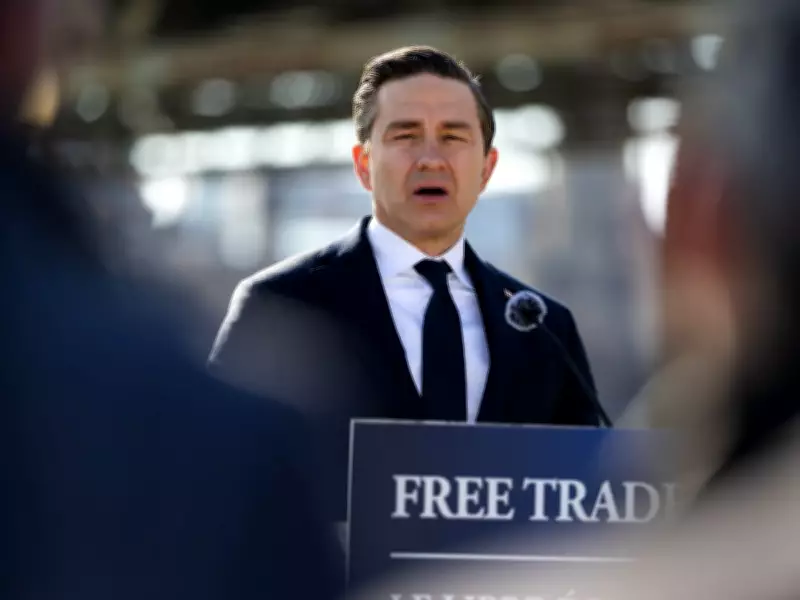
Conservative Party of Canada Leader Pierre Poilievre has declared his intention to terminate the proposed high-speed rail project connecting Toronto and Quebec City, labeling it a $90 billion "boondoggle" under Prime Minister Mark Carney's Liberal government. The announcement, made during a press conference in Peterborough, Ontario, underscores a significant political clash over infrastructure spending and fiscal priorities.
Project Details and Cost Estimates
The Alto rail line, spanning approximately 1,000 kilometers, is estimated to cost between $60 billion and $90 billion. It is being developed by a consortium that includes the Caisse de Depot et Placement du Quebec and AtkinsRealis Group Inc. The first section, planned to link Montreal and Ottawa, is scheduled to commence construction by 2030, with operations not expected to begin until at least 2037.
Political Context and Criticism
Poilievre criticized the project as a "ridiculous pie-in-the-sky Liberal spending initiative" that has escalated under Carney's leadership. He emphasized the delayed timeline and high costs, arguing that the funds should be reallocated to lower national debt, reduce taxes, and combat inflation. This stance resonates in areas like Peterborough, where local residents oppose the rail line due to concerns over potential land expropriation.

Broader Political Implications
The announcement comes amid a shifting political landscape. Poilievre, once a frontrunner for prime minister, saw his polling decline in early 2025 following Justin Trudeau's resignation and U.S. President Donald Trump's imposition of tariffs on Canada. Carney's Liberals secured a victory in the April 2025 election but fell short of a parliamentary majority. Recently, Carney persuaded four opposition lawmakers, including three from Poilievre's Conservative caucus, to join the Liberals, potentially paving the way for a slim majority after upcoming special elections on April 13.
Future Prospects and Election Dynamics
If the Liberals gain a majority in Parliament, it could facilitate the passage of legislation without opposition support and reduce the likelihood of an imminent national election. Conversely, Poilievre's pledge to cancel the rail project highlights a key campaign issue, positioning fiscal restraint against ambitious infrastructure investments. The debate over the Alto line reflects broader tensions in Canadian politics regarding economic management and government spending priorities.