Amy Hamm argues that while protecting children online is a worthy goal, a draconian censorship regime is not the solution. In a recent protest on Parliament Hill, children and parents demanded the revival of the online harms act, which Prime Minister Mark Carney could use as cover to pass sweeping new censorship laws.
The protest and its implications
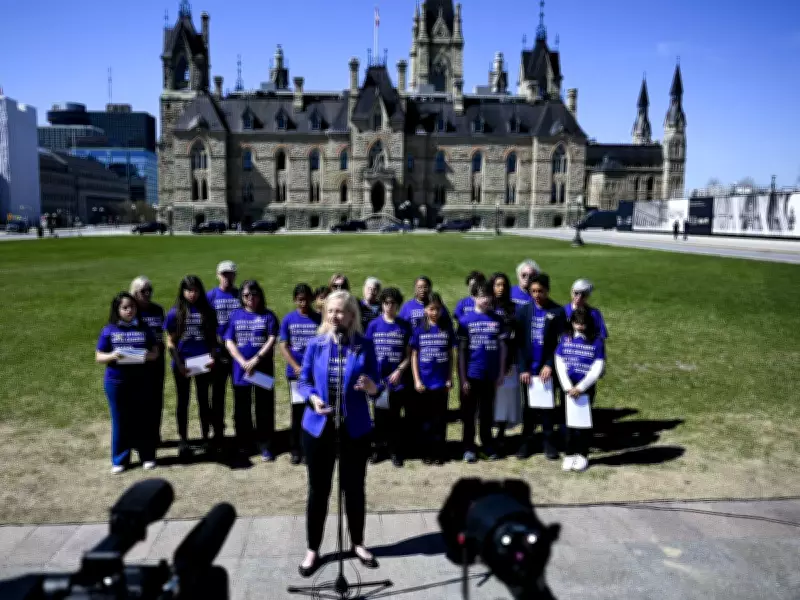
The demonstration, organized by Children First Canada—a registered charity that received a $200,000 federal grant on April 1—called for the immediate tabling of a bill similar to the one killed when former Prime Minister Justin Trudeau prorogued Parliament in 2025. Opponents of the new bill risk being accused of malice for refusing to meet the demands of victims paraded across Parliament Hill.
Protesters included Carol Todd, mother of deceased teen Amanda Todd, who died by suicide after online bullying and sextortion in 2012, and numerous young people. Children read from scripted statements about online bullying, sextortion, and AI-driven violence. One child blamed the Tumbler Ridge, B.C., school shooting on artificial intelligence for providing the killer a plan—a speculative claim. Another family alleged that the Grok chatbot in their Tesla asked their 12-year-old son for nude photos, a claim denied by xAI and unverified.

Dubious examples and bad legislation
Hamm questions why these dubious examples were needed when real cases of sextortion and cyberbullying are abundant. While protesters represent a valiant cause, she worries they are unintentionally bolstering public approval for bad legislation. The timing of the protest is also odd: the Liberals now have a majority government and already announced plans to revive the online harms act earlier this year, reconvening an expert advisory group on online safety that includes activist Bernie Farber.
The Liberal government frames the online harms act as critical for child safety, stating that social media can be used to sexually exploit children, promote self-harm, incite violence, and foment hate. However, Hamm maintains that online safety is ultimately parents' responsibility, not the government's.