Myanmar Concludes Final Election Phase with Military Control Predetermined
On Sunday, January 25, 2026, Myanmar held the third and final round of its general election, a process that unfolded with the military already certain to maintain its dominant control over the government. The election took place across various regions, including Mandalay in central Myanmar, where voters participated despite the predetermined political outcome.
Voter Participation Amidst Political Certainty
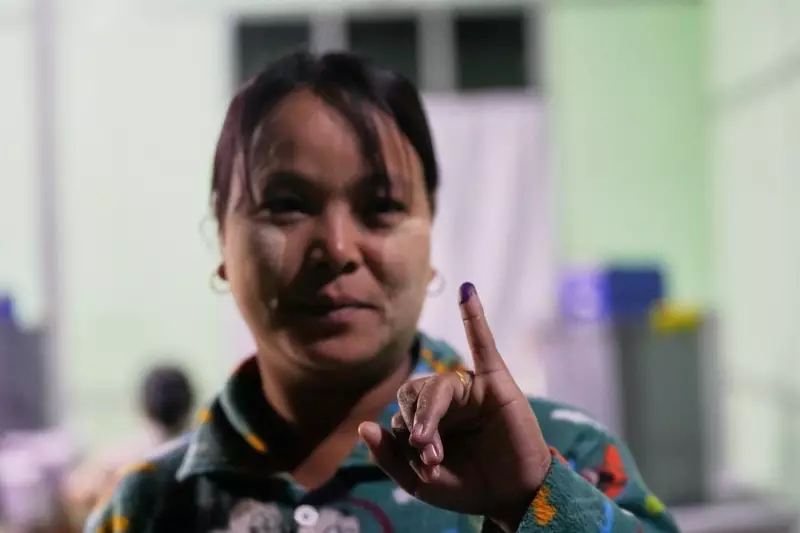
At polling stations in Mandalay, voters displayed their ink-marked fingers, indicating they had cast their ballots. This symbolic act of civic engagement occurred even as the army's continued governance was assured, highlighting a complex dynamic of public participation within a constrained political framework. The election rounds have been closely monitored internationally, with this final phase marking the conclusion of a staged electoral process.
Background of Military Influence in Myanmar
Myanmar has experienced significant political turmoil in recent years, with the military playing a central role in the country's governance. The 2026 election follows a period of instability and conflict, during which the army has consolidated its power. This electoral process, while allowing for some degree of public involvement, has been structured in a manner that ensures military oversight and control over the resulting government.

The Associated Press reported on the event, noting that the election's outcome was largely a foregone conclusion due to the military's entrenched position. This situation reflects ongoing challenges in Myanmar's political landscape, where democratic aspirations intersect with authoritarian realities.
International and Domestic Implications
The election's conduct and results are likely to have implications both domestically and internationally. Domestically, it may influence public sentiment and potential future movements, while internationally, it could affect diplomatic relations and aid considerations. The participation of voters, as seen in Mandalay, suggests a populace engaged in the political process, albeit within limited parameters.
As Myanmar moves forward from this election, questions remain about the future of governance, human rights, and stability in the country. The military's firm grip on power, confirmed through this electoral round, sets the stage for continued scrutiny and potential challenges ahead.