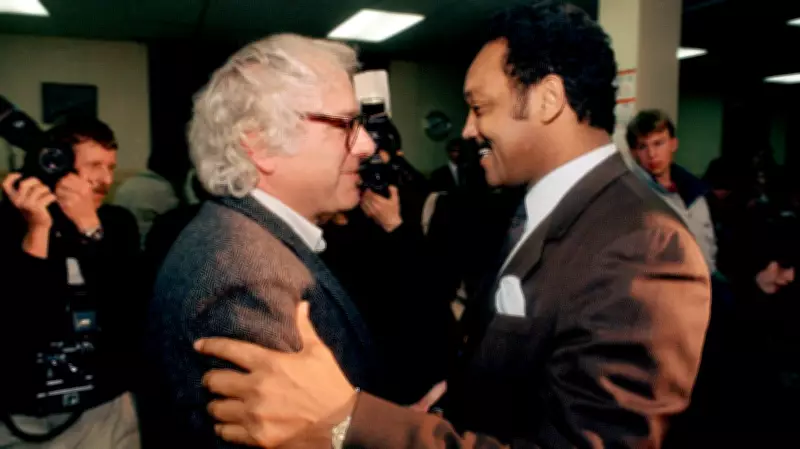
Rev. Jesse Jackson, Civil Rights Leader and Presidential Trailblazer, Dies at 84
The Rev. Jesse Jackson, a civil rights icon whose two presidential campaigns in the 1980s helped define the modern progressive movement and create a vision of a multiracial coalition dedicated to economic fairness, died early Tuesday at the age of 84, his family announced. His legacy bridges the era of Martin Luther King Jr. with contemporary struggles for justice and equality.
A Life of Service and Leadership
Born in segregated Greenville, South Carolina, Jackson rose to national prominence in his early 20s and became a controversial yet influential figure by age 30. Over decades, he evolved from a civil rights activist to an international negotiator, CNN host, and respected elder statesman. In a statement, his family described him as a "servant leader" who uplifted millions through his unwavering belief in justice, equality, and love, urging others to continue the fight for these values.
Presidential Campaigns and Progressive Vision
Jackson's presidential runs in 1984 and 1988 were pivotal in shaping the Democratic Party's identity. Despite facing criticism as being more flash than substance and lacking electoral success beyond a symbolic role as a Washington, D.C., shadow senator, he crafted an image of a multiracial coalition focused on economic populism. His campaigns emphasized policies such as doubling the federal education budget, endorsing a precursor to Medicare for All, and advocating for tax hikes on the wealthy and a military spending freeze.

Sen. Bernie Sanders, who campaigned alongside Jackson in 2020, credited him with paving the way for Barack Obama's presidency, stating, "If there was no Jesse Jackson, in my view, there never would have been a President Barack Obama." Jackson's outreach to working-class whites, including in towns like Greenfield, Iowa, tripled his white support from 1984 to 1988, demonstrating his ability to build bridges across racial lines.
Civil Rights and Economic Justice
Jackson's activism began in college with sit-ins and participation in the Selma to Montgomery marches. He later led Operation Breadbasket, an economic arm of the Southern Christian Leadership Conference, and founded People United To Serve Humanity (PUSH), which organized boycotts to promote economic opportunities for African Americans. He famously declared, "The new frontier of civil rights is economic — silver rights," highlighting his focus on financial equity.
However, his actions following Martin Luther King Jr.'s assassination, including appearing on television with a blood-stained shirt, led to a permanent rift with King's family and criticism from other civil rights leaders. Jackson defended these actions as those of a grieving young man, but the controversy persisted throughout his career.
International Diplomacy and Controversies
Jackson also served as an unlikely negotiator for the United States, securing the release of Americans from Syria and Cuba in the 1980s. These efforts bolstered his presidential bids but were overshadowed by controversies, such as accusations of antisemitism after his "hymietown" remark and his association with Louis Farrakhan. Additionally, his social conservative views on issues like abortion and drug use contrasted with his progressive economic stance.
Legacy and Later Years
In the 1990s, Jackson hosted a CNN talk show and advised President Bill Clinton, despite earlier conflicts. His relationship with President Barack Obama was testy, marked by public disagreements, but he remained a vocal activist. After a Parkinson's diagnosis in 2017, he continued to lead protests, including in Ferguson and Minneapolis, and spoke out on issues like the war in Gaza and warnings about white supremacy in the 2024 election.
Jackson's campaigns registered Black voters en masse, contributing to Democratic gains, and nurtured a generation of Black women in politics, such as Donna Brazile and Minyon Moore. His personal life included a marriage to Jacqueline Brown, with whom he had five children, and a public extramarital affair that led to the cancellation of his CNN show.

As the Democratic Party still seeks to fulfill the multiracial coalition he envisioned, Jackson's impact on civil rights, economic justice, and progressive politics endures, leaving a complex but indelible mark on American history.