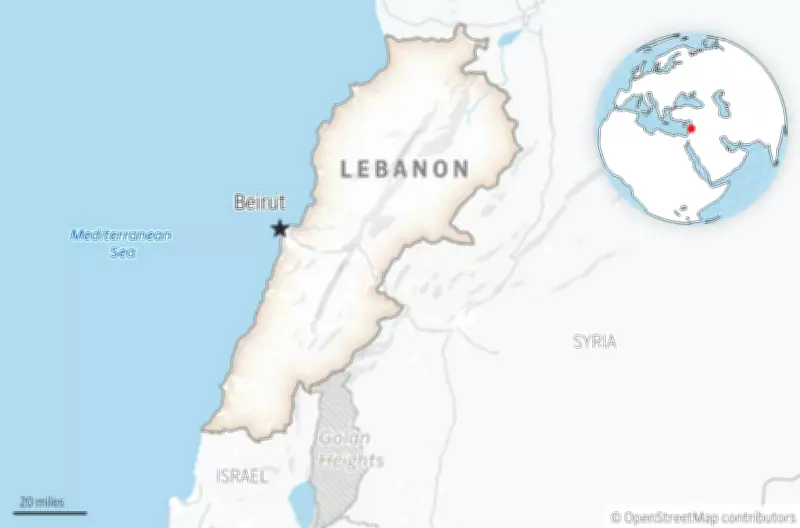
Israel launched airstrikes on Beirut's southern suburb on Thursday, just hours before crucial talks were set to begin in Washington. The strikes targeted what Israeli officials described as Hezbollah positions in the area, causing significant damage and raising fears of further escalation in the region.
Airstrike details
According to Lebanese security sources, at least three missiles hit the densely populated neighborhood, destroying a multi-story building and damaging several others. Emergency services reported at least five injuries, though no fatalities have been confirmed so far. The Israeli military stated that the strikes were precision strikes aimed at weapons storage facilities and command centers used by Hezbollah.
Washington talks in focus
The airstrikes come as U.S. envoy Amos Hochstein is scheduled to meet with Israeli and Lebanese officials in Washington to discuss a potential ceasefire and border demarcation. The timing of the attack has drawn criticism from some diplomats, who worry it could undermine the negotiations. A senior U.S. official, speaking on condition of anonymity, said the administration was 'deeply concerned' by the escalation.

Regional reactions
Hezbollah quickly condemned the strikes, vowing retaliation. In a statement, the group said it would respond 'at the appropriate time and place.' The Lebanese government called for an emergency session of the United Nations Security Council, while Iran, a key backer of Hezbollah, accused Israel of 'state terrorism.' Meanwhile, the European Union urged both sides to exercise restraint and return to dialogue.
Impact on civilians
The southern suburb of Beirut is a densely populated area home to many Shia Muslims, including Hezbollah supporters. Residents described scenes of panic as the strikes hit. 'We heard a huge explosion, and then the whole building shook,' said Fatima, a 34-year-old teacher who asked to be identified only by her first name. 'We don't know if it's safe to stay here anymore.' The United Nations humanitarian office reported that at least 1,000 families have been displaced by the recent violence in the area.
Broader context
The strikes mark a significant escalation in the ongoing conflict between Israel and Hezbollah, which has seen periodic flare-ups since the 2006 war. The Washington talks were seen as a last-ditch effort to prevent a full-scale war, but Thursday's attack has cast a shadow over their prospects. Analysts say both sides are positioning for potential conflict, with Israel seeking to degrade Hezbollah's military capabilities and the group aiming to maintain its deterrence.