The Iranian Canadian Congress (ICC) is under fire from within the Iranian-Canadian community for what critics say is a failure to condemn the Islamic Republic's brutal crackdown on protesters. In January 2026, ICC president Mona Ghassani appeared on CBC, blaming U.S. sanctions and Israeli influence for the unrest, a stance that many Iranian-Canadians say contradicts their strong support for regime change.
Controversial CBC Interview
During the interview, Ghassani told host David Cochrane that the events in Iran did not 'exist within a vacuum,' pointing to American sanctions that devalued the Iranian rial and alleged Israeli 'influence operations.' Ghassani, who uses they/them pronouns, stated that 'they have no interest in the Iranian people and they are only interested in their personal interests in the region.' The comments came as reports estimated over 20,000 civilians had been killed by government forces.
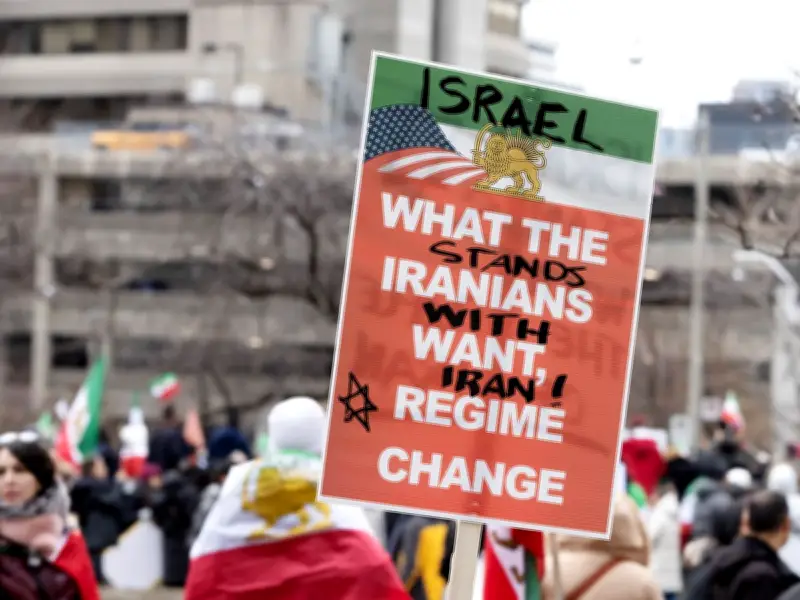
The interview drew immediate backlash, with the CBC later apologizing for providing a platform for 'the narrative of the Iranian regime.' Many Iranian-Canadians felt the ICC's position was out of touch with the majority of the nearly 300,000-strong community, which overwhelmingly supports toppling the Islamic Republic. A National Post survey in April 2026 found broad backing for regime change and support for U.S.-Israeli efforts to degrade Iran's military.

ICC's Tepid Response
The ICC's social media posts during the crisis were notably vague. A Jan. 24 message offered 'condolences to the grieving families of the deceased among our compatriots in the recent unrest in Iran,' without assigning blame. A Feb. 17 post wished 'patience and peace for all survivors.' Critics say the ICC avoided naming the regime as the perpetrator, reflecting a reluctance to take a clear stance.
Arsalan Kahnemuyipour, a University of Toronto linguistics professor, was invited by CBC to address the controversy. He called Ghassani's rhetoric 'offensive to the Iranian Canadian community' and dismissed the ICC as a fringe group. 'I think they’re absolutely a fringe,' he told National Post. 'They’re fringe in the Iranian Canadian community. They have much more support outside of the Iranian Canadian community.' He noted that ICC rallies often draw only 50 to 100 people.
Community Divide
The incident has highlighted a deep divide within the diaspora. Many Iranian-Canadians view the ICC as aligned with the regime's interests, rather than representing the community's desire for freedom and democracy. Some are calling for a review of the organization's mandate and leadership.
Ghassani's interview featured awkward pauses and hesitant language, which critics say betrayed a struggle to articulate mainstream Iranian-Canadian views. The controversy underscores ongoing tensions between regime loyalists and pro-democracy activists within the diaspora, with the ICC caught in the middle.
As the protests in Iran continue, the role of diaspora organizations like the ICC remains contentious. For many Iranian-Canadians, the group's reluctance to condemn the regime has damaged its credibility and raised questions about its future.