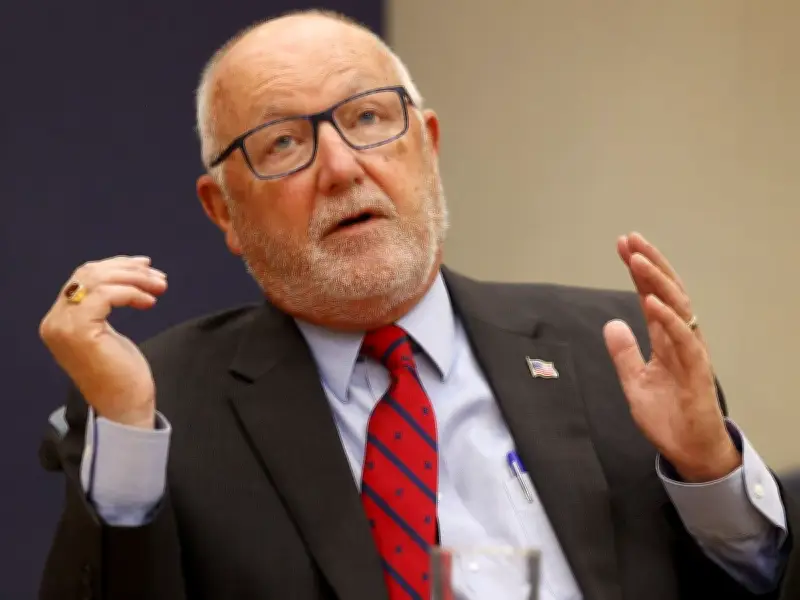
U.S. Ambassador to Canada Pete Hoekstra has dismissed the notion that Canada is footing the entire bill for the Gordie Howe International Bridge, calling it a "big myth." In a July 2 interview on The Food Professor podcast, Hoekstra addressed the ongoing delays in opening the bridge, which connects Windsor, Ontario, and Detroit, Michigan.
Canada as Bank, Not Payer
Hoekstra acknowledged that Canada loaned the Windsor-Detroit Bridge Authority C$7 billion for construction. "So, Canada, yes, Canada is serving as the bank for the bridge," he said. However, he emphasized that the bridge will be paid for through tolls collected from users, not by Canadian taxpayers. "The bridge will actually be paid for by the folks who are using the bridge. It will not be paid for by the Canadian government. So, Canada put the money up front, but at the end of the day, the expectation is that there will be a 'use tax' that will pay for the bridge."
According to the U.S. Department of Transportation, the Government of Canada expects to recoup its investment over 36 years from toll revenue. After that, revenue will be shared between Canada and the state of Michigan.

Cost Overruns and Delayed Opening
The bridge's opening has been stalled while both governments review the revenue-sharing arrangement. Hoekstra noted that the project has come in "significantly over budget and significantly later than originally forecast." He said, "That has changed the business model." The original agreement was signed 12 to 15 years ago, and the current situation is "very, very different."
Hoekstra added, "We both look forward to getting it open," but acknowledged that "the Canadian government and the U.S. government recognized that there are some issues that are outstanding." The two federal governments have agreed to delay while they "get some of this ironed out … in terms of how the business case has changed."
Ambassador Bridge Concerns
Hoekstra also referenced concerns related to the existing Ambassador Bridge, also connecting Detroit and Windsor and owned by the Moroun family. In January, the Morouns made a U.S.$1 million campaign donation to a MAGA political action committee. Shortly after, President Donald Trump stated on social media that he would block the opening of the Gordie Howe bridge.
Hoekstra pointed out that traffic is not increasing in the Detroit River corridor. "The Gordie Howe Bridge is not generating new traffic. So, you're moving revenues … to the Gordie Howe Bridge … So, it's a diversion of funds that will end up paying for this bridge." This diversion of existing traffic from the Ambassador Bridge to the new crossing is a key factor in the business model review.
Looking Ahead
Hoekstra's comments highlight the complex financial and political dynamics surrounding the Gordie Howe International Bridge. The project, initially forecast to open in 2024, has faced multiple delays and cost escalations. The current review aims to reassess the revenue-sharing agreement in light of these changes, ensuring that both countries' interests are protected before the bridge opens to traffic.