The federal Liberal government's long-promised "Assault-Style Firearms Compensation Program" has officially launched, but it is facing immediate and significant hurdles that cast doubt on its efficacy and underlying rationale. The program's rollout was strategically announced on a Saturday in Montreal, a timing critics argue was designed to minimize media scrutiny, coinciding with Prime Minister Mark Carney's high-profile engagements abroad.
Widespread Provincial Opposition and a Failed Pilot
The buyback scheme is already confronting a wall of resistance from provincial governments. Five provinces, representing 60 per cent of the Canadian population, have declared they will not participate in the federal initiative. This coalition includes Manitoba, which is governed by the NDP, highlighting that opposition crosses partisan lines. This provincial refusal is not a minor logistical issue; it is a fundamental obstacle because provincial authorities control policing, and the program requires gun owners to surrender their firearms to police.
An early test run of the program in Cape Breton yielded dismal results, collecting only 25 weapons. This poor showing, combined with the provincial boycott, paints a picture of a policy in trouble before it even begins in earnest. Critics have likened the program's design to a public relations stunt with little practical benefit for community safety.

The Indigenous Exemption and a Contradiction in Policy
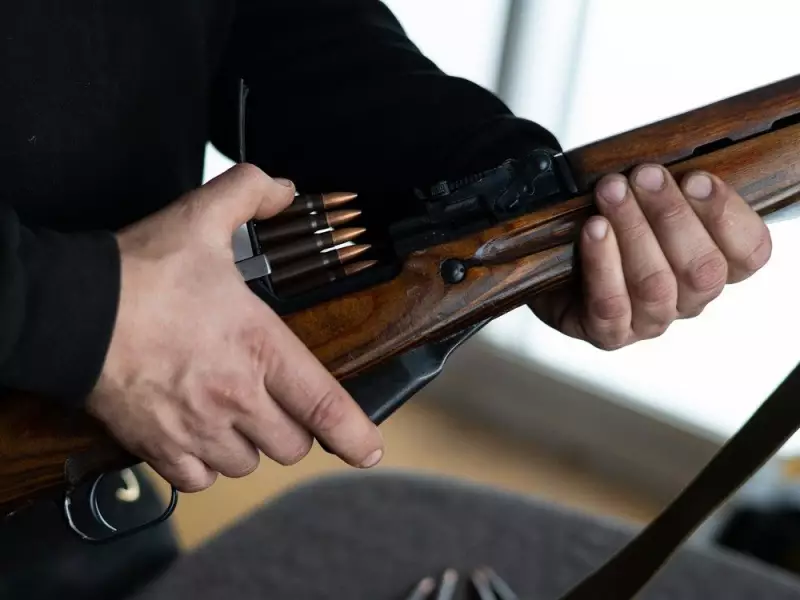
During the Montreal announcement, Public Safety Minister Gary Anandasangaree introduced a notable exception to the buyback rules. He explicitly reassured Indigenous Canadians that they would face no "adverse impact" from the program, specifically mentioning the SKS rifle. Many Indigenous people use this rifle for hunting, though some variants fall under the government's visual definition of an "assault-style-type" weapon.
This exemption, to be managed by a dedicated expert panel as per constitutional considerations, has sparked a pointed critique. If the core justification for the massive buyback program is public safety—removing "weapons of war" from communities to reduce gun violence—then creating a blanket exemption for any demographic group appears contradictory. As columnist Chris Selley argues, the minister's assurance suggests the government is less concerned with the safety of Indigenous Canadians, who are disproportionately affected by violence, than with that of non-Indigenous citizens.
A Program Built on Appearance Over Substance?
The controversy touches on a long-standing criticism of Canadian gun control: its focus on a firearm's cosmetic features rather than its functional mechanics. The SKS rifle, valued as a hunting tool, is being treated differently based on its use and user, not its inherent capabilities. This highlights a tension within the policy's foundation.
Furthermore, the program's public safety premise is challenged by the reality that a vast majority of guns used in crimes in Canada are smuggled from the United States, not legally owned firearms now being targeted for buyback. The government's press release reiterated that "assault-style firearms do not belong in our communities," yet the special provision for Indigenous hunters implicitly acknowledges a legitimate, non-threatening use for at least one such platform.
With billions of dollars potentially at stake, a majority of provinces in open revolt, and a foundational principle that seems to waver under scrutiny, the future of the gun buyback program looks uncertain. The key questions remain: how much public money will be spent before the program is potentially abandoned, and does its design truly match its stated goal of making all Canadians safer?