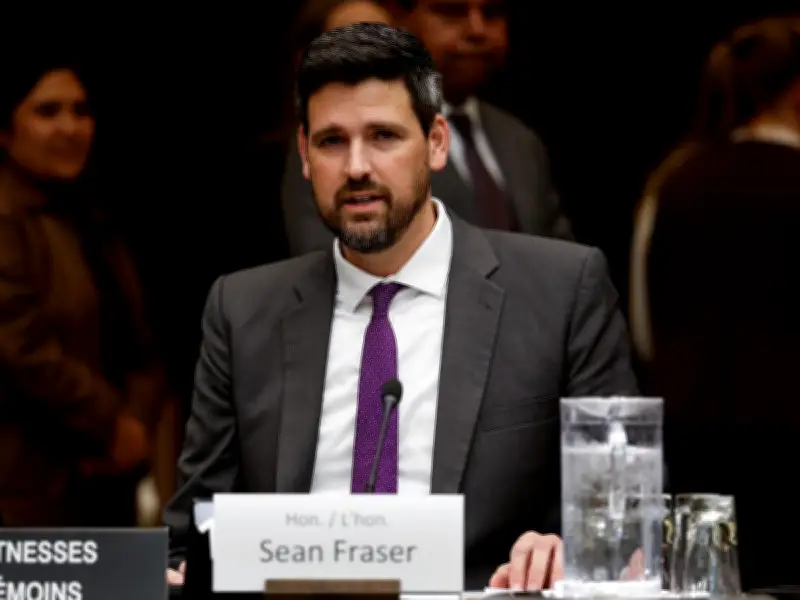
The federal government has indicated it will not support efforts to include the criminalization of statements that deny or downplay the residential school system in its anti-hate legislation, following the defeat of a Senate amendment on Wednesday. This development comes as the Senate grapples with processing a massive influx of mail—approximately 200,000 unsorted postcards—related to the controversial bill.
Background of Bill C-9
Introduced in September by Justice Minister Sean Fraser, Bill C-9 aims to address a police-reported rise in antisemitism and other hate-related incidents. The legislation proposes new offenses for obstruction and intimidation at places of worship and other venues where identifiable groups gather. However, the bill has faced significant controversy since its introduction.
Concerns from Advocacy Groups
Muslim advocacy groups and civil liberties organizations have raised alarms about provisions that would criminalize the display of symbols linked to designated terrorist organizations. They warn that protesters could be unfairly targeted if police cannot distinguish between actual terror symbols and Islamic phrases or images co-opted by extremist groups.

Further controversy arose when the Liberals accepted a Bloc Quebecois amendment to remove religious defenses from the Criminal Code in exchange for the Bloc's support in the House of Commons. This move drew criticism from Muslim and Christian organizations, including the Canadian Conference of Catholic Bishops, who argued it could chill religious teaching and preaching. The government has since added a certainty clause and emphasized that religious freedoms remain protected under the Charter of Rights and Freedoms.
Senate Amendment on Residential School Denialism
This week, the Senate committee on human rights sought to amend the bill further by criminalizing the condoning, denying, or downplaying of the Indian residential school system. Senator Nancy Karetak-Lindell, a survivor of residential schools, introduced the amendment after hearing testimony from First Nations witnesses, including a regional chief from the Assembly of First Nations, who warned of a rise in anti-Indigenous hate.
Despite these efforts, the amendment was defeated. A spokesman for Minister Fraser stated that the provision extends beyond the bill's original intent, signaling the government's opposition. The Senate is scheduled to debate and vote on the bill on Thursday, with any changes requiring approval from the House of Commons.
Massive Mail Campaign
The backlash against Bill C-9 has spurred organized letter-writing campaigns. A memo distributed to senators on Wednesday, obtained by the National Post, informed them of a bulk shipment of approximately 200,000 unsorted postcards. Staff were instructed to retrieve postcards addressed to them, highlighting the intense public engagement with the legislation.