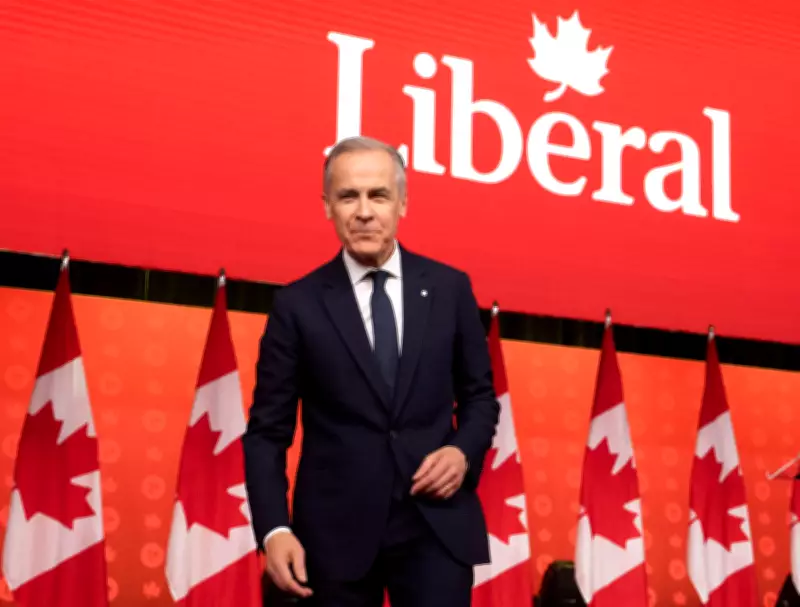
Mark Carney's Liberals Secure Majority Government After Sweeping Byelections
The political landscape in Canada has shifted decisively as Prime Minister Mark Carney's Liberal Party has officially secured a majority government. This milestone was achieved following a series of strategic victories in three federal byelections, most notably a critical late-night win in Quebec that cemented their parliamentary control.
Byelection Triumphs Cement Parliamentary Control
The Liberal Party's path to majority status was paved through decisive performances in key electoral districts. The most significant breakthrough came with a hard-fought victory in Quebec, where late-night ballot counting confirmed the Liberals had captured a traditionally competitive seat. This Quebec win, combined with successful campaigns in two other byelections, provided the exact number of seats required to cross the 170-seat threshold for a parliamentary majority.
Political analysts note that these byelection results demonstrate the Liberal Party's continued appeal across diverse regions and suggest a consolidation of support behind Prime Minister Carney's leadership. The victories come at a crucial juncture, providing the government with greater legislative stability and reducing reliance on opposition parties to pass key agenda items.

Implications for Parliamentary Governance
With a confirmed majority, the Carney administration now possesses enhanced authority to implement its policy agenda without the constant threat of confidence votes that characterized the previous minority parliament situation. This parliamentary stability is expected to facilitate more ambitious legislative initiatives across multiple policy domains, including economic strategy, healthcare reform, and environmental protection measures.
The majority status fundamentally alters the dynamics within Parliament's chambers. Government bills will now face less procedural obstruction, and committee assignments will reflect the Liberal Party's numerical advantage. However, political observers caution that majority governments also face heightened expectations for deliverable results, as they can no longer attribute legislative stagnation to opposition obstructionism.
Strategic Positioning for Future Governance
Prime Minister Carney's team has emphasized that this majority mandate provides an opportunity for sustained, long-term policy implementation rather than the short-term compromises often necessitated by minority governments. The administration is expected to prioritize previously announced initiatives with renewed vigor, particularly those related to economic innovation, social program enhancements, and international relations.
Opposition parties now face the challenge of recalibrating their parliamentary strategies in response to the new majority reality. While their ability to block government legislation has diminished significantly, they retain important roles in scrutinizing policy implementation, exposing potential shortcomings, and presenting alternative visions to the electorate ahead of the next general election cycle.
The coming parliamentary sessions will reveal how the Carney administration utilizes its strengthened position, with political watchers anticipating both bold initiatives and careful political calculations as the government balances its majority authority with the ongoing need to maintain broad public support across Canada's diverse regions and constituencies.