In a brief pro forma session of the House of Representatives on Thursday, Democrats made a bold but unsuccessful attempt to compel a vote on President Donald Trump's Iran war, only to be swiftly rebuffed by Republican leadership. With both the House and Senate officially on vacation, these periodic sessions are typically ceremonial, but Democrats seized the moment to challenge the status quo.
Democrats' Disrupted Effort
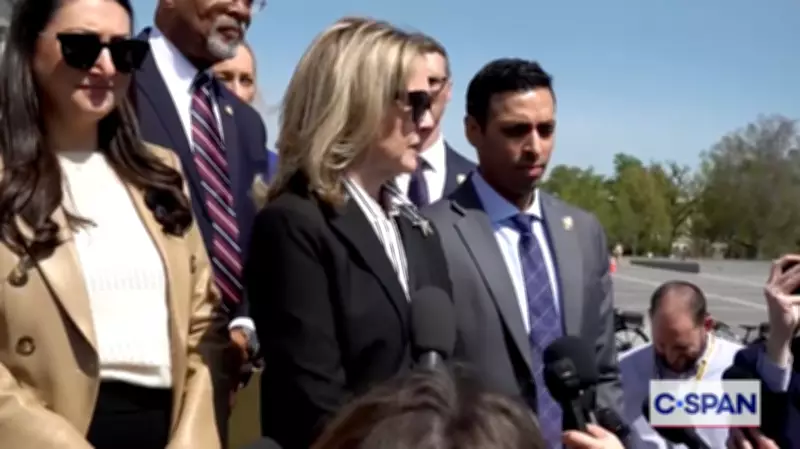
During the session, Rep. Glenn Ivey (D-Md.) tried to interrupt the proceedings to demand a vote on a War Powers Resolution, a move aimed at addressing the escalating Iran conflict. However, Rep. Chris Smith (R-N.J.), presiding over the session, ignored the request and promptly gaveled the chamber out, effectively shutting down the Democratic initiative. Despite this setback, Democrats turned the event into a public spectacle, with half a dozen lawmakers attending and later speaking to reporters on the House steps to voice their frustrations.
Rep. Madeleine Dean (D-Pa.) emphasized the constitutional duty at stake, stating, "Democrats are here on the Hill, saying to the Congress, saying to the speaker of the House, have us back in session so that we would live up to our constitutional responsibility." This effort underscores the deepening divide over military engagements and presidential authority.

Background on War Powers and Political Shifts
The War Powers Resolution, enacted after the Vietnam War to curb presidential power in initiating prolonged military conflicts, allows individual members of Congress to force snap votes on ceasing hostilities. Last month, both chambers voted on resolutions to end the Iran war, but Republicans defeated them. However, the political landscape has shifted following President Trump's provocative Easter Sunday post, where he demanded Iran "open the fuckin' strait," referring to the Strait of Hormuz, and threatened that a "whole civilization will die."
This genocidal language has drawn condemnation from even some Republicans, while key leaders like House Speaker Mike Johnson (R-La.) and Senate Majority Leader John Thune (R-S.D.) have remained silent. Rep. Mary Gay Scanlon (D-Pa.) told HuffPost, "My constituents, people across the political spectrum and the pope, I think, were really, really shocked by the president's language... and it can't be excused as a negotiating tactic. The silence of so many Republicans is also a recognition that they know this is out of control."
Future Prospects and Veto Power
Despite Thursday's rebuff, Democrats plan to force a vote on a war disapproval resolution when the House reconvenes next week. The key question is how vote totals might change; last month, two Republicans supported the resolution, and four Democrats opposed it. One of those Democrats has since indicated a shift in favor, and two House Republicans have criticized Trump's threat as unacceptable.
However, even if both chambers approve the resolutions, President Trump can veto them, and there are unlikely to be enough votes to override such a veto, highlighting the ongoing challenges in congressional oversight of military actions.