Carney's Stark Warning at Davos: The Old World Order Is Gone Forever
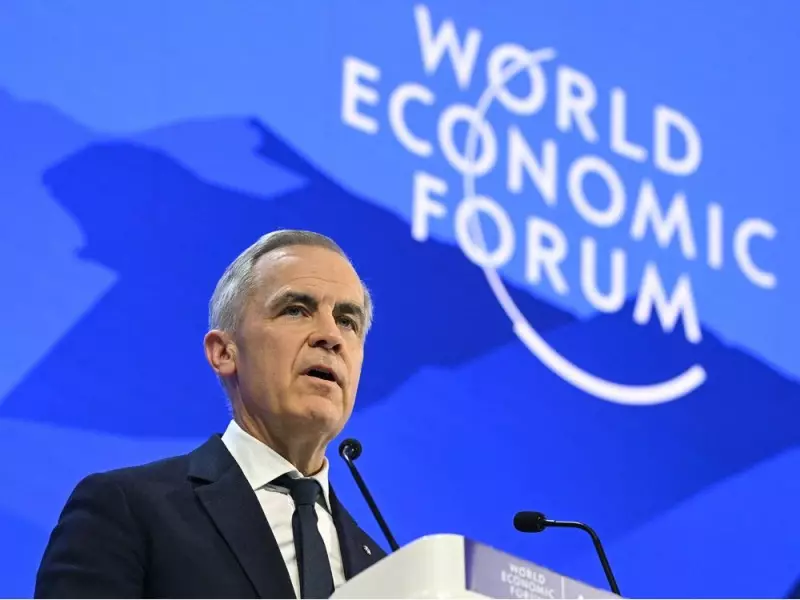
In a striking address that resonated through the halls of the World Economic Forum, Prime Minister Mark Carney delivered what observers are calling his most direct assessment yet of global geopolitics. Speaking during a plenary session in Davos, Switzerland, Carney declared that the traditional rules-based international order has ceased to exist and will not return.
A Call to Action for Middle Powers
Carney's speech, delivered in both English and French, contained a powerful message for nations like Canada that find themselves navigating between competing superpowers. "Today I will talk about the breakdown of the world order, about the end of a pleasant fiction and the beginning of a brutal reality where the geopolitics of the superpowers is not subject to any constraints," he began, setting the tone for his sobering assessment.
The Prime Minister specifically warned against the dangers of middle powers remaining silent or retreating into economic isolationism while what he termed "hegemons" and superpowers systematically dismantle the remaining structures of international cooperation. His comments, while never explicitly naming any country, were widely interpreted as addressing the growing tensions between major global powers.

Economic Coercion as the New Normal
Carney painted a picture of a transformed global landscape where economic relationships have become tools of geopolitical pressure. "More recently, great powers began using economic integration as weapons. Tariffs as leverage, financial infrastructure as coercion, supply chains as vulnerabilities to be exploited," he declared, in remarks that many attendees understood as referencing both the United States and China.
The timing of Carney's speech was particularly significant, coming on the same day that former President Donald Trump shared a controversial social media post featuring a fictional map that depicted Canada and other nations as part of the United States. This context added weight to Carney's warnings about the erosion of established international norms.
A Standing Ovation for Direct Language
Carney's message found receptive ears among the hundreds of politicians, business leaders, and journalists gathered for the prestigious forum. His declaration that "middle powers must act together because if you are not at the table, you are on the menu" elicited audible reactions from the audience, and his speech concluded with a rare standing ovation.
As a veteran of numerous World Economic Forum meetings and a former member of the organization's board of trustees, Carney brought both experience and authority to his assessment. His speech aligned with broader themes emerging from this year's Davos gathering, where many participants expressed concern about the fragmentation of global cooperation.
Contrasting Approaches Among World Leaders
What distinguished Carney's address from those of other world leaders at the forum was his deliberate avoidance of naming specific countries. While French President Emmanuel Macron and European Commission President Ursula von der Leyen explicitly criticized the United States and its policies, Carney maintained a more diplomatic approach, focusing instead on systemic issues and collective responses.
"Stop invoking the 'rules-based international order' as though it still functions as advertised," Carney urged his audience. "Call the system what it is: a period where the most powerful pursue their interests using economic integration as a weapon of coercion."
The Prime Minister's speech represents a significant moment in Canada's evolving foreign policy approach, signaling a more assertive stance in defending multilateral principles while navigating an increasingly complex and confrontational global landscape.