As California's primary election concludes on Tuesday, a growing consensus among voters and political insiders is that the state's nonpartisan election system must be overhauled. Enacted in 2012 through Proposition 14, the so-called "jungle" primary system allows candidates from all parties to compete on a single ballot, with the top two finishers advancing to the general election. The system was designed to reduce polarization and boost moderate and independent candidates, but critics argue it has instead encouraged strategic gamesmanship and often prevented party-affiliated voters from having a candidate of their choice in the general election.
Republican Lockout Fears Sparked Democratic Reassessment
In a state dominated by Democrats, Republicans and third parties have historically suffered the most under the jungle primary. In both 2016 and 2018, voters faced a choice between two Democrats for U.S. Senate races, a scenario that has repeated in numerous congressional and state legislative contests. However, in 2026, the Democratic Party faced its own crisis: Republican gubernatorial candidates Steve Hilton and Chad Bianco led early polls, with the Democratic vote splintered among a lackluster field. The possibility of a Republican governor in the nation's largest economy triggered a five-alarm emergency among Democrats and renewed calls to scrap the system.
“The current system we have does not work,” said Rusty Hicks, chair of the California Democratic Party, on May 1. “It needs to be revised or repealed.”

Ballot Initiative Filed to Repeal Proposition 14
Days later, Democratic strategist Steven Maviglio, former press secretary for Governor Gray Davis, filed a ballot initiative for the 2028 election to repeal Proposition 14 and return to partisan primaries. “Even though the scenario of two candidates from one party has played out numerous times in legislative races, we haven’t seen it for the governor’s race,” Maviglio said. “This really put a spotlight on the dangers of the system.” Maviglio has recruited former California GOP Chair Ron Nehring and support from the Libertarian and Green parties. Third parties, which have been almost universally locked out of general elections, have already sued to overturn the system. The initiative requires over 850,000 signatures to qualify for the ballot, though Maviglio plans to refile after Tuesday's primary to reduce the threshold slightly.
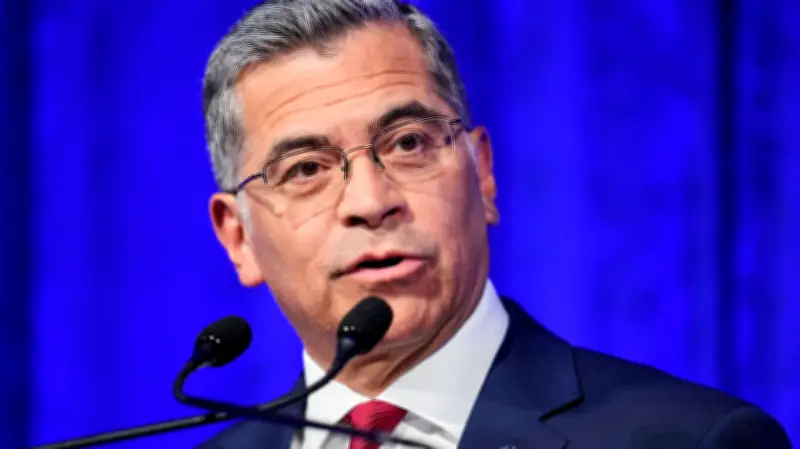
The immediate threat of a Democratic lockout in the gubernatorial race has receded after President Donald Trump endorsed Hilton and following former Democratic Representative Eric Swalwell's withdrawal amid rape accusations. The race now sees former Health Secretary Xavier Becerra and billionaire Tom Steyer vying to consolidate Democratic voters. Meanwhile, the Democratic Governors Association has spent over $1.5 million on mailers attacking Hilton for receiving Trump's endorsement, an example of the gamesmanship that pervades the system.
Gamesmanship in Local Races
Similar tactics have emerged in the Los Angeles mayoral race, where supporters of incumbent Democratic Mayor Karen Bass ran ads attacking Republican Spencer Pratt, which critics say inadvertently boosted his profile among Republican voters. City Councilmember Nithya Raman, a Democrat running to Bass's left, accused Bass of "promoting the campaign of a MAGA Republican" at a debate on May 5. In Northern California, a Democratic super PAC spent $100,000 to boost the Republican running against longtime Democratic Representative Doris Matsui, while a separate Democratic PAC promoted a progressive challenger to incumbent GOP Representative David Valadao. This mirrors Senator Adam Schiff's 2024 Senate campaign, where he boosted Republican Steve Garvey to avoid facing Democratic Representative Katie Porter in the general election.

Voter Dissatisfaction and System Flaws
Despite initial support—voters passed Proposition 14 with 54% in 2010—the system has never been popular with political parties. Every major party opposed its introduction. Supporters argued it would give independent voters a greater voice and produce more moderate candidates, but actual elections have not always followed that logic. In Senate races where only Democrats advanced, Republicans voted for the candidate challenging the preferred party nominee, regardless of ideology. Voters also engage in strategic voting, often choosing the best-polling candidate to ensure their party's representation. A May poll by Capitol Weekly found that 50% of likely primary voters want to modify the system, 29% want to eliminate it, and only 21% favor keeping it unchanged. One Democratic participant said, "I voted for the person I thought had the best chance of winning, not necessarily the person I liked best." A Republican participant added, "I like two candidates and voted for the one that was polling better."
As the 2026 primary concludes, the debate over California's jungle primary is far from over, with a potential ballot measure in 2028 that could reshape the state's electoral landscape.