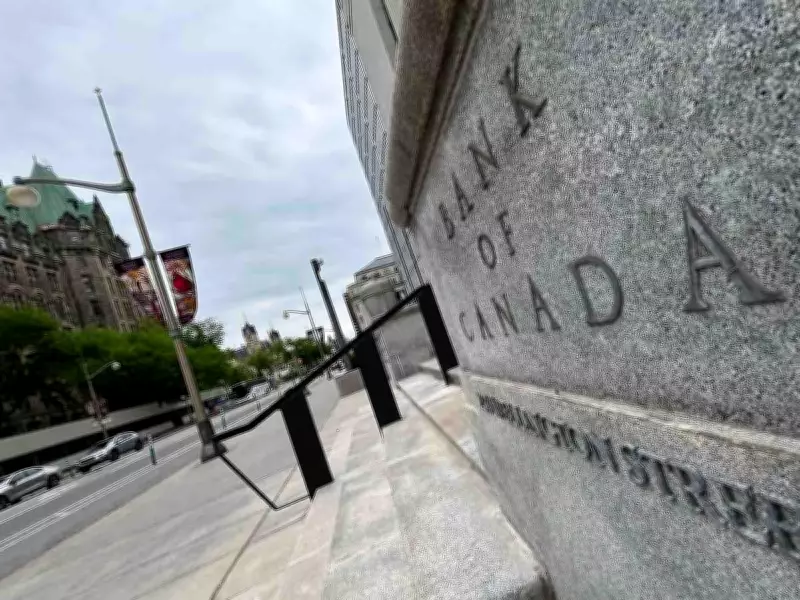
The Bank of Canada is widely expected to maintain its benchmark interest rate at 2.25 per cent on Wednesday, marking the fourth consecutive hold. However, economists remain divided on whether the central bank's next move will be a cut or an increase.
Economic Uncertainty Prevails
Early signs of softening discretionary spending amid higher fuel prices, ongoing tensions in the Middle East, and trade uncertainties are likely to keep the Bank of Canada from making any changes to its key overnight interest rate. The central bank is trying to balance inflation expectations, driven largely by skyrocketing oil prices resulting from the conflict in the Middle East, with ensuring the economy does not slow down too much.
Supply Constraints and Inflation
Supply issues stemming from the closure of the Strait of Hormuz, following attacks on Iran by the United States and Israel, also raise the prospect of ongoing supply constraints. These factors contribute to upward pressure on inflation, complicating the central bank's decision-making process.

Robert Kavcic, a senior economist at Bank of Montreal, said: "We are comfortable with our view that the (Bank of Canada) will be on hold through 2026, barring a material change in the growth and/or inflation backdrop." He noted that recent data points, including stagnating job growth, subdued business investment, and a tepid housing market, align with the Bank of Canada's March assessment that risks to the economic outlook were "tilted to the downside."
Divergent Views on Future Moves
Such trends might have supported an interest rate cut to stimulate economic growth prior to the oil shock, but few economists see that happening now with inflation concerns in the picture. Many forecast that the Bank of Canada's next move will be a rate increase, with market activity suggesting this could happen before year-end.
"The market continues to price in tightening later in 2026. We believe that has probably gone too far," Kavcic said. "It would likely require at least three months of evidence that core inflation is moving higher in the short term and evidence that inflation pressure is broadening."
TD Economists Also Expect Hold
Economists at Toronto-Dominion Bank also expect the central bank to maintain its rate on Wednesday. Rishi Sondhi, an economist at TD, said in a note: "With the economic fallout from the war still highly uncertain, it would be premature to pivot from a hold, particularly with core inflation still well-behaved."
Headline inflation has risen 0.6 percentage points to 2.4 per cent, but the details were "modestly softer" than expected, Sondhi said. He added that gas prices have been more contained through April and the federal government has temporarily removed the excise tax on fuels. However, other data point to rising business input costs, with suggestions that these could be passed on to consumers, and there has been some upward drift in inflation expectations since the start of the Middle East conflict.