

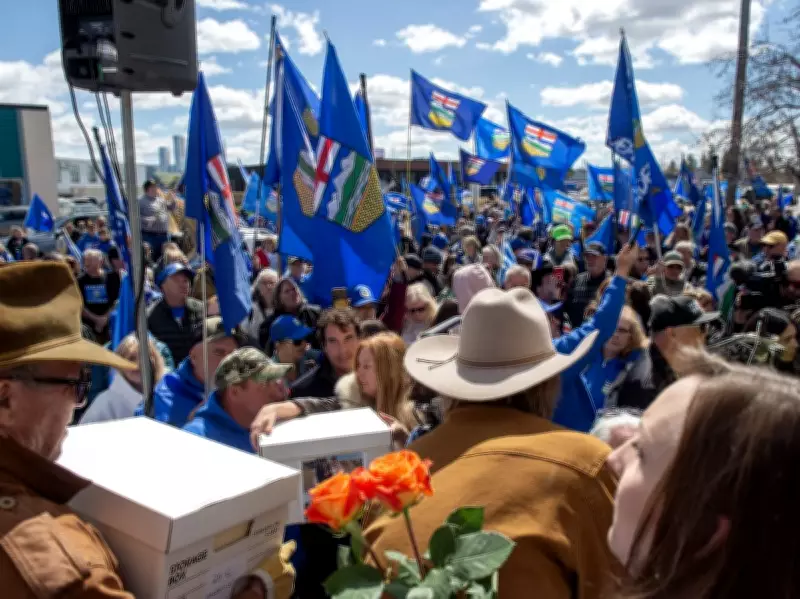
On Wednesday morning, the Canadian Press wire ran a story in which reporter Fakiha Baig talked to several political scientists about the unusual nature of the Alberta separatist movement. While this is a fair approach, the article primarily relied on political scientists rather than historians, who might have provided deeper historical context. Political scientists, as noted, are often more accessible to journalists.
The Uniqueness of Alberta Separatism
Baig's story begins with the observation that most separatist movements originate in regions with a prior history of independent nationhood or significant cultural differences from the central authority. University of Ottawa's Andre Lecours states, "There are no significant secessionist movements that hinge only on fiscal and economic grievances." This claim prompted anticipation for a counterexample, particularly one that serves as a significant historical parallel for Alberta separatism.
Political Scientists Weigh In
Instead of historical analysis, the article continues with political scientists noting that the United States experienced a civil war over cultural differences, and referencing Scotland's 2014 independence referendum. Baig emphasizes that Alberta Premier Danielle Smith has been negotiating with separatists, offering them a democratic test, though she is not an avowed separatist. This approach is deemed unusual, yet it mirrors Scottish Prime Minister David Cameron's strategy of allowing the referendum to settle the issue.

The Scottish Precedent
In the Alberta context, little attention is given to Cameron's gambit. His goal was to let the Scottish Nationalist Party (SNP) hold a referendum, secure a Union victory, and deprive the SNP of their raison d'etre. While Cameron achieved a win and the Union remains intact, the SNP adapted by cycling through leaders and remains in power in devolved Scotland. The centralized British parties are in crisis, raising the possibility that the SNP could outlast the UK Conservative Party. This serves as both an instructive situation and a warning for Canada and Smith's United Conservatives.
The Padanian Parallel
The historical parallel that best fits Alberta separatism is the "Padanian independence" movement in Italy during the 1990s. This movement was the creation of Umberto Bossi (1941-2026), a politician from Lombardy. "Padania" refers to the Po River basin (Padus in Latin), and Bossi used it to craft a nationalist myth for northern Italy, complete with a Declaration of Independence. He tapped into regional anger to build the Lega Nord party, which became a significant political force.
Lessons for Alberta
The Alberta separatist movement, like Padania, is driven largely by fiscal and economic grievances, but it also has cultural undertones. The comparison suggests that the movement may resolve itself through democratic processes, similar to Scotland's referendum. Premier Smith's strategy of engaging separatists could either defuse the movement or, as in Scotland, fail to eliminate it entirely. The outcome remains uncertain, but the historical parallels offer valuable insights.






