






U.S. Rate Cuts Unlikely to Bring Economic Relief to Canada
WASHINGTON, D.C. — As speculation swirls around potential U.S. Federal Reserve interest rate cuts in 2026, Canadian economists are cautioning that these monetary policy shifts may fail to deliver meaningful economic benefits north of the border. The persistent threat of trade wars and protectionist policies continues to overshadow any potential advantages that might flow from American monetary easing.
The Tariff Sword Hanging Over Canadian Exports
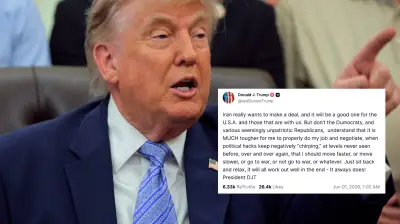
U.S. President Donald Trump's aggressive tariff policies have already inflicted significant damage on Canada's economic landscape. These protectionist measures have resulted in:
- Substantial reductions in Canadian export volumes
- Temporary shutdowns at several automotive manufacturing plants
- Depressed manufacturing sector performance
- Slowed GDP growth with indications of further economic contraction
These developments have created what economists describe as "the economic elephant in the room" that could negate any positive effects from U.S. monetary policy changes.
Diverging Central Bank Approaches
While the Bank of Canada has signaled its intention to maintain current interest rates throughout the year, the U.S. Federal Reserve has adopted a more cautious, wait-and-see approach. This policy divergence creates additional complexity for cross-border economic forecasting and coordination.
The recent nomination of Kevin Warsh to replace Jerome Powell as Federal Reserve Chair later this year has introduced new uncertainty into monetary policy projections. Warsh, a former Federal Reserve governor, has historically maintained hawkish positions on interest rates, emphasizing inflationary control over monetary easing.
Expert Analysis: Limited Benefits for Canada
Michael Davenport, senior economist at Toronto-based Oxford Economics, offered measured perspective on the situation: "Typically, anything that's good for the U.S. economy is generally good for the Canadian economy. So to the degree to which rate cuts boost the U.S. economy, and sort of support demand in the U.S. economy, that should flow through and have some modest positive benefits for Canada's economy."
However, Davenport and other experts emphasize that these benefits would likely be modest at best, particularly given the current trade environment.
The Federal Reserve's Decision-Making Process
Jason Daw, head of North American Rates Strategy at RBC Capital Markets, highlighted the collaborative nature of Federal Reserve decision-making: "Unilaterally, Warsh would not dictate U.S. interest rate policy; he would need to get a lot of members of the Fed on board to accomplish that."
Twelve voting members on the Federal Open Market Committee ultimately determine U.S. monetary policy, and while the chair traditionally helps build consensus or joins the majority, individual influence remains constrained by collective decision-making processes.
Data-Driven Policy Over Political Pressure
Economic experts anticipate that Federal Reserve decisions throughout 2026 will be primarily driven by inflationary data and labour market indicators rather than presidential demands. Michael Madowitz, principal economist at the New York City-based Roosevelt Institute, noted: "My read right now is that data is going to play a bigger role than a new Fed chair in whether we get rate cuts in 2026."
This data-centric approach suggests that even with leadership changes at the Federal Reserve, monetary policy decisions will remain grounded in economic indicators rather than political considerations.
Conservative Support for Warsh Nomination
Despite Trump's public criticism of Jerome Powell for not lowering interest rates more aggressively, his nomination of Kevin Warsh has received support from conservative circles. Andrew Hale, fellow at Washington-based Advancing American Freedom, commented: "Warsh is a solid pick. He doesn't instinctively support lowering interest rates, backs an independent Fed, and is more hawkish than Powell."
Hale suggested that Trump's counterintuitive selection of Warsh reflects the president's appreciation for the nominee's financial sector background and concern for Wall Street perceptions, rather than a straightforward desire for immediate rate reductions.
The complex interplay between U.S. monetary policy, trade relations, and political dynamics creates significant uncertainty for Canada's economic outlook, suggesting that sunnier economic days may remain elusive despite potential Federal Reserve policy shifts.