

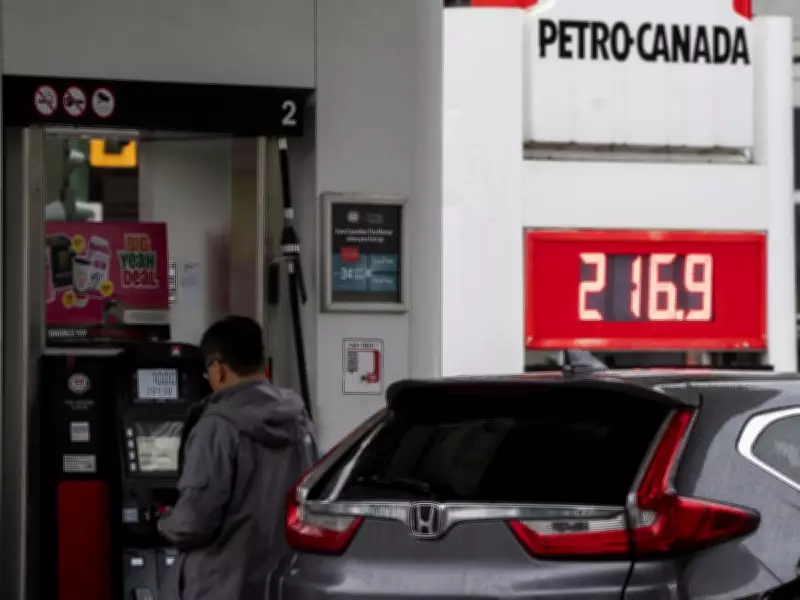
Conservative Party leader Pierre Poilievre has proposed a federal tax holiday on fuel as a response to skyrocketing gas prices driven by the ongoing conflict in Iran. The controversial plan, however, is being criticized as both counterproductive and narrow-minded by opponents who argue it would cost the government billions while offering only temporary relief.
The Staggering Financial Cost
According to estimates, Poilievre's proposed fuel tax holiday would cost the federal government approximately $5.25 billion this year alone. To fund this substantial revenue cut, significant spending reductions would be necessary for essential services and infrastructure projects. One notable casualty could be the proposed Toronto-Quebec City high-speed rail line, which Poilievre has suggested cancelling to help finance the temporary tax break.
Economic Implications and Inflation Concerns
While the Bank of Canada has acknowledged that removing consumer carbon taxes "could temporarily" lower inflation by roughly 0.7 percentage points, these effects are strictly one-time occurrences. Once the proposed "holiday" period concludes, prices are expected to spike again, potentially triggering a secondary inflationary shock that could further strain household budgets.

The fundamental debate centers on competing economic priorities: investing in long-term infrastructure versus offering short-term cost-of-living relief. The temporary fuel tax cuts represent an oversimplification of complex economic challenges, providing limited relief at best while potentially boosting consumption in ways that contradict environmental goals.
Infrastructure Versus Immediate Relief
Poilievre argues that his proposal would deliver "immediate relief" to Canadian families while lowering transportation costs for goods moved by truck. However, critics maintain that this strategy creates a false dichotomy between addressing immediate affordability concerns and pursuing long-term fiscal and environmental sustainability.
The high-speed rail project, by contrast, offers structural, environmental, and enduring economic benefits that extend far beyond temporary price adjustments. This debate highlights the fundamental tension between immediate political solutions and sustainable policy approaches that require patience and significant investment.
Broader Context of Economic Policy
The discussion surrounding Poilievre's proposal emerges against a backdrop of global conflicts driving energy price volatility. It also reflects deeper philosophical divisions about government's role in managing economic challenges—whether through direct intervention in markets or through strategic infrastructure investments that reshape economic fundamentals.
As Canadians grapple with rising living costs, the fuel tax holiday proposal has become a flashpoint in broader conversations about fiscal responsibility, environmental policy, and the appropriate balance between short-term relief and long-term planning.






